What Size Clothes Fit a 2-Year-Old?
A practical, parent-friendly guide to choosing playful prints without compromising on comfort, fit or everyday wear.
Practical choices.
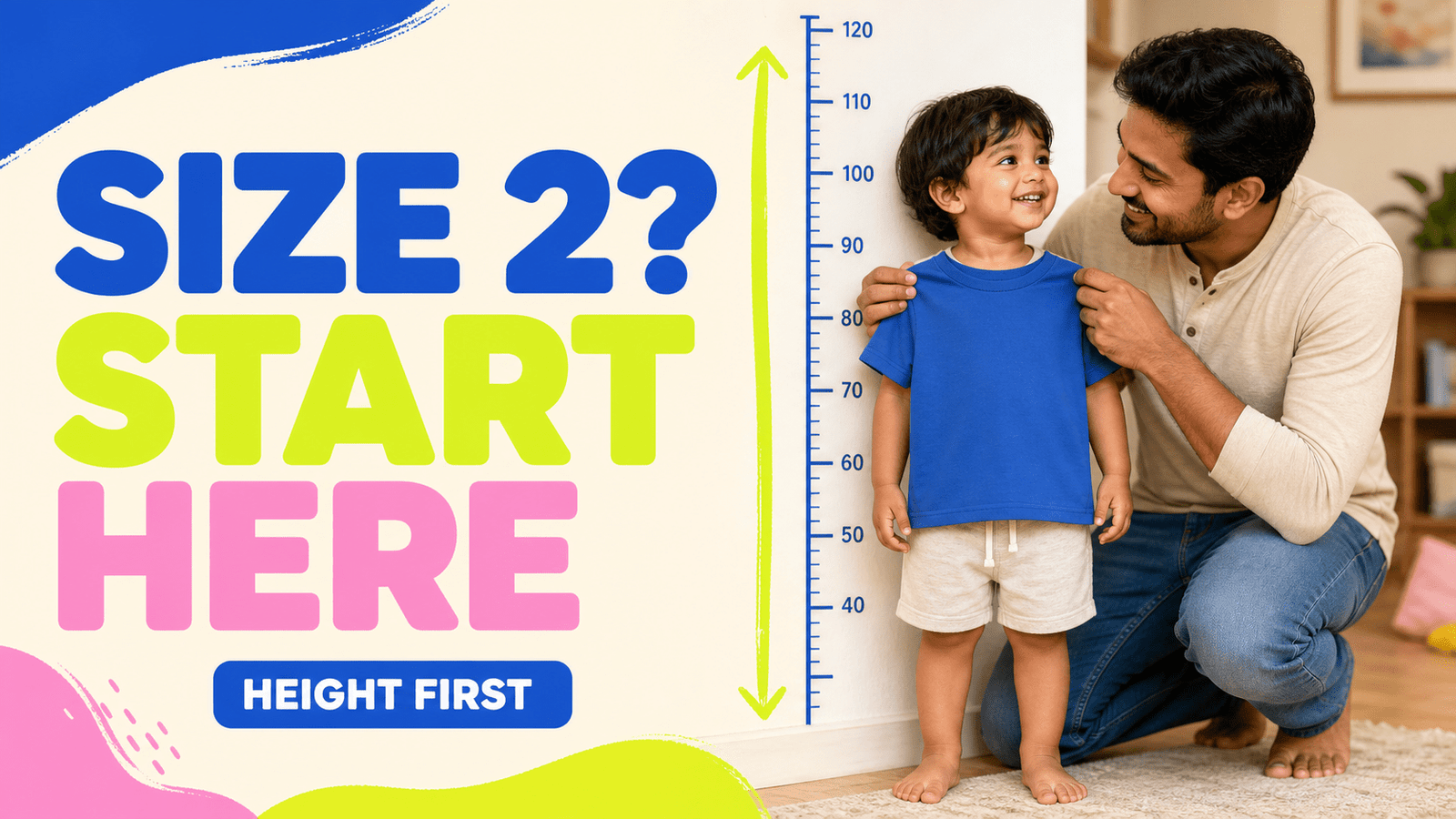
There is no universal clothing size for every 2-year-old. A 2–3 years label is a useful place to start, but current height, chest, waist and hip measurements are more reliable than age alone. Compare those numbers with the size chart for the exact product and check whether the chart uses body or garment measurements.
Children grow at different rates, and two brands can use the same age label for different dimensions. This guide shows how to choose a practical starting size without guessing or automatically sizing up.
Quick answer: what should you measure?
| Measurement | Why it matters | How to take it |
|---|---|---|
| Height | Best overall starting point | Floor to top of head, without shoes |
| Chest | Checks room in tops | Around the fullest part, tape level |
| Waist | Checks waistband fit | Around the natural waist, not pulled tight |
| Hip/seat | Checks room in shorts and bottoms | Around the fullest part of the seat |
| Inside leg | Useful for full-length pajamas | Crotch area to desired hem point |
Use a flexible tape over light clothing and write down the date. Our step-by-step kids sizing guide explains the method and common measuring errors.
Why “2 years” and “2–3 years” are only starting points
Age bands help organize a catalogue, but they do not describe every child’s proportions. A child may be taller with a smaller waist, or shorter with more room needed through the seat. The intended fit also changes the garment: a relaxed top may be wider than a regular top even when both carry the same age label.
Always read the chart heading. A body chart tells you which child measurements a size is designed around. A garment chart gives dimensions of the clothing itself. A flat half-chest width is not the same as a full chest circumference.
How to choose between 1–2 and 2–3
Do not decide from the birthday alone. Compare all measurements that affect the specific garment. If the child’s height points to one size but the waist points to another, consider where the garment is least forgiving. For shorts, the waist, rise and seat matter. For a top, chest, shoulder placement and length matter.
If the child is between sizes, look for information about the intended silhouette and stretch. Compare the product’s measurements with a similar garment that already fits comfortably. Check the exchange policy before ordering rather than assuming the larger option will be correct.
Should you size up for growth?
Sizing up is not automatically safer. A much larger top may slip at the neck or interfere with movement, while loose shorts can slide down. Full-length bottoms with extra fabric at the heel can become a trip risk.
A small amount of wearing ease should come from the garment design, not from adding arbitrary centimetres to the child’s body measurement. Choose a comfortable fit now and reassess as the child grows.
Fit checks for a 2-year-old shorts set
- Check that the neckline lies flat and does not feel tight.
- Lift both arms; the top should not pull sharply across the chest.
- Check that the waistband stays in place without deep pressure marks.
- Ask the child to sit or squat; the rise and seat should allow movement.
- Look for twisting seams, rough labels or loose decorative parts.
- Follow the care label and recheck fit after washing.
For more detail, use our everyday shorts-set checklist.
Using a favourite outfit as a reference
Lay a comfortable outfit flat without stretching it. Measure the top width from armpit to armpit, top length from shoulder to hem, relaxed waistband width, rise and shorts length. Compare equivalent measurements only. If the new product lists body dimensions, compare those with the child—not with the flat garment.
This method is helpful when ordering online, but it does not replace the live product information. Fabric, pattern construction and intended fit can make two sets with similar flat measurements feel different.
A Tiny Bee sizing example
The Ocean Shell Shorts Set was listed in sizes 1–2 through 7–8 when this guide was prepared. A child aged two might begin by comparing the 1–2 and 2–3 options, but the current chart and the child’s measurements should decide. Price, size availability and product details can change; verify them on the live page.
Common sizing mistakes
- Buying from age alone without measuring height or waist
- Comparing a half-chest garment width with a full body circumference
- Pulling the measuring tape too tight
- Adding several centimetres “for growth”
- Using an old size-chart screenshot
- Assuming the same size will match across every brand
Frequently asked questions
Is size 2 the same as 2–3 years?
Not necessarily. Labels and measurements vary by brand, so use the exact product chart.
Is height more important than age?
Height is often a better starting point, but chest, waist, hip and garment length can change the final choice.
What if my 2-year-old is between sizes?
Check which measurement controls the tightest part of the garment, compare with a well-fitting outfit and review the intended fit and exchange policy.
Should an elastic waist leave marks?
A waistband should stay up without leaving deep pressure marks or causing discomfort during sitting and movement.
How often should I measure my child?
Remeasure when current clothes start fitting differently, before a seasonal purchase or whenever the last measurements are no longer recent.
Explore A Tiny Bee shorts sets and use each live product page to confirm the right size and availability.
Bring the guide to life
Only currently available products are shown. Sizes and stock update live.