Do Cotton Kids Clothes Shrink? What Parents Should Know
A practical, parent-friendly guide to choosing playful prints without compromising on comfort, fit or everyday wear.
Practical choices.
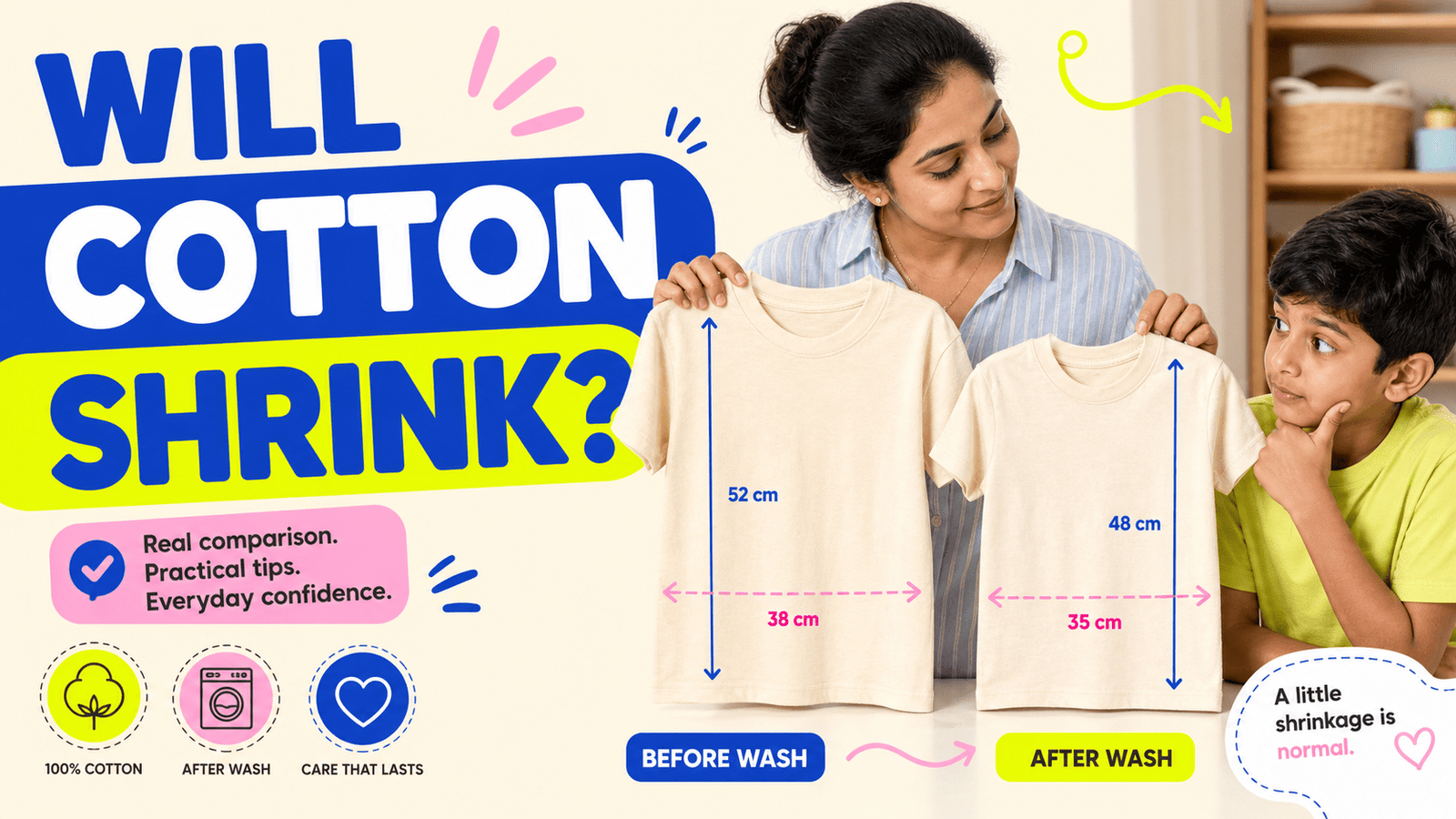
Cotton clothing can change size after washing and drying, but the amount is not universal. Fibre content, yarn and fabric construction, finishing, garment construction and the exact care process all matter. A “cotton” description alone cannot predict a percentage of shrinkage for a specific kids garment.
Follow the sewn-in care label and measure the actual garment if fit is important. Do not deliberately buy a much larger size based on an assumed shrink rate.
What parents mean when they say a garment shrank
Shrinkage is a reduction in one or more garment dimensions. A top may become shorter without becoming equally narrower; pajama bottoms may change at the leg, rise or waistband differently. A piece can also appear changed because it twisted, puckered or was stretched while wet.
For a useful check, compare the same landmarks before and after care:
- top length from the same shoulder point to hem;
- chest width measured flat at the same level;
- sleeve length from the same seam;
- bottom length, rise and leg width;
- relaxed waistband width without stretching.
Why cotton garments can change dimensions
Manufacturing places fibres, yarns and fabric under tensions. Wetting, movement and drying can allow the structure to relax. Heat and mechanical action can affect that result. Knit and woven fabrics, loose and dense constructions, preshrunk and untreated materials, and garments with different elastics or trims do not all behave alike.
That is why a fibre name is not a complete care instruction. The finished garment—including print, elastic, stitching and trim—must be considered as one item.
Read the label before choosing a wash routine
The US Federal Trade Commission’s care-label guidance describes washing, bleaching, drying, ironing and warnings as parts of regular garment care instructions. It also explains that a care instruction should be supported for the finished garment, not just one component.
India has its own labelling and consumer rules; the FTC reference is used here to explain why complete care instructions matter, not as a statement of Indian legal requirements. The exact product label remains the practical source for that garment.
A cautious first-wash routine
- Photograph the care label before washing.
- Measure the garment only if a close fit makes change important.
- Close any fastenings and turn printed pieces inside out when the label permits.
- Use the stated washing method and temperature.
- Use the stated drying method and heat level.
- Reshape gently only when appropriate; do not force or stretch elastic.
- Let the garment fully dry before judging the final fit.
General advice such as “always use cold water” or “never tumble dry cotton” can conflict with a specific label. Follow the garment instruction rather than a blanket rule.
Heat is not the only variable
Parents often focus only on water temperature. Drying heat, cycle length, mechanical action, load crowding, repeated care and how a wet garment is handled can also affect dimensions and appearance. A gentle-sounding process is not automatically correct for every component.
Use the step-by-step process in our cotton kids-clothes washing guide, but let the exact label override general suggestions.
Do not confuse shrinkage with a child’s growth
Children can outgrow clothing between wears. Compare garment measurements, not memory alone. Check whether the top length, chest width, waistband, rise and leg length changed, then compare the child’s current measurements separately.
If the garment measures the same but feels tight, the child may have grown or the preferred fit may have changed. If the garment measurement changed, record which dimension changed before deciding whether care was the likely cause.
Should parents size up for possible shrinkage?
Do not automatically buy one or two sizes larger. Oversized neck openings, shoulders, waists or hems can create poor fit now, and assumed future shrinkage may never occur. Use the current chart, current child measurements and intended fit.
If the child is genuinely between sizes, compare both sizes using the brand’s chart and the garment type. Our measurement guide explains how to separate body and garment measurements.
Can cotton blends shrink?
A blend can still change dimensions. The result depends on the blend percentage, yarn, construction, finishing and finished-garment care—not simply the presence of polyester or another fibre. Do not infer the content from touch or appearance.
For a balanced comparison of fibre properties and trade-offs, see cotton versus polyester for kids clothes. Check the actual fibre label before applying that information to a product.
What to do after an unexpected change
- Stop repeating the same wash-and-dry process until the label is checked.
- Confirm the before-and-after measurement if one exists.
- Check whether the change affects safe, secure movement or only styling preference.
- Contact the seller with the product, size, care label and care process.
- Do not promise that stretching, soaking or ironing will restore the garment; those actions may cause further change.
Keep a photo of the label and order details when asking for help. A precise record is more useful than a guessed shrink percentage.
Frequently asked questions
Do all cotton kids clothes shrink?
No universal result applies to every garment. Fibre content, fabric and garment construction, finishing and the care process all influence dimensional change.
How much will a cotton garment shrink?
You cannot accurately predict a specific percentage from the word “cotton” alone. Use product-specific test information when available and measure the garment before and after care if necessary.
Does hot water shrink cotton?
Heat can influence dimensional change, but water temperature is only one variable. Follow the exact washing and drying instructions on the garment.
Should I buy cotton kids clothes one size bigger?
Not solely because shrinkage is possible. Buy for secure current fit using the exact size chart and child measurements.
When should I judge the fit after washing?
Wait until the garment has been cared for as directed and is fully dry. Wet fabric and partially dried elastic can give misleading measurements.
Explore current A Tiny Bee kidswear and verify the exact product description, size chart, fibre information and care label before purchasing.
Bring the guide to life
Only currently available products are shown. Sizes and stock update live.