How to Wash Cotton Kids Clothes Without Fading or Shrinking
A practical, parent-friendly guide to choosing playful prints without compromising on comfort, fit or everyday wear.
Practical choices.
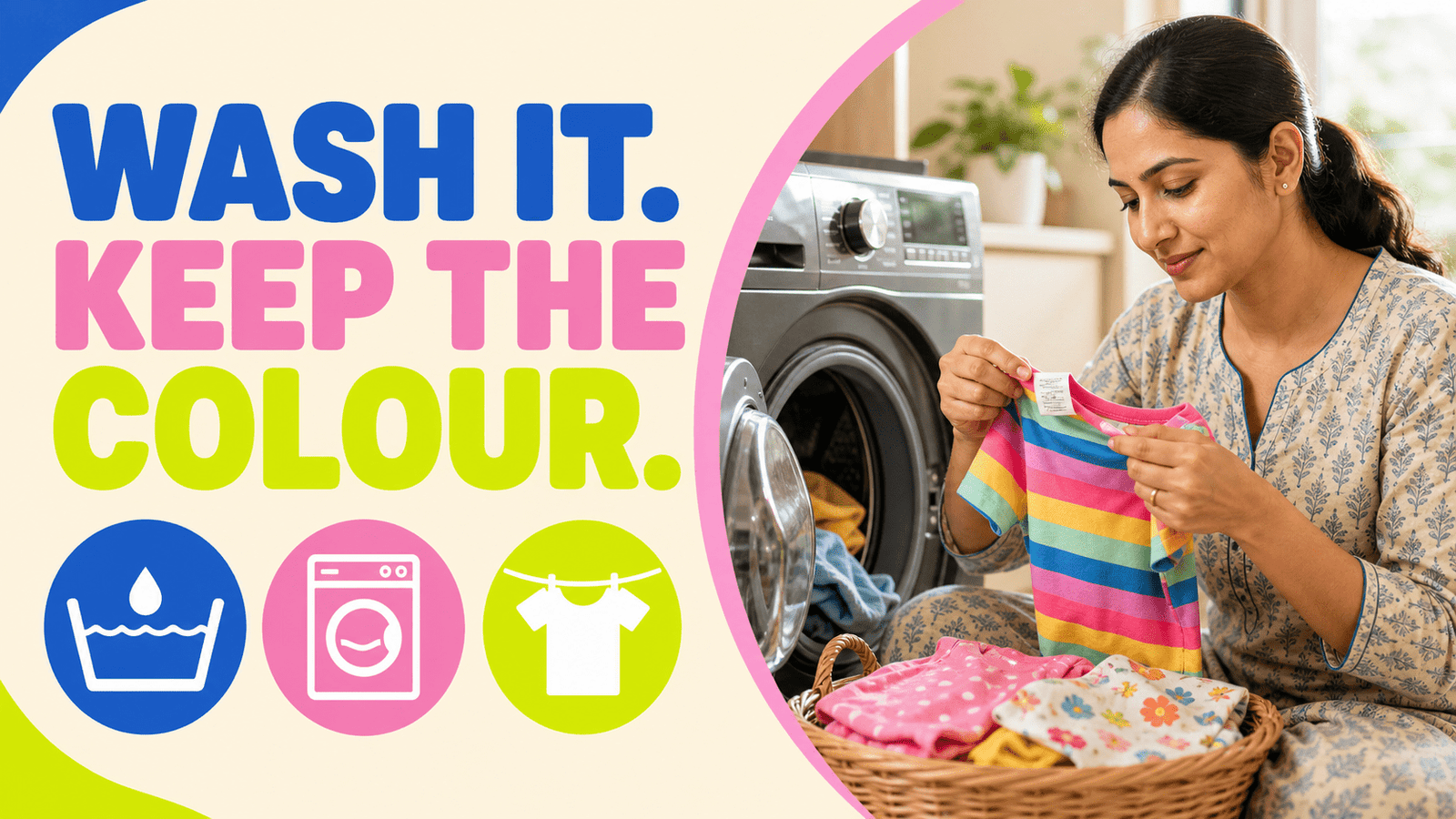
To wash cotton kids clothes, begin with the garment’s care label, separate similar colours, treat visible marks before washing and use only the temperature and drying method the label permits. Turn printed clothes inside out, avoid overloading the machine and check that stains are gone before heat drying. Cotton construction, dyes and finishes vary, so one routine does not suit every item.
This guide is for washable everyday clothing. If the sewn-in instructions disagree with general advice, follow the garment label. The FTC’s care-label explainer describes washing, bleaching, drying, ironing and warning information that a complete care instruction may contain.
A safe wash routine at a glance
- Read the care label and empty pockets.
- Close fasteners and turn printed garments inside out.
- Separate by colour intensity and fabric-care needs.
- Pre-treat stains with a product allowed by the label.
- Choose the stated wash method, temperature and cycle.
- Use the detergent dose for the load and local water conditions.
- Dry exactly as directed and remove garments promptly.
Step 1: read the care label
Look for hand-versus-machine washing, water temperature, bleach restrictions, drying method and ironing guidance. Do not assume a cotton product automatically tolerates hot water, high dryer heat or chlorine bleach. Dyes, prints, elastic, thread and finishes can change what the complete garment can withstand.
If a label says “wash with like colours,” group the item with colours of similar depth. If it says “wash separately,” do that, especially for the first wash. Keep a phone photograph of a fading label if the garment is likely to be handed down.
Step 2: prepare the clothes
- Empty pockets and shake out sand or loose soil outdoors.
- Close zips, hooks or hook-and-loop tabs so they do not catch other fabric.
- Turn printed T-shirts and shorts inside out to reduce direct rubbing against the drum and other garments.
- Put small or delicate pieces in a mesh laundry bag when their label permits machine washing.
- Do not wash a heavily muddy item with a lightly worn load without first removing loose soil.
Step 3: sort more carefully than “lights and darks”
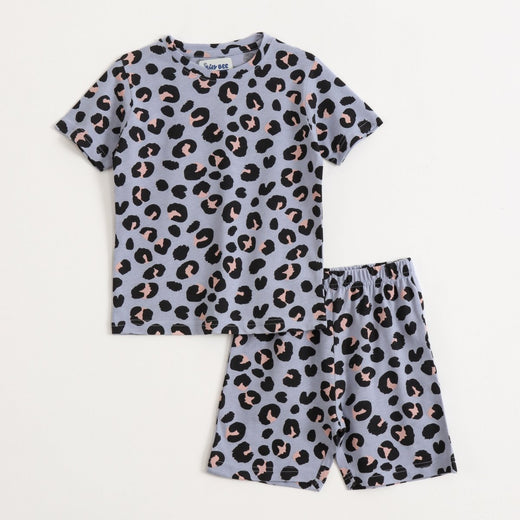
Colour is only one sorting factor. Also separate lint producers from garments that attract lint, heavily soiled pieces from lightly worn clothes and items with different temperature or cycle requirements. A dark printed shorts set may belong with similar dark colours, but only when all items can use the same care settings.
Step 4: pre-treat stains before washing
Do not let the dryer confirm that a mark has disappeared. Identify the likely stain, check the label and pretest the cleaning product on an inconspicuous area. The University of Georgia Extension’s textile fibre guide notes that stains may become difficult to remove when they are washed without suitable pre-treatment.
Never combine cleaning products casually. In particular, do not mix chlorine bleach with ammonia or other household cleaners. Keep stain products and wash supplies out of children’s reach and follow their labels.
Step 5: choose water temperature and cycle
Use the care-label temperature rather than a blanket rule. Cooler settings are not automatically correct for every soil type, and hotter settings are not automatically better for every garment. The same applies to the cycle: normal agitation may be fine for one item while another label calls for a gentler process.
Do not pack the drum tightly. Clothes need room to move through the wash water. An overloaded machine can reduce rinsing and increase rubbing, while a very small unbalanced load may not run as intended. Follow the machine manufacturer’s load guidance.
Step 6: measure detergent
More detergent is not necessarily more cleaning. Use the product’s dosing instructions for load size, soil level, machine type and water hardness. Too little may leave soil; too much may be difficult to rinse. Avoid pouring concentrated products directly onto a coloured print unless the product instructions specifically allow it.
Step 7: dry and inspect
Before drying, check the neckline, cuffs, front and shorts seat for remaining marks. Repeat an appropriate pre-treatment rather than applying heat to a visible stain. Then follow the stated line-dry, flat-dry or tumble-dry method and temperature.
Reshape the garment while damp when the label allows. Remove dry clothes promptly, fold along natural seams and avoid leaving clean clothes compressed in the machine.
How to reduce fading and shape change
- Follow the permitted temperature and drying instructions.
- Turn printed garments inside out.
- Separate strong colours and do not overload the drum.
- Use only label-approved bleach or stain products.
- Avoid unnecessary high heat and prolonged drying.
- Store clothes only when fully dry.
These steps reduce avoidable stress; they cannot guarantee that every garment will remain unchanged. Fibre blend, knit structure, dye and finish also matter. For a broader comparison, read cotton versus polyester for kids.
If you are deciding whether an item needs laundering yet, first use the condition-based guide to how often kids clothes should be washed. Once the decision is made, return to the exact garment’s care label for the wash method.
Frequently asked questions
Should cotton kids clothes always be washed in cold water?
No universal temperature applies to every cotton garment. Follow the temperature on the care label and consider the complete garment, including print, elastic and trims.
Should printed clothes be turned inside out?
Turning them inside out can reduce direct surface rubbing during washing, but it does not override the other care instructions.
Can I use chlorine bleach on coloured kids clothes?
Only when the care label and bleach product permit it. Never apply undiluted bleach to coloured fabric or mix bleach with ammonia or other cleaners.
Why should I check stains before drying?
Heat can make some remaining stains harder to remove. Inspect the garment while it is still wet and repeat a suitable treatment when needed.
How should clean kids clothes be stored?
Store them fully dry in a clean, ventilated space. Fold without compressing elastic and avoid leaving damp clothing in a basket or machine.
Explore A Tiny Bee kidswear and check the sewn-in label for the exact garment before choosing a wash method.
Bring the guide to life
Only currently available products are shown. Sizes and stock update live.