How Often Should Kids Clothes Be Washed?
A practical, parent-friendly guide to choosing playful prints without compromising on comfort, fit or everyday wear.
Practical choices.
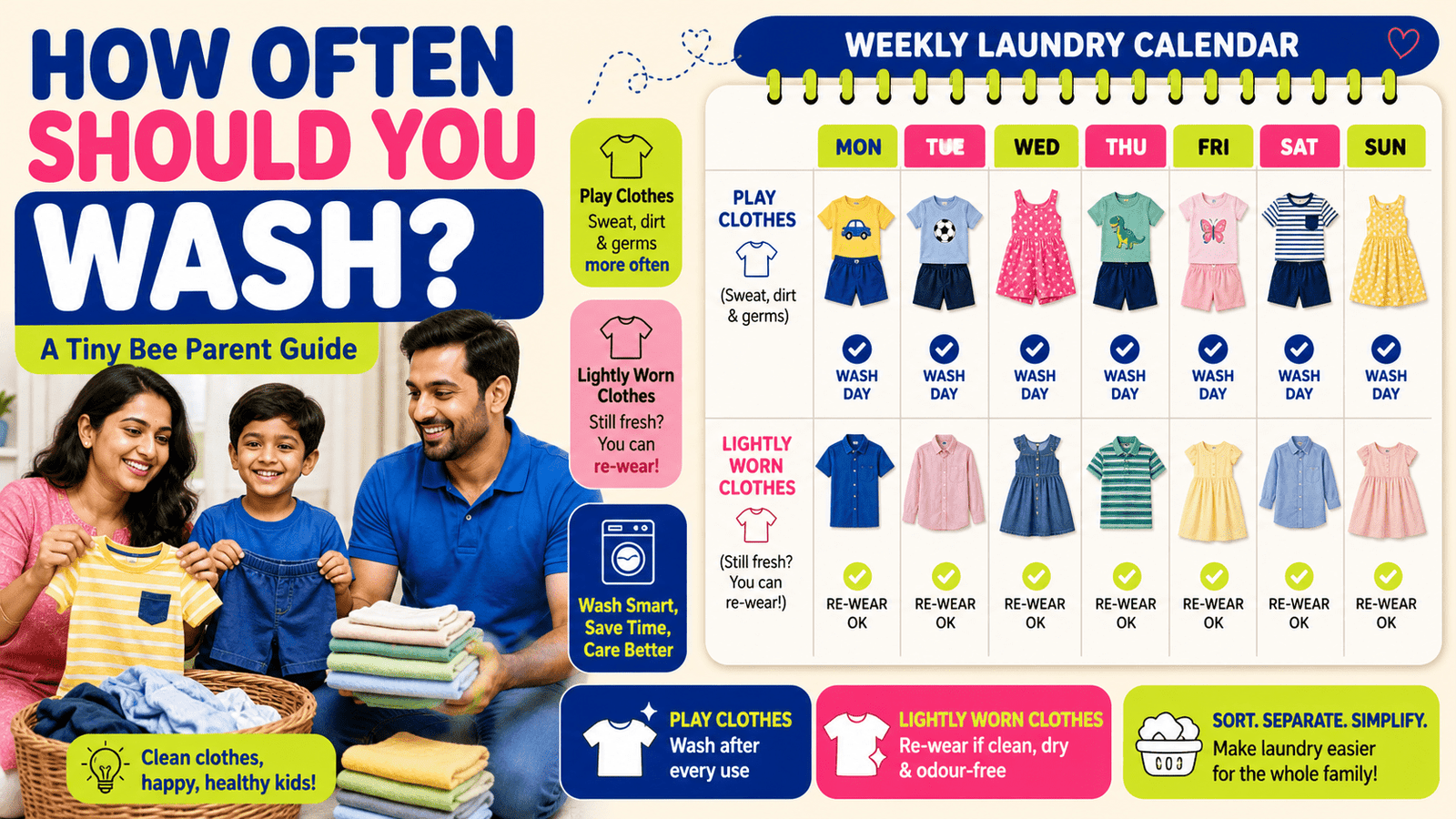
There is no single safe wear count for every item of kids clothing. Wash a garment when it is visibly dirty, wet, noticeably sweaty or odorous, contaminated with food or body fluids, or covered by illness-specific guidance. A clean, lightly worn outer layer may be considered for rewear only when the garment, household routine and child’s circumstances support it.
The decision should be based on condition and use—not a rigid calendar. Direct-skin contact, activity, weather, spills, toileting accidents and illness can all move an item into the wash sooner.
Use a condition-based wash decision
| What happened? | Ordinary decision | Extra check |
|---|---|---|
| Visible dirt, food, paint or mud | Wash after suitable stain pre-treatment | Check colourfastness and the care label first |
| Wet from sweat, rain or a spill | Do not store damp; wash or handle according to the source | Drying alone does not remove soil |
| Noticeable odour or heavy active play | Wash | Use the recommended detergent dose and cycle |
| Body-fluid contamination | Wash promptly and handle carefully | Follow relevant health guidance when illness is involved |
| Clean, dry, lightly worn outer layer | Assess before rewear | Check direct-skin contact, setting and household needs |
| New newborn clothing | Wash before first use | Follow the sewn-in care instructions |
Do not use garment category alone
Two identical-looking outfits can need different treatment. One may have been worn for an hour in an air-conditioned room; the other may have been used during outdoor play in humid weather. The garment name does not record soil, moisture or exposure.
Direct-skin items and sleepwear deserve a closer check than a clean outer layer because they have longer or closer contact. Even so, avoid publishing one number such as “wash every two wears” as a universal rule. The correct decision changes with the child, activity, weather and event.
Wash promptly when soil is obvious
Visible stains, dampness, persistent odour, food residue and toileting accidents are clear reasons to move the garment out of the wearable rotation. Keep wet items out of a closed wardrobe or next-size storage zone.
For a stain, blot or remove excess material using a method suitable for the fabric. Do not rub every stain or apply a household chemical without testing. Our kids clothing stain-removal guide uses a label-first, colourfastness-aware process.
Separate ordinary laundry from illness guidance
The US Centers for Disease Control and Prevention says ordinary household laundry should be washed with detergent at the recommended water temperature and dried completely. It also notes that dirty laundry from a sick person can generally be washed with other people’s items. Read the current CDC household cleaning guidance for its complete context.
That general guidance does not replace instructions for a particular illness or body-fluid event. Vomit, diarrhoea, blood, a diagnosed infection or advice from a health professional can require different handling. Do not invent a hotter cycle or bleach instruction when the garment cannot safely tolerate it; follow applicable health guidance and the product labels.
Wash new newborn garments before use
HealthyChildren.org, a site of the American Academy of Pediatrics, recommends washing newborn clothes before use because of skin sensitivity and unknown handling before purchase, while noting that outerwear with little skin contact may be an exception. See its cleaning baby clothes guidance.
This newborn-specific advice should not be stretched into a claim that every clean garment for every older child needs washing after every brief wear.
Rewear only after a deliberate check
Before returning a lightly worn item to the wardrobe, ask:
- Is it completely dry?
- Is there any visible soil, stain or food residue?
- Is there an odour that was not present before wear?
- Was it worn directly against the skin for a long period?
- Was the child ill or exposed to a specific contamination?
- Will another child wear it next?
- Does the household have a stricter health-related routine?
If the answer raises uncertainty, wash the garment according to its care label. Do not spray fragrance onto a soiled item to make it seem wearable.
Avoid overwashing and underwashing
Unnecessary washing adds friction, detergent exposure, drying time and work. Delaying a needed wash allows soil or moisture to remain. The goal is not the fewest washes or the most washes; it is a repeatable decision that keeps the wearable pile clean and dry.
Use separate baskets or labelled zones for wearable, needs washing and stain treatment. Our kids clothing organization guide can be extended with a small “worn once—check first” area so uncertain items do not mix with clean storage.
Follow the complete care label
Once the decision to wash is made, the label controls method, temperature, drying, bleaching warnings and ironing. Do not assume all products tagged as cotton can share one cycle. Construction, dyes, prints, elastic and trims can change what the whole garment tolerates.
Use our cotton kids clothing wash guide for the process after the wash decision has been made.
Frequently asked questions
Should kids clothes be washed after every wear?
Not as a universal rule for every garment. Wash based on soil, moisture, odour, direct contact, activity and any illness-specific need.
Can clean pajamas be worn again?
Assess direct-skin contact, sweat, spills, odour, illness and the household routine. Do not use one rewear number for every child or climate.
Should new kids clothes be washed before wearing?
HealthyChildren.org specifically recommends washing newborn clothes before use. For other garments, check the product information, label and household needs.
Can sick-person laundry be washed with other clothes?
CDC household guidance says it is generally safe, but a specific illness or contamination may have additional instructions. Follow current public-health and garment guidance.
Does air-drying a worn garment make it clean?
No. Drying removes moisture; it does not remove dirt, food residue or other soil. Use the condition check to decide whether washing is needed.
Explore current A Tiny Bee kidswear and check the exact product’s care information before planning a wash-and-wear rotation.
Bring the guide to life
Only currently available products are shown. Sizes and stock update live.