How to Organize Kids Clothes by Size and Season
A practical, parent-friendly guide to choosing playful prints without compromising on comfort, fit or everyday wear.
Practical choices.
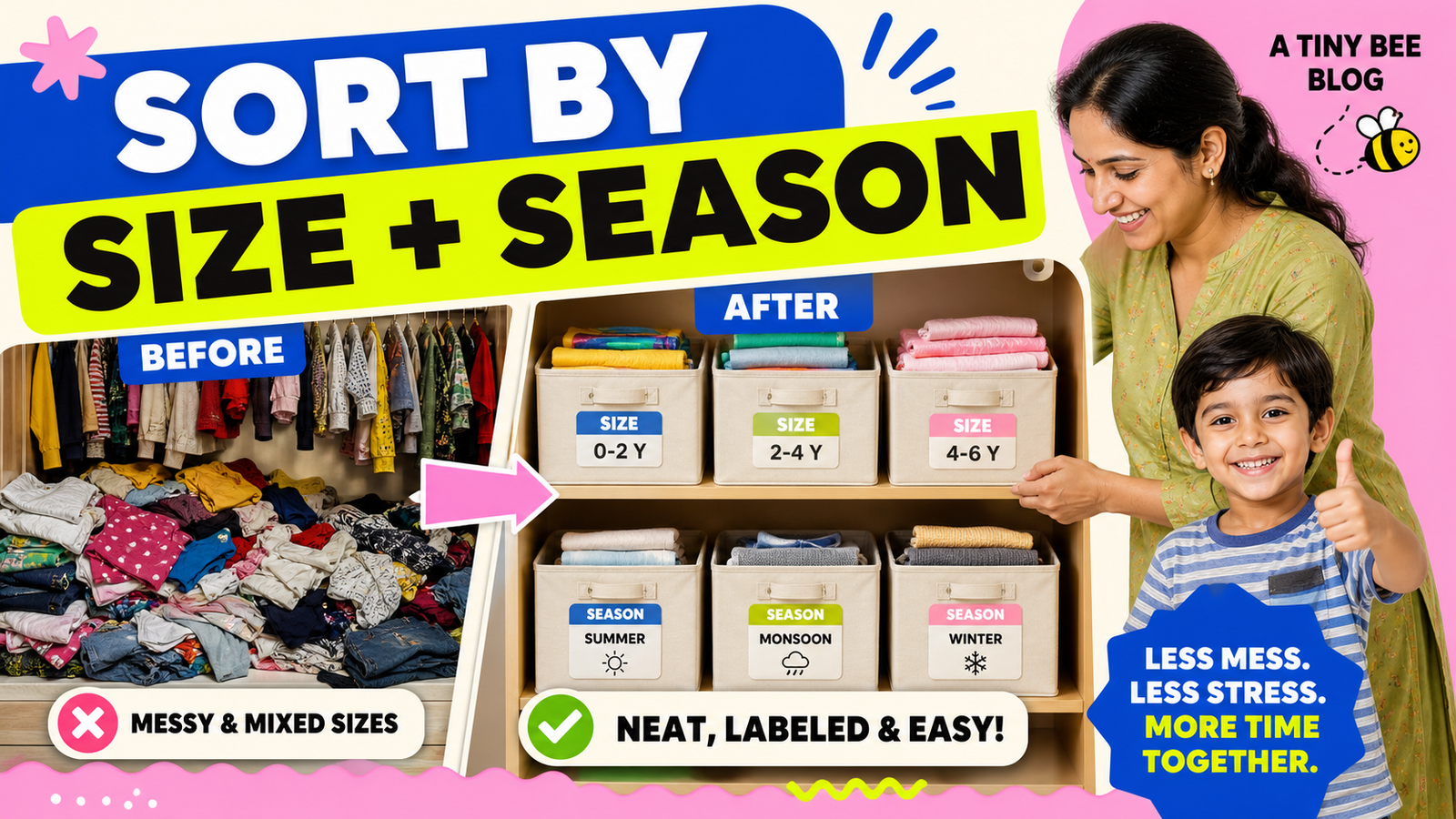
Organize kids clothes with three clearly labelled zones: “fits now,” “next size,” and “outgrown.” Inside each zone, separate warm-weather, cool-weather and special-use items only when that distinction helps your household. This is easier to maintain than sorting everything by colour or exact garment type.
The system should answer one question quickly: what can this child wear today? It should also stop a good next-size garment from disappearing until it is already too small.
Start with a fit audit, not a storage purchase
Do not buy boxes before checking the clothes. Bring together the wardrobe, laundry, school bag spares and stored hand-me-downs. Work with one child and one size range at a time so pieces do not migrate between piles.
- Fits now: secure, movement-friendly garments suitable for the current weather and routine.
- Next size: garments that are genuinely too large now but likely to be useful later.
- Outgrown: pieces that are tight, short, difficult to put on or no longer stay secure.
- Repair or stain treatment: items that should not return to the wearable rotation yet.
- Release: unsuitable pieces to donate, resell, recycle or discard responsibly.
Use current measurements and a movement check rather than relying on the age printed on the tag. Our kids clothing measurement guide explains height, chest, waist, hip and inside-leg checks.
Build a three-zone system
| Zone | Best location | Label | Review trigger |
|---|---|---|---|
| Fits now | Child-accessible drawer or wardrobe | Garment type or ready outfit | Something feels tight or the weather changes |
| Next size | One nearby closed container | Size + season + contents | Current rotation begins to look short |
| Outgrown | Temporary exit bag or box | Destination + review date | Container fills or scheduled monthly review |
Keep the “next size” container accessible. If it is buried behind unrelated storage, it cannot do its job. Keep the outgrown zone small and temporary so it does not become a second unsorted wardrobe.
Label by real size and useful season
A useful label might read “5–6 / warm weather / 4 tops + 3 shorts,” not simply “kids clothes.” Record the size shown on the garment, but remember that labels vary by brand and product. If a hand-me-down fits unusually small or large, add a note.
Use broad weather groups that match where you live. “Warm,” “rainy” and “cool evenings” may be more practical than four imported season names. Do not predict next year’s size from age alone; growth and garment grading vary.
Keep current clothes simple to reach
Inside the fits-now zone, choose one organisation method the child and every caregiver can repeat:
- By ready outfit: useful for coordinated sets and faster mornings.
- By garment type: tops, shorts, full-length bottoms and pajamas.
- By use: everyday play, school or outing, sleepwear and special activity.
Colour sorting can look neat but rarely answers what fits, matches or suits the day. Put the most-used current items at the easiest height. Keep sleepwear separate enough that a daytime spill does not empty the bedtime drawer.
Create one “wear next” signal
Choose a repeatable trigger for reviewing the next-size box. Examples include a waistband that no longer sits comfortably, sleeves or hems becoming short, or several current outfits failing the movement check. Review the whole next-size group before buying replacements.
Do not automatically move every larger item into use. Check the current weather, neckline, shoulder position, waistband security, rise, length and movement. A garment can have the next label and still be unsuitable today.
Use a small inventory note
A phone note is enough. Record counts only for practical gaps: wearable daytime outfits, sleepwear, weather layers and one or two special-use categories that matter to your routine. The purpose is to prevent duplicate purchases, not to catalogue every sock.
Before adding more, use the laundry-cycle calculator in how many clothes a child needs. This organisation guide decides where clothing belongs; the quantity guide decides whether the rotation is sufficient.
Prepare stored clothes before closing the container
Store only clean, fully dry garments. Check pockets, remove loose soil and separate items that need repair. Follow the individual care label before washing; similar-looking garments can have different instructions. Avoid storing damp clothing in a sealed container.
Fold pieces so the label or a simple inventory card is visible. Protect storage from moisture, pests, dust and direct sunlight according to the conditions in your home. Do not treat a sealed bag as proof that a garment was dry or stain-free.
Run a ten-minute monthly reset
- Move tight or short garments to the outgrown zone.
- Check whether any next-size pieces now fit.
- Return clean current items to their assigned place.
- Send repair items to the next action instead of back to the drawer.
- Update only meaningful shortages.
A monthly reset is usually easier than a large seasonal rescue. When storing pieces for another child, add the actual condition and size notes while they are still easy to remember. The rotation and repair principles in how to make kids clothes last longer can help decide what is worth keeping.
Frequently asked questions
Should kids clothes be organised by size or season?
Use size first because fit decides whether a child can wear the garment. Add a broad weather or season label inside each size only when it improves retrieval.
What should stay in the child’s main wardrobe?
Keep only current-size, current-weather clothing and regularly used special items within easy reach. Store next-size and out-of-weather garments separately.
How often should I review children’s clothes?
A quick monthly reset works for many households. Review sooner when several clothes feel tight, the weather changes or the current rotation develops gaps.
Should I store stained or damaged clothes?
Not in the wearable or hand-me-down box. Treat, repair, repurpose or release them first so the stored count reflects usable clothing.
How should I label hand-me-downs?
Write the garment’s stated size, useful weather group, contents and any fit note such as “runs small.” Do not rely only on the intended recipient’s future age.
Explore current A Tiny Bee kidswear only after checking the fits-now and next-size zones, then verify the live size chart, product information and stock before filling a genuine gap.
Bring the guide to life
Only currently available products are shown. Sizes and stock update live.