How to Make Kids Clothes Last Longer
A practical, parent-friendly guide to choosing playful prints without compromising on comfort, fit or everyday wear.
Practical choices.
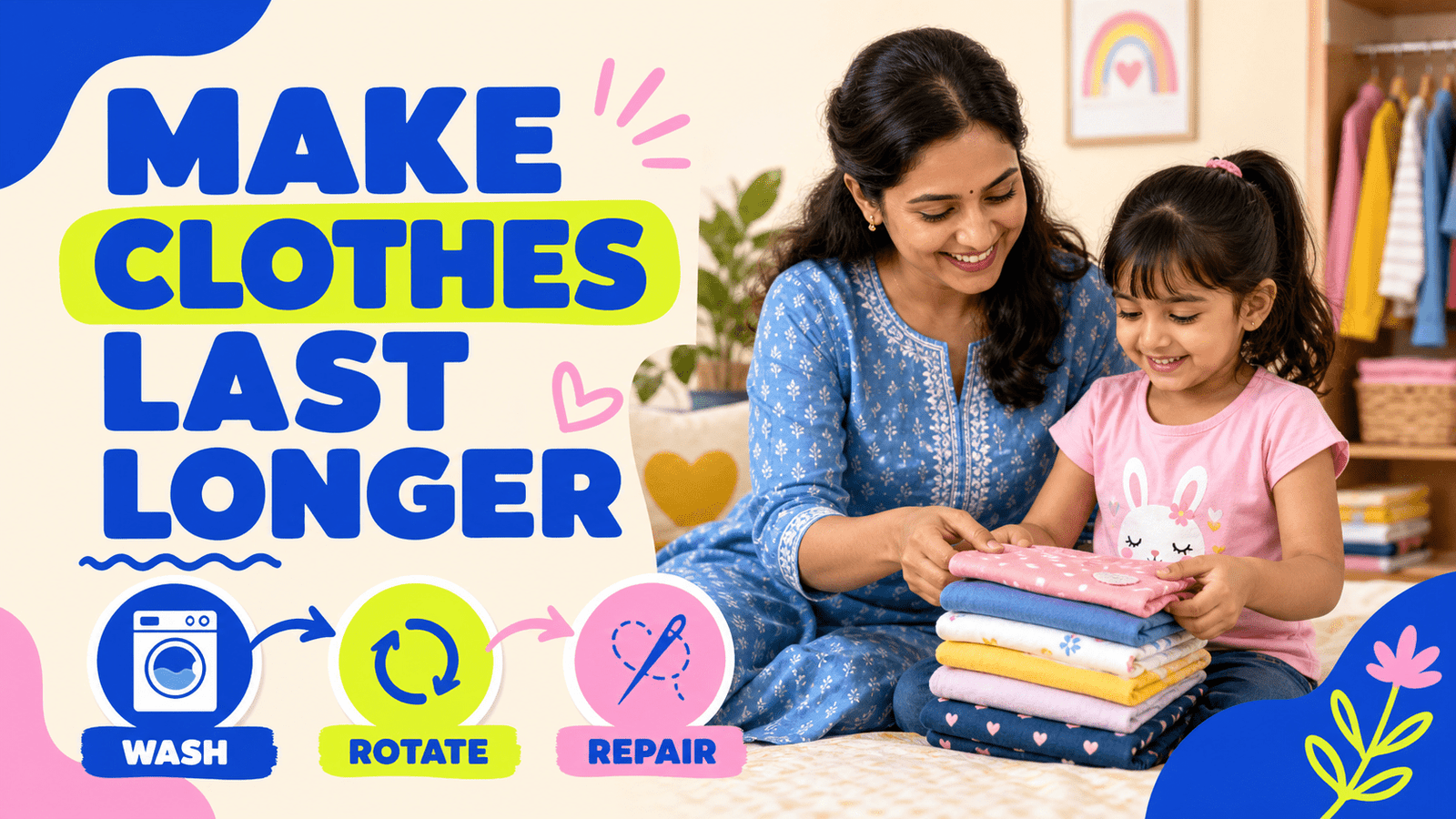
To make kids clothes last longer, buy the right current size, rotate garments, treat stains promptly, follow each care label, reduce unnecessary heat and repair small problems before they grow. Store clothes clean and fully dry, and reassess fit often so stretched necklines, strained seams or dragged hems are not mistaken for normal wear.
Longevity depends on the fibre, knit or weave, dye, print, construction, fit and care routine. No checklist can guarantee a lifespan, but consistent handling can prevent avoidable damage.
Start with fit
Clothes that are too tight experience repeated strain at the underarm, crotch, seat, knee and waistband. Clothes that are much too large may drag, twist or catch. Measure the child and compare the current chart instead of buying several sizes up “for growth.”
Use our kids clothing measurement guide and recheck when the child’s movement changes or seams begin to pull.
Rotate instead of repeating one favourite
A small usable rotation gives each garment time to be washed, dried completely and returned to storage. It also makes wear easier to notice. Rotation does not require a large wardrobe: the goal is to avoid one outfit carrying every playday and wash cycle while other pieces remain unused.
Keep complete sets together, but also mix the printed top with a plain bottom and the shorts with another suitable T-shirt. Our kids co-ord guide explains how coordinated pieces can work separately.
Handle stains early
Remove excess soil, blot liquid and pre-treat according to the care and cleaning-product labels. Check the mark before tumble drying. The University of Georgia Extension’s fibre-care reference notes that some stains can become difficult to remove when washed without appropriate pre-treatment.
Avoid a drawer full of unlabelled home mixtures. Keep products in original containers, pretest for colourfastness and never mix cleaning chemicals.
Wash according to the complete garment
The fibre name alone does not decide care. Elastic, trim, print and finish can need different handling from the base fabric. The FTC care-label guide explains that washing, drying, bleaching, ironing and warnings form part of a garment’s regular care instructions.
- Separate similar colours and compatible care settings.
- Close fasteners and turn printed pieces inside out.
- Remove loose sand or mud before washing.
- Do not overload the machine.
- Measure detergent rather than adding an arbitrary extra amount.
- Use only the permitted water temperature, cycle and drying method.
See our cotton kids clothing wash guide for a step-by-step routine.
Reduce avoidable friction
Friction happens during play and washing. Turn prints inward, fasten rough hook-and-loop tabs and separate them from soft knits. Use a mesh bag for a small item when machine washing is allowed. Do not scrub one spot so hard that the surface becomes fuzzy or the print cracks.
Dry without unnecessary stress
Follow the stated line, flat or tumble-dry instruction. Avoid extending a dryer cycle after the garment is already dry, and do not hang a heavy wet knit from a point that may stretch. Reshape gently while damp only when the instructions allow.
Make sure clothes are completely dry before folding. Damp storage can create odour and other problems. Keep wardrobes away from active leaks and direct contact with dusty floors.
Repair small damage early
Check seams, hems, waist elastic and labels after washing. Secure a loose seam before it opens further. A simple repair should match the garment’s construction; if you are unsure, use a local tailor rather than pulling loose threads or applying an unsuitable adhesive.
Do not alter tight children’s clothing in a way that creates hard knots, sharp ends or loose decorative parts. When elastic or fabric has lost its function, retire the item from active wear.
Store by current size and season
- Wash and dry garments completely.
- Repair seams and remove stains before long storage.
- Label groups by measured size rather than memory.
- Fold elastic without stretching it around a hanger.
- Use a clean, dry, ventilated storage area.
- Recheck fit before returning stored clothes to use.
Know when a garment should leave rotation
Retire or repurpose a garment when it restricts movement, will not stay secure, has an unsafe loose component, has thinning fabric at a high-stress area or cannot be cleaned appropriately. Passing clothes to another child is useful only when the garment remains safe, clean and functional.
Frequently asked questions
Does washing less always make clothes last longer?
No. Clothing should be washed when hygiene, soil and use require it. Follow the label and avoid unnecessary or overly harsh cycles.
Should I always buy a larger size?
No. Excess length or a loose waistband can interfere with wear now. Choose from current measurements and intended fit.
Should printed clothes be ironed?
Only as the care label permits. Some prints or trims may be damaged by direct heat.
Can small seam openings be repaired?
Often, yes, when caught early and repaired with an appropriate stitch. Use a tailor when the construction or location is unfamiliar.
How should outgrown clothes be stored?
Store them clean, fully dry, repaired and labelled by measured size in a dry space. Recheck their condition before reuse.
Explore A Tiny Bee kidswear and verify the current fit, product information and care label for every garment.
Bring the guide to life
Only currently available products are shown. Sizes and stock update live.