Half Sleeve Night Suit for Kids: A Fit-Point Guide
A practical, parent-friendly guide to choosing playful prints without compromising on comfort, fit or everyday wear.
Practical choices.
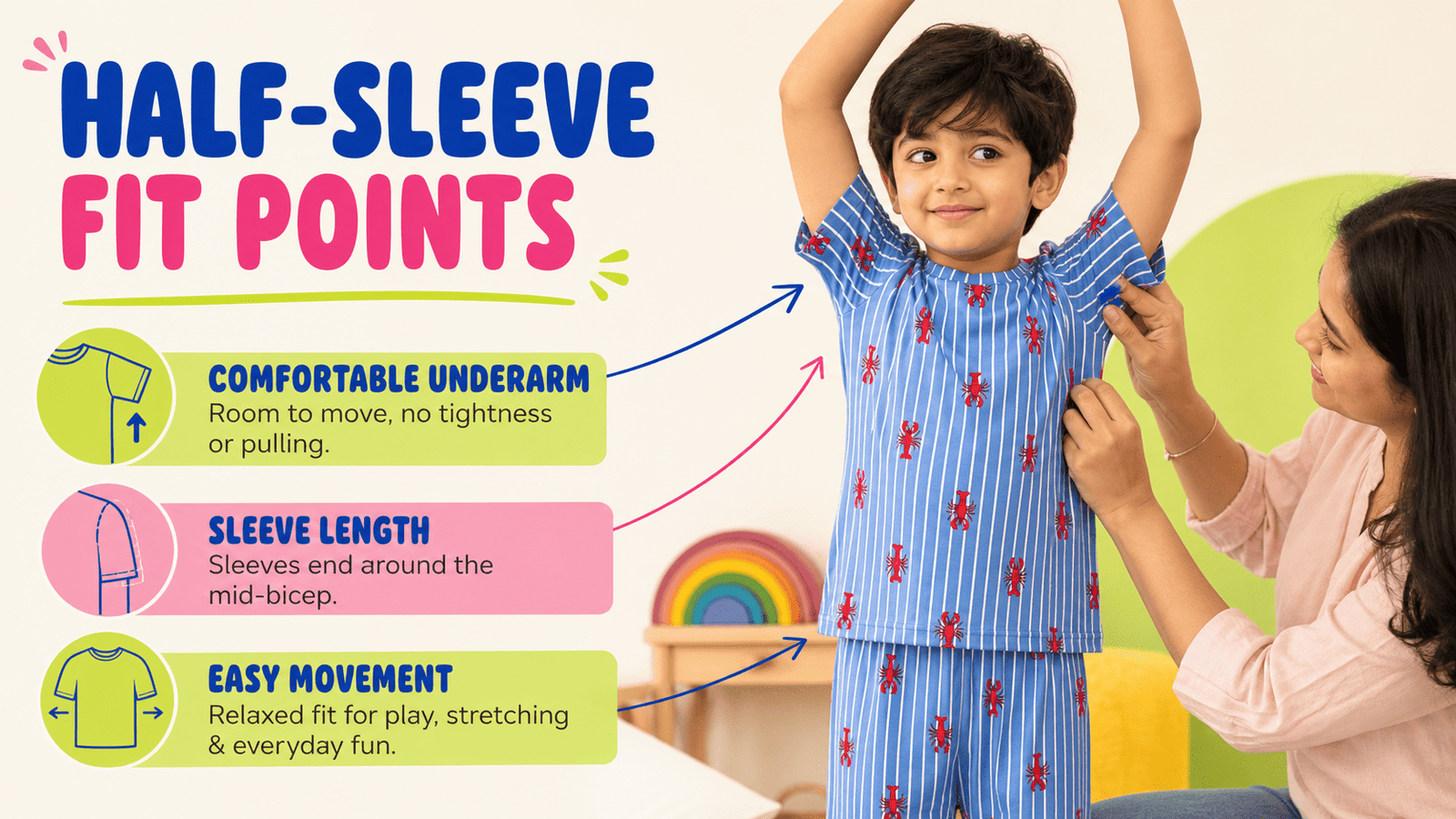
A half sleeve night suit for kids should be checked at seven fit points: neck, shoulder, armhole, sleeve opening, waistband, rise and leg length. The sleeve being short does not prove the set is roomy, cool or correctly sized. Treat the top and bottom as two garments that must work together.
This page focuses on half-sleeve construction. For the broader body-versus-garment measurement method, use our kids clothing measurement guide.
1. Neck opening
The opening must pass over the head without excessive force and then sit without persistent gaping or rubbing. Compare the product construction with a current top that is easy to put on. A wider-looking neckline in a photograph does not tell you its stretch or finished circumference.
2. Shoulder position
Check where the shoulder seam sits when the child stands naturally. A dropped shoulder may be intentional, while a standard shoulder that falls far down the arm can indicate excess width. The important question is whether the intended silhouette remains stable when the arms move.
3. Armhole movement
Ask the child to reach forward and raise both arms. The top should not pull sharply across the back, dig into the underarm or lift excessively. Armhole shape can limit movement even when the chest looks wide enough.
4. Sleeve opening
A half sleeve normally ends around the upper arm, where circumference can vary considerably. Check the opening while the arm is relaxed and bent. Do not rely on age alone; compare the finished opening with a similar top that fits.
| Fit point | Useful comparison | Warning sign |
|---|---|---|
| Neck | Current easy-on top | Hard to pull over head or persistent gaping |
| Shoulder | Intended seam position | Seam pulls or drops unintentionally |
| Armhole | Reach test | Digging, back pull or strong body lift |
| Sleeve opening | Upper-arm circumference | Grip marks or restricted bend |
5. Waistband
Elastic should hold the bottoms in place without relying on an extremely tight stretch. Confirm whether the chart gives a relaxed waist, stretched waist or body waist. These numbers are not interchangeable. Check comfort standing, sitting and after meals.
6. Rise and seat room
The rise controls how the bottoms sit from waist through crotch. Too little room can pull when sitting; too much can sag or twist. Let the child sit cross-legged, squat and climb onto the bed while you watch whether the waistband rolls or the crotch pulls.
7. Leg length
Full-length pajama bottoms should not sit under the heel. Extra length intended as growth room can bunch at the ankle or become a trip risk when walking. Compare inseam and outseam using the seller’s measurement method rather than guessing from overall height.
Check the set as a pair
One labelled size must fit both pieces, but children do not all have the same top-to-bottom proportions. If the top is right and the bottom is not, the set is not the correct practical fit. Write down the controlling measurements for both pieces before choosing.
A flat-garment comparison you can repeat
Choose a half-sleeve top and full-length pajama bottom that currently fit. Lay them on a flat surface without pulling the fabric. Use the same tape and the same start and end points for every comparison.
- Measure the top from underarm to underarm and note whether that is a flat width, not a full circumference.
- Measure shoulder seam to shoulder seam and top length from the same high point each time.
- Measure the sleeve opening flat and double it only if the seller also reports circumference.
- Measure the waistband relaxed, then note any seller-provided stretched measurement separately.
- Measure front rise and trouser length using the chart’s stated method.
Do not compare a flat width with a body circumference or a stretched elastic waist with a relaxed one. If the online chart does not define the method, ask before ordering. Our size-chart interpretation guide explains these common mismatches.
Recheck after washing
A set can change through washing, drying and wear. Follow the care label, reshape before drying when instructed, and compare the same fit points again before buying the next size or handing the set to another child. Do not assume the old age label still represents the garment’s current dimensions.
When not to size up
Do not choose the next label merely because the child will grow. Reject the larger size when the neck becomes unstable, the shoulder drops beyond the intended cut, the waistband cannot hold, or the trouser hem reaches under the heel. Growth room is useful only while the set remains wearable now.
Current A Tiny Bee construction
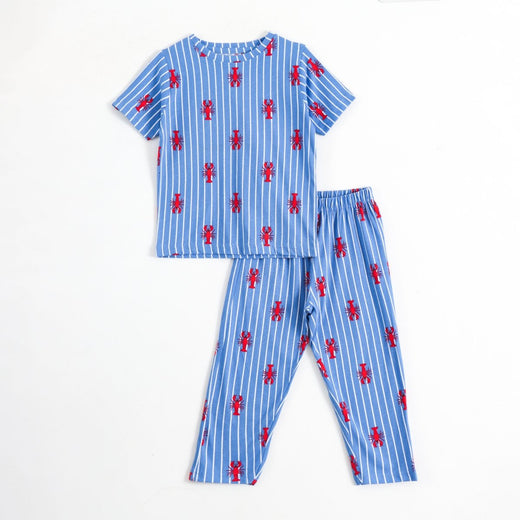
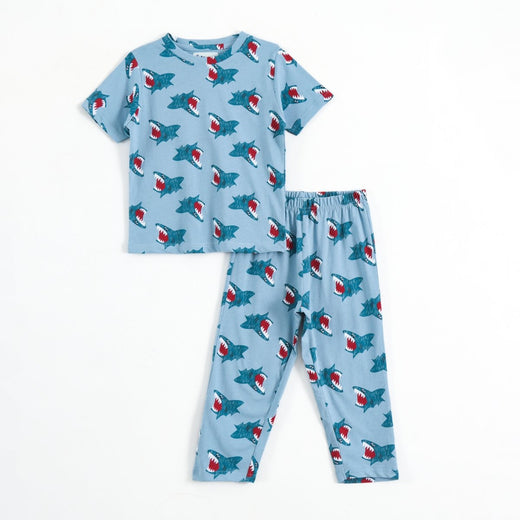
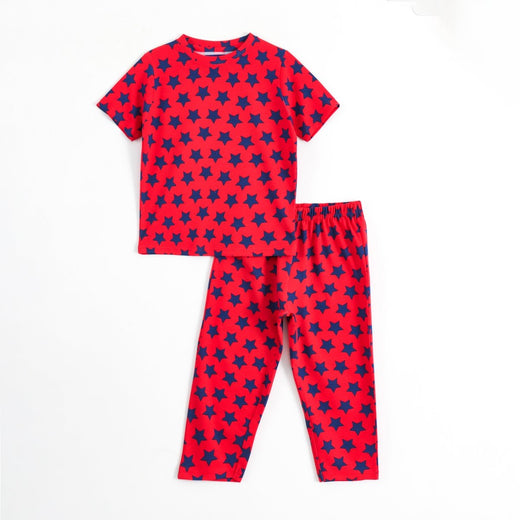
At the review date, A Tiny Bee’s three active pajama designs showed a crew-neck, half-sleeve top with matching full-length elastic-waist bottoms. The live size labels were 2–3 through 7–8, and the listed price was ₹349. These are current catalogue facts, not permanent promises; verify the exact product page before ordering.
Frequently asked questions
Is a half sleeve night suit the same as a shorts set?
No. A half-sleeve night suit can pair the top with full-length bottoms, while a shorts set uses shorts. Check both pieces rather than the top alone.
Should the shoulder seam sit exactly on the shoulder?
It depends on the intended cut. Compare the product’s intended silhouette and confirm that movement does not create pulling or instability.
How much growth room should pajama bottoms have?
Enough for the planned wear period without putting the hem under the heel, destabilising the waist or creating heavy bunching.
What if the top and bottom need different sizes?
A fixed two-piece set may not suit that proportion. Do not force the choice based on the better-fitting piece alone.
See current half-sleeve A Tiny Bee pajama sets and compare the live chart and variant selector.
Bring the guide to life
Only currently available products are shown. Sizes and stock update live.