How Should Kids Pajamas Fit? A Comfort and Movement Guide
A practical, parent-friendly guide to choosing playful prints without compromising on comfort, fit or everyday wear.
Practical choices.
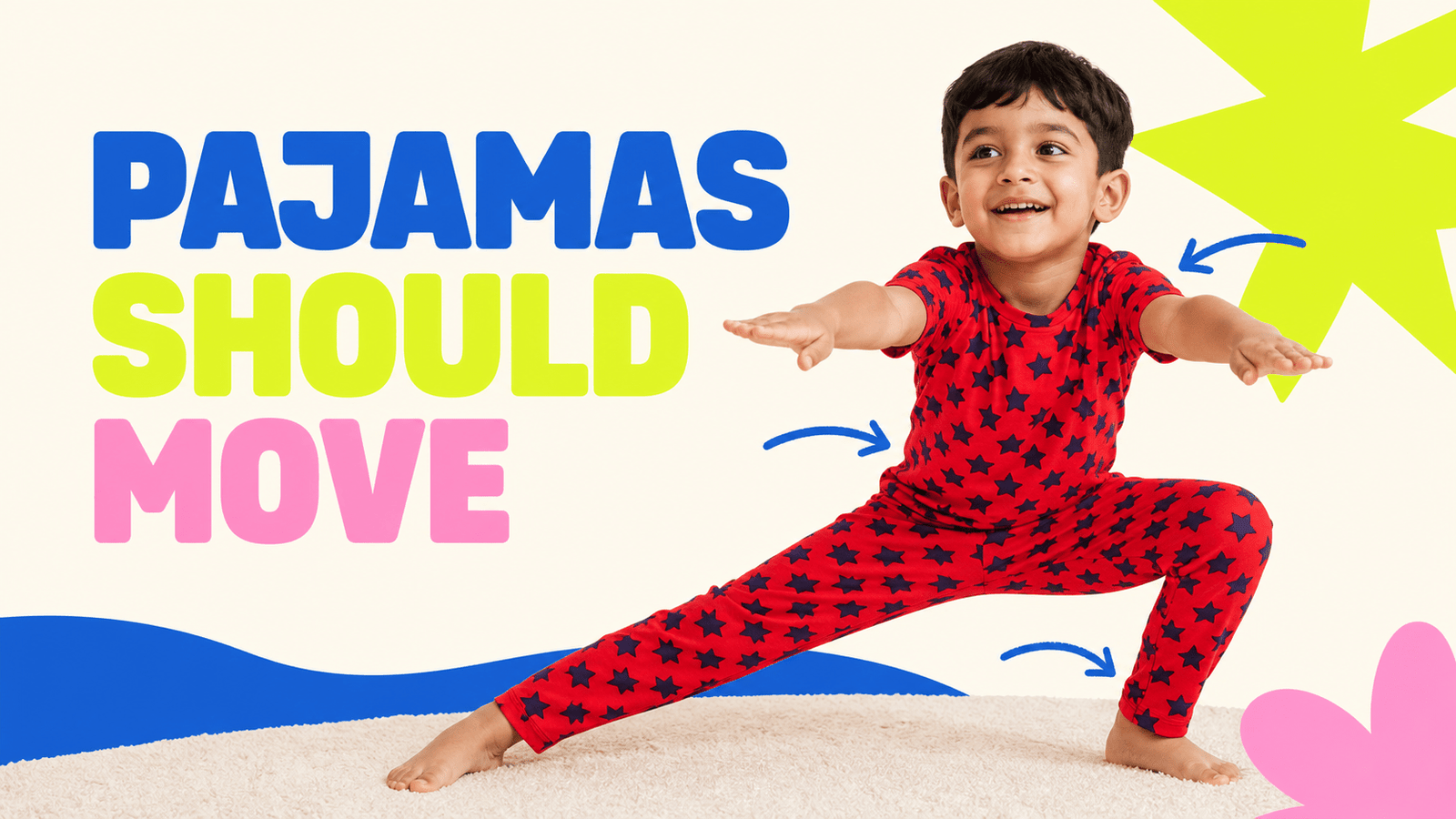
Kids pajamas should allow comfortable movement without excessive pressure, slipping or fabric bunching. The neck opening should pass over the head easily, shoulders should sit predictably, the waistband should remain in place without digging in, and full-length bottoms should finish without sitting under the heel. Always follow the product’s intended fit and current size chart.
This is a practical fit and movement guide, not a medical or regulatory assessment. Product requirements can differ by garment and market.
The five-minute pajama fit check
Keep tags attached and ask the child to move naturally:
- Put the top on and remove it without forcing the neck opening.
- Raise both arms overhead and reach forward.
- Sit cross-legged and then stand.
- Squat and take a long step.
- Walk normally and check whether the waistband slips or the hem goes under the heel.
Look for ease of movement and ask the child what feels uncomfortable. A technically “correct” size is not useful if a seam, opening or waistband bothers the individual child.
How the pajama top should fit
Neck
The opening should pass over the head comfortably and sit flat enough for the intended design. A stretched opening that does not recover or a tight opening that requires force is a reason to recheck the size and construction.
Shoulders
Shoulder seams provide a useful visual reference. They should not pull toward the neck, and they should not drop so far that the sleeve and body twist during normal movement—unless the product is intentionally designed as an oversized style.
Chest and body
The child should be able to reach, turn and sit without sharp pulling lines. At the same time, excessive loose fabric can bunch and feel inconvenient. Compare the result with the brand’s intended fit rather than applying a universal “tight” or “loose” rule.
Top length
Raise both arms and sit down. The top should provide the coverage the family expects without restricting movement. If it rides up substantially, check the chest, shoulder and length measurements together.
How pajama bottoms should fit
Waistband
The waistband should stay in its natural position while walking and sitting. It should not require repeated pulling up, twist inside its casing or leave a deep pressure mark. Test movement without folding or rolling the waistband, because that changes the designed fit.
Rise and seat
Ask the child to sit cross-legged and squat. Strong pulling at the crotch or back waist can indicate insufficient rise or seat room. Large folds and slipping can indicate too much room.
Thigh and knee
The child should be able to bend the knee and take a long step without the fabric stopping the movement. The right ease depends on the fabric and cut, so compare how the whole garment moves rather than pinching one section.
Length
For full-length bottoms, the hem should not sit under the foot. A small amount of growth room is different from several folds collecting at the ankle. Do not assume that excess length is harmless simply because the child may grow into it.
Age size versus body measurements
An age label is a category, not a guarantee. Children of the same age can have different heights, waists, hips and proportions. Measure the child and compare the numbers with the current chart. A well-fitting top and bottom at home can also be measured flat for comparison.
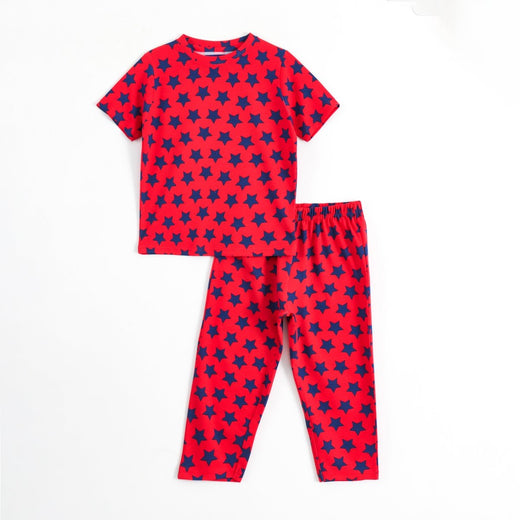
The current Starry Red Pajama Set is listed in sizes 2–3 through 7–8. It was priced at ₹349 when this guide was prepared. Check the live page for today’s availability and use the brand’s latest sizing information rather than relying on this article for a static measurement chart.
Should you size up?
Size up only when the measurements and product shape support that decision. A larger size can add body room and length, but it can also make the neckline, shoulders or waistband too loose. If the child is between sizes, compare the garment measurements and ask the seller how the specific style is intended to fit.
Fit problems and what to recheck
| What you notice | Recheck |
|---|---|
| Top pulls when arms lift | Chest, shoulder, sleeve opening and top length |
| Waistband slips | Waist measurement, elastic recovery and intended rise |
| Pulling while sitting | Rise, seat and thigh room |
| Hem sits under heel | Inside leg and overall length |
| Neck opening is difficult | Opening construction and size |
Fit can change after washing
Read the care label before washing. Fabric and garment dimensions can change depending on fibre, construction, finishing, water temperature, drying and handling. Do not remove tags or wash until you are satisfied with the unworn fit and the exchange conditions.
For material and construction checks, use the cotton night-suit buying checklist.
Frequently asked questions
Should kids pajamas be one size bigger?
No automatic rule works for every garment. Compare measurements with the product chart and check the neckline, shoulders, waistband, rise and length together.
How do I know if pajama bottoms are too long?
If the hem sits under the heel, creates several folds at the ankle or changes the child’s normal walking, recheck the inside-leg length and size.
How much room should the waistband have?
It should stay in place during movement without slipping or creating uncomfortable pressure. Exact ease varies with the elastic, rise and child.
Can I use another brand’s size chart?
No. Size labels are not standardized across every brand and style. Use the current chart for the exact product being purchased.
See the complete kids night-suit guide, then shop current A Tiny Bee pajama sets.
Bring the guide to life
Only currently available products are shown. Sizes and stock update live.