Kids Night Suits: How to Choose Fabric, Fit and Sleeve Length
A practical, parent-friendly guide to choosing playful prints without compromising on comfort, fit or everyday wear.
Practical choices.
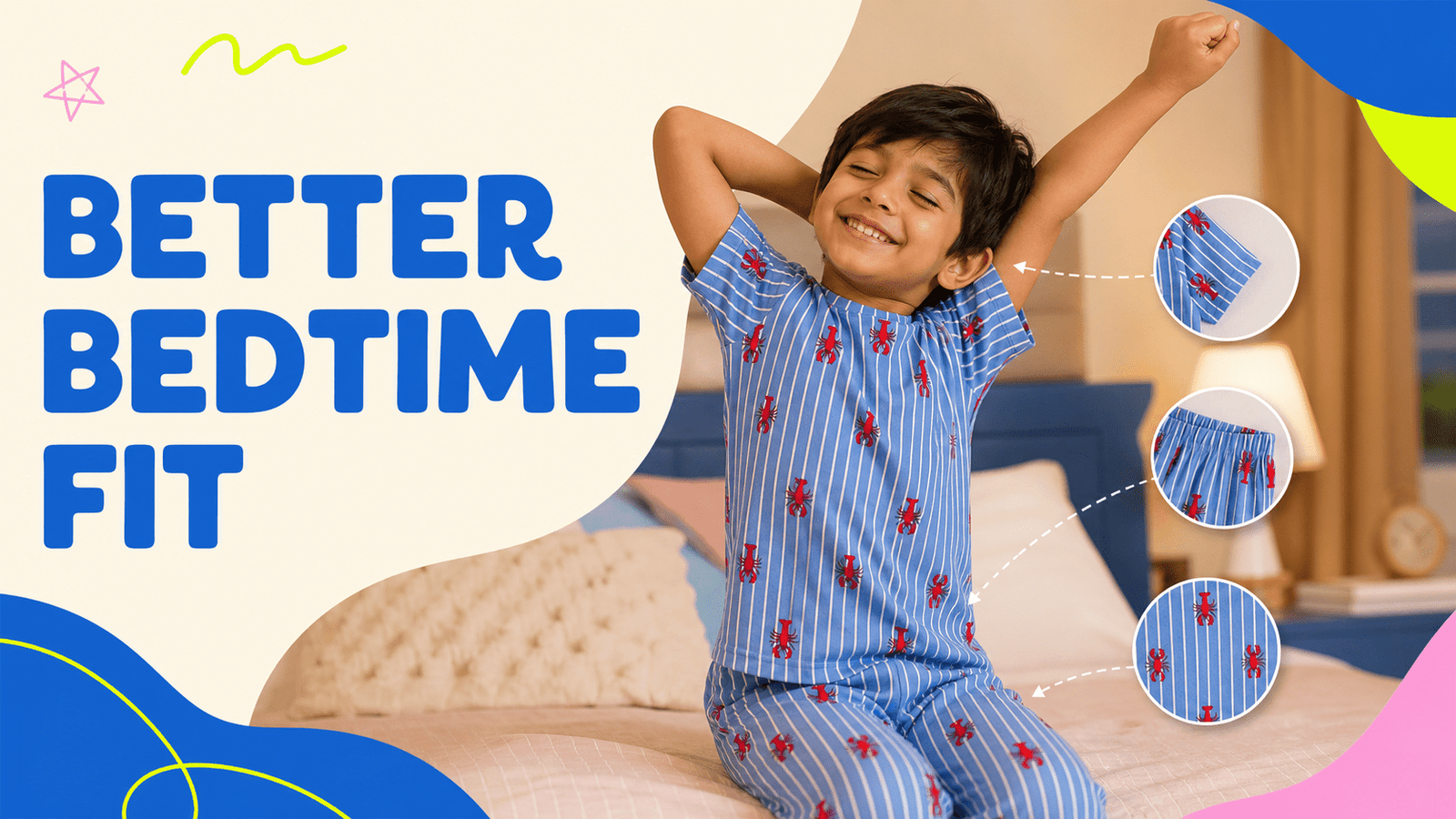
Choose a kids night suit by matching the fabric information, fit and coverage to the child’s room temperature and bedtime routine. The top should allow easy arm movement without a tight neck opening, the waistband should stay in place without digging in, and the bottoms should not bunch excessively at the ankle. Use measurements—not age alone—and follow the garment’s care label.
In India, “night suit” and “pajama set” commonly describe a coordinated sleepwear top and bottom. Some sets use shorts, while others use full-length bottoms. The right option depends on the child, season, room and household routine; a product name cannot answer those questions by itself.
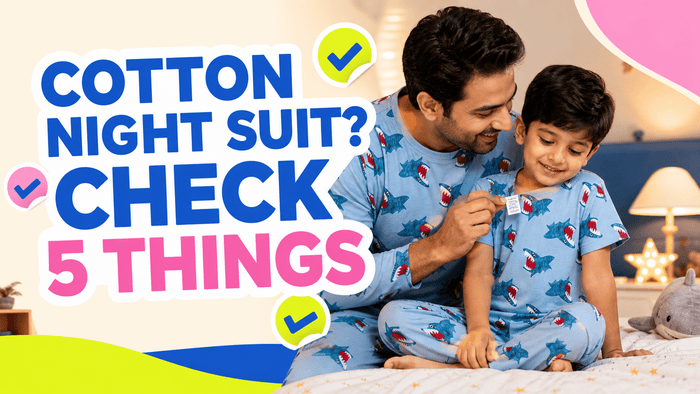
Quick night-suit buying checklist
- Compare the child’s current measurements with the brand’s size chart.
- Read the exact material description rather than relying on “soft” or “premium.”
- Check neck opening, shoulder position, sleeve opening and top length.
- Check waistband comfort, rise, seat room and leg length.
- Choose coverage for the actual room temperature—not only the outdoor season.
- Confirm the live price, size availability and exchange policy before ordering.
1. Start with room conditions
A warm, non-air-conditioned room can call for a different set from a strongly air-conditioned bedroom. Short sleeves can provide less arm coverage, while full-length pajama bottoms cover the legs. Families can add or remove a separate light layer when conditions change rather than forcing one heavy set to cover every season.
Consider the bedtime routine too. A child who reads on the floor, moves around before bed or changes independently may benefit from uncomplicated separates and an easy waistband. Any decision about sleep temperature or a child’s health should come from a qualified professional; clothing guidance cannot diagnose or treat sleep problems.
2. Read the fabric description carefully
Look for a specific material or composition statement, then check the label when the garment arrives. “Cotton,” “cotton blend” and “100% cotton” are different claims. Surface feel, fabric weight, knit structure and finishing can also affect how a night suit feels and how it changes after washing.
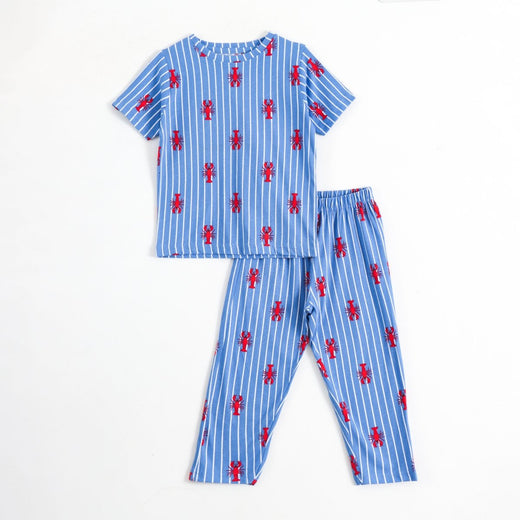
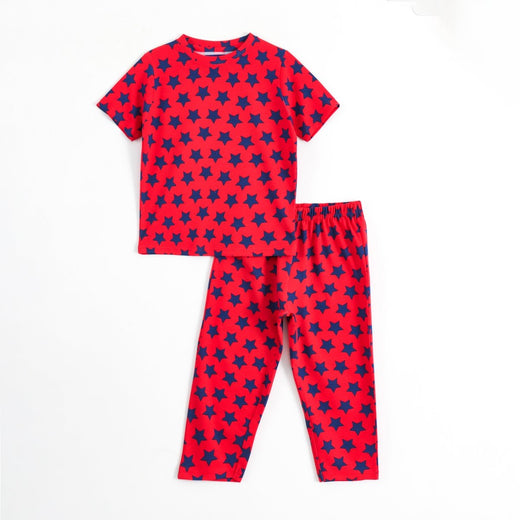
A Tiny Bee’s live catalogue tags its three currently active pajama designs as cotton. That catalogue tag should not be expanded into a percentage claim unless the product page or sewn-in label provides one. Our cotton night-suit checklist explains how to read those details precisely.
3. Check the top in four places
- Neck opening: it should pass over the head comfortably and return to shape.
- Shoulders: seams should sit predictably rather than pulling toward the neck or dropping far down the arm.
- Sleeves: the child should be able to raise both arms without the whole top riding up.
- Hem: it should provide comfortable coverage when sitting and moving.
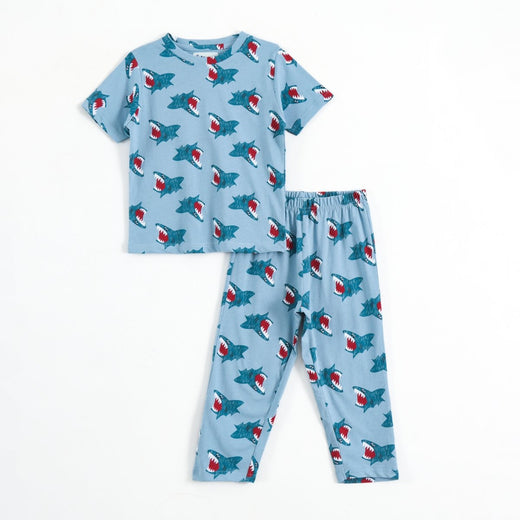
The Shark Splash Pajama Set is a current A Tiny Bee example with a short-sleeve crew-neck top and matching full-length bottoms. When this guide was prepared, it was listed at ₹349 with sizes 2–3 through 7–8 available. Always verify the live product page because stock and prices can change.
4. Check the bottoms for movement and length
An elastic waistband should feel secure without deep pressure. The child should be able to sit cross-legged, squat and take a long step without the fabric pulling sharply at the crotch, seat or thigh. Full-length bottoms should not collect in large folds under the heel.
Excess length is not automatically “room to grow.” It can make the garment inconvenient now. If measurements fall between sizes, compare the actual garment measurements and intended fit rather than choosing a larger age label by default.
5. Decide between short and long bottoms
| Option | Useful when | Check |
|---|---|---|
| Short-sleeve top + shorts | The room is consistently warm and the child prefers less coverage | Shorts rise, thigh room and waistband |
| Short-sleeve top + long bottoms | You want leg coverage without long sleeves | Inside leg length and ankle bunching |
| Long-sleeve top + long bottoms | The room is cooler or the child prefers more coverage | Cuff fit and whether layers make the child too warm |
This table is a wardrobe guide, not a temperature prescription. The parent or caregiver should assess the room and the individual child.
6. Look at seams, elastic and print care
Before removing tags, inspect the underarm, side seam, crotch, inner leg and waistband join. Stitching should be reasonably even and secured. Gently stretch and release the waistband to check that it recovers evenly. Follow the sewn-in care label, especially for printed fabrics; high heat or harsh treatment can affect colour and shape.
7. Compare total value
The best-value night suit is not simply the one with the largest discount badge. Compare the final checkout cost, clarity of product information, likely frequency of wear, care requirements and exchange terms. A coordinated set that fits well and gets regular use can have a lower cost per wear than a cheaper set that remains in the drawer.
For a general value framework, see our kids clothes under ₹500 quality checklist.
Continue with the checklist that matches the purchase: summer night suits, half-sleeve night-suit fit, or unisex pajama sets. These pages narrow the decision without replacing the live product chart or size selector.
Frequently asked questions
What is the difference between a kids night suit and pajamas?
In everyday Indian retail language, the terms often overlap. Both can describe a coordinated top and sleepwear bottom. Check the actual garment pieces, sleeve length and bottom length instead of relying only on the category name.
Should kids pajamas be loose or fitted?
They should allow normal movement without excessive fabric bunching or pressure. Follow the product’s intended fit and size chart. Different products and markets can have specific requirements, so do not apply one generic rule to every garment.
Should I buy a larger night suit for growth?
Not automatically. Too much extra length or a loose waistband can make the set impractical now. Compare measurements and consider how the specific garment is designed to fit.
How many pajama sets does a child need?
That depends on laundry frequency, climate, nighttime accidents, travel and how often sleepwear is changed. Use our pajama-set quantity formula: start from the number of nights between reliable wash-and-dry cycles, then account for planned rewears, expected changes and one clean spare.
Explore A Tiny Bee kids pajama sets and confirm today’s size, price and availability on each product page.
Bring the guide to life
Only currently available products are shown. Sizes and stock update live.