Unisex Pajama Set for Kids: Print, Fit and Size Checklist
A practical, parent-friendly guide to choosing playful prints without compromising on comfort, fit or everyday wear.
Practical choices.
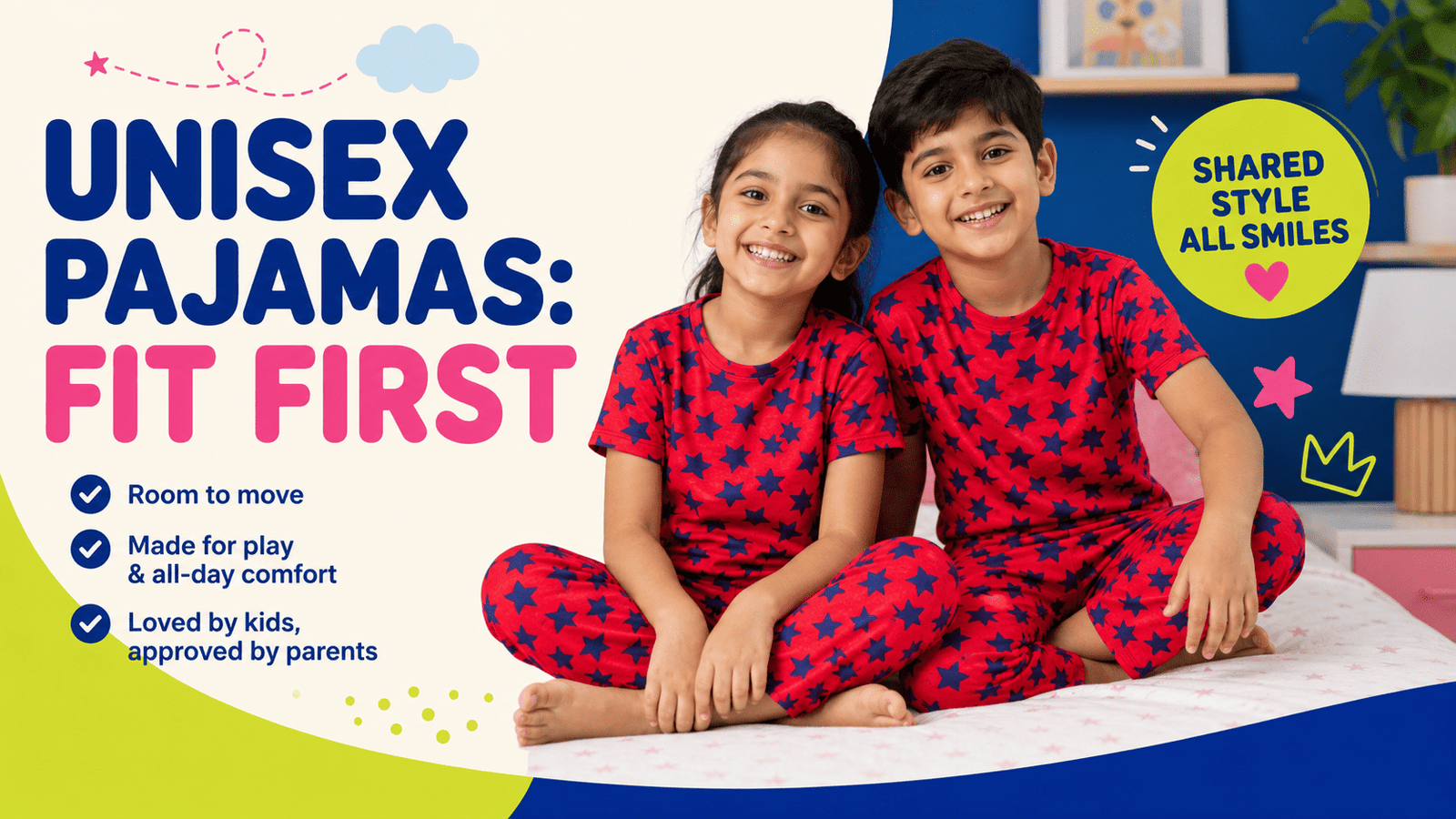
A unisex pajama set for kids describes how a style is presented, not a universal body shape or guaranteed fit. Choose by the child’s print preference, current measurements, garment openings and the way the top and bottom work together. “Unisex” does not replace a size chart.
For the wider wardrobe case for gender-neutral clothing, read our unisex kids clothes guide. This page owns the narrower pajama purchase decision.
Start with the child’s print preference
Stars, sea animals, stripes and other motifs do not have to be assigned by gender. Show the actual product image to the child when practical. A print they choose is more useful than a label that adults assume they should prefer.
Use measurements, not gender shortcuts
Children of the same age can have different height, chest, waist, rise and limb proportions. Compare the exact product chart with current measurements or with a similar pajama set that fits. Confirm whether the seller lists body measurements or finished-garment measurements.
- Top: neck opening, shoulder, chest, armhole and length.
- Bottom: relaxed and stretched waist, rise, seat room and leg length.
- Set: both pieces must work in the same labelled size.
Check openings and adjustability
A crew neck, elastic waist and pull-on construction can simplify dressing, but the actual dimensions still matter. Check that the neck passes comfortably over the head, the sleeve opening does not grip and the waistband stays in place through sitting and movement.
Plan shared-wardrobe use honestly
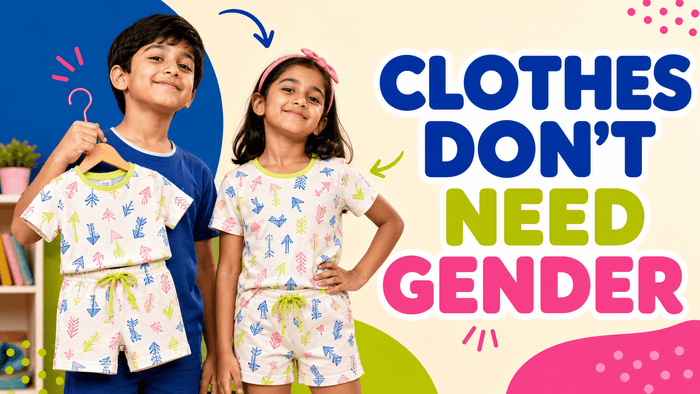
A unisex presentation can make a set easier to pass between siblings or cousins when the recipient likes the print and the measurements work. Do not assume the same age label will fit the next child. Recheck the garment after washing and compare it with the next child’s current measurements.
| Shared-use check | Why it matters |
|---|---|
| Print accepted by the next child | Shared use only works if the child wants to wear it |
| Neck and elastic condition | Openings can change with wear and laundering |
| Current garment measurements | The label does not show shrinkage or wear |
| Seams and fabric condition | Repair needs should be handled before handover |
Do not infer fabric performance from “unisex”
Unisex does not tell you fibre content, fabric weight, stretch, finishing, colourfastness or thermal comfort. Read the product information, the sewn-in composition label and care instructions separately. Avoid claims such as “breathable,” “hypoallergenic” or “shrink-proof” unless the exact product evidence supports them.
Separate catalogue labels from product evidence
Online stores use titles, tags and collection labels to organise products. Those fields help discovery, but they do not replace the exact product image, size chart, fibre declaration or live variant selector. Treat each field according to what it can prove.
| Field | What it can help with | What it cannot prove |
|---|---|---|
| Unisex label | How the style is presented | Fit for every child |
| Age size | Narrowing the chart | Body proportions or garment measurements |
| Catalogue fibre tag | Finding possible material information | The complete sewn-in composition for the delivered item |
| Product photo | Colour, print and visible construction | Stretch, fabric weight or feel |
| Live variant selector | Current listed availability | Future stock |
Measure for the next wearer
If a set may be shared later, record its garment measurements after the current child has outgrown it and after the final wash. Lay the pieces flat and note top width, top length, sleeve opening, relaxed waistband, rise and trouser length. Store those measurements with the set instead of relying on the faded age label.
Before handover, check seams, elastic recovery, stains, holes and care-label legibility. Repair what can be repaired and retire a garment that no longer functions safely. Shared use is a practical option, not an obligation to keep a worn set in circulation.
How to compare two prints fairly
Keep fit and construction constant while asking which print the child prefers. If two designs use the same pattern and price, compare live size stock, colour preference and how clearly the product page shows the garment. Do not rank one print as “for boys” or “for girls” unless the child makes that choice.
Current A Tiny Bee examples
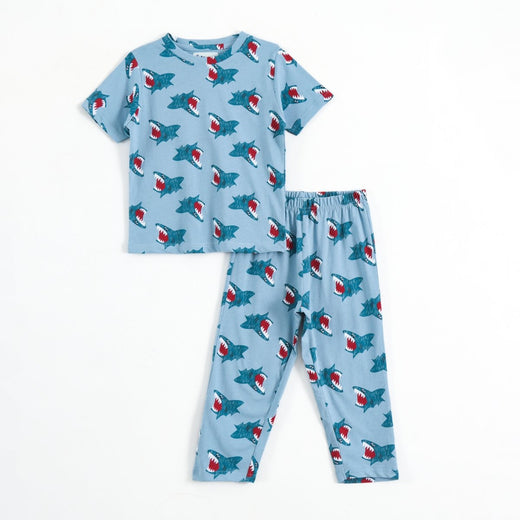
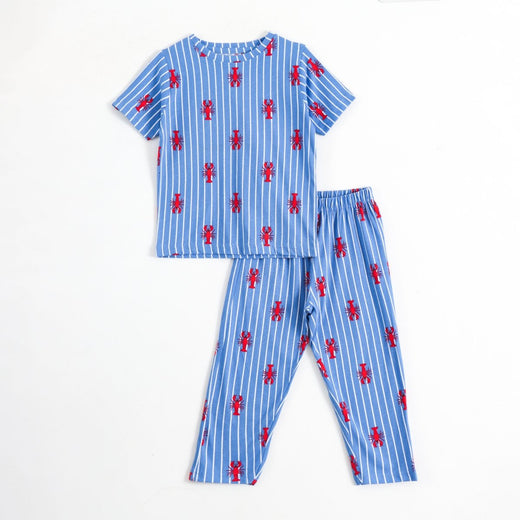
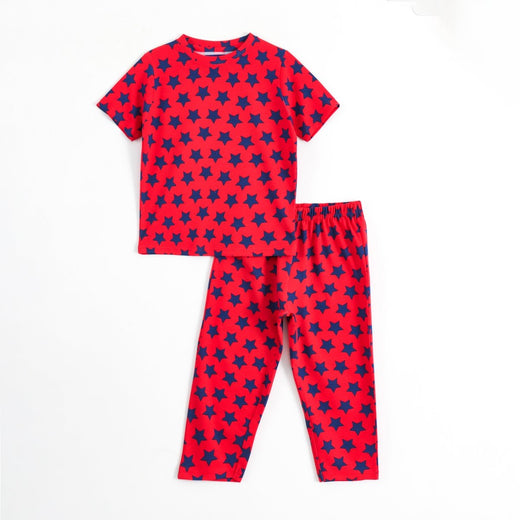
On 19 July 2026, A Tiny Bee’s active unisex pajama collection included Shark Splash, Lobster Stripe and Starry Red. Each was listed at ₹349 with size labels 2–3, 3–4, 4–5, 5–6, 6–7 and 7–8 available. The collection tags the products as cotton. Confirm the live page and sewn-in label because catalogue facts and stock can change.
A five-step choice
- Let the child respond to the actual print.
- Compare top and bottom measurements separately.
- Check neck, sleeve, waist, rise and leg length.
- Read fibre and care information independently of the unisex label.
- Verify the live price and size stock immediately before checkout.
Frequently asked questions
Do unisex pajamas fit every child the same way?
No. The presentation is unisex, but fit still depends on the child’s measurements and the garment pattern.
Can brothers and sisters share the same pajama set?
They can when each child likes the print and the current garment measurements fit. Recheck condition and size before handover.
Does unisex mean oversized?
No. It does not specify looseness. Use the exact chart and intended silhouette.
Are all A Tiny Bee pajamas unisex?
The three active designs reviewed were presented as unisex. Check the current listing because the assortment can change.
Browse current unisex A Tiny Bee pajama sets and verify live product details and size availability.
Bring the guide to life
Only currently available products are shown. Sizes and stock update live.