Are Cotton Clothes Better for Children? A Balanced Guide
A practical, parent-friendly guide to choosing playful prints without compromising on comfort, fit or everyday wear.
Practical choices.
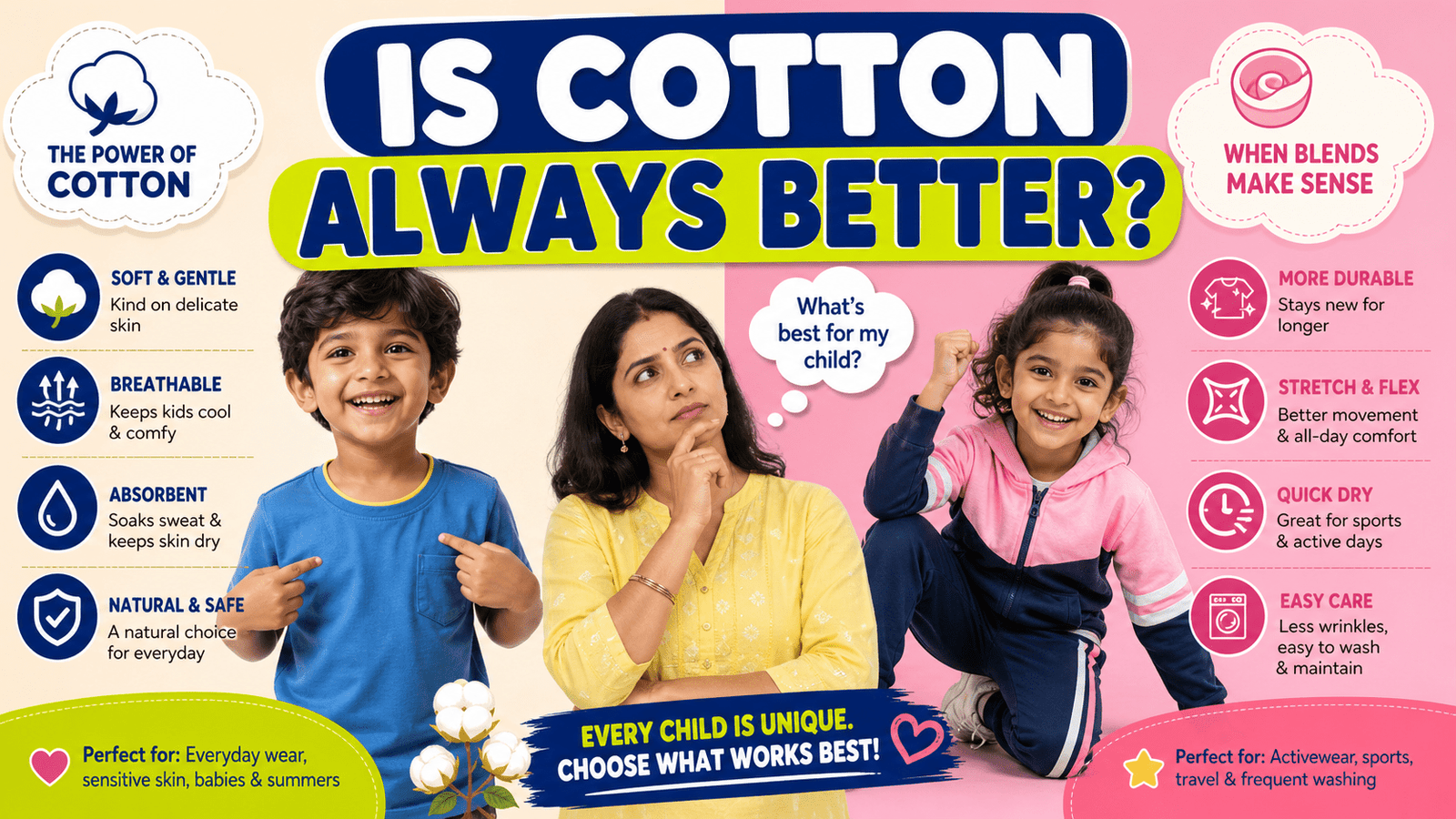
Short answer: cotton clothes can be a practical choice for many children, especially when the garment is soft, loose enough to move in and suitable for the weather. But “cotton” alone does not prove that a garment will feel better. The exact fibre percentage, knit or weave, seams, fit, colour finish, activity, washing routine and the child’s own response all matter.
This is a decision guide, not a medical rule. A child with persistent itching, eczema or a worsening rash needs individual advice from a qualified clinician. Clothing can reduce avoidable friction or overheating, but it does not diagnose or treat a skin condition.
When can cotton be a useful choice?
Cotton is often chosen for everyday children’s clothing because it can feel soft, absorb moisture and work in familiar wash routines. The American Academy of Dermatology advises loose-fitting cotton clothing for children when heat, sweat or clothing can trigger eczema. The American Academy of Pediatrics also recommends thin, loose-fitting cotton clothing when discussing heat rash prevention. These are context-specific recommendations, not proof that every cotton garment is automatically suitable for every child.
The first useful question is therefore not “Is cotton always best?” but “Does this exact garment fit the child, activity and climate?” A soft top that pulls across the shoulders, a waistband that leaves a deep mark or a thick garment used during active outdoor play can still feel uncomfortable regardless of the fibre name.
Use a six-part clothing check
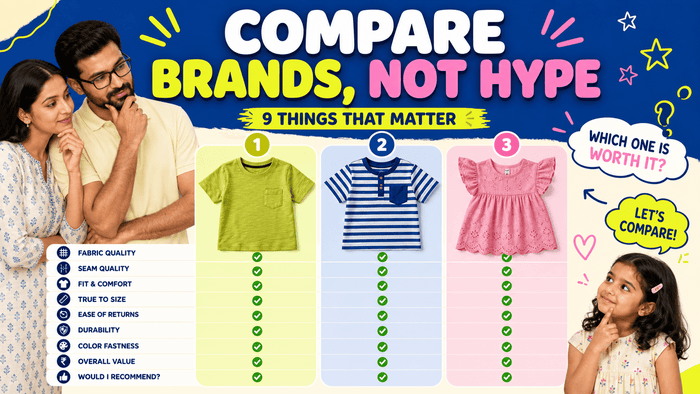
- Read the exact fibre statement. Look for a percentage composition on the current product information and sewn-in label. Do not infer fibre content from a photograph, colour, texture or product title.
- Check the construction. Feel or inspect the neck seam, armholes, waistband, labels and print surface. Raised, stiff or poorly finished areas can create friction.
- Check movement. Ask the child to reach, sit, squat and walk. The garment should not pull sharply at the neck, shoulder, rise or thigh.
- Match the weather and activity. Thin, loose clothing may be more practical in heat, while sun exposure, insects, air-conditioning and evening temperatures can change the needed coverage.
- Plan for moisture. Absorbing sweat is not the same as drying instantly. Pack a dry change for long, humid or very active days.
- Follow the care label. Fibre, colour, print and construction can react differently to heat, detergent and drying. The label is the garment-specific instruction.
For a deeper fibre comparison, read cotton versus polyester for kids. If you want to inspect fabric and stitching before checkout, use the cotton clothing quality checklist.
Cotton does not remove the need to check fit
A comfortable fibre cannot rescue the wrong size. Compare the child’s current measurements with the garment information rather than buying by age alone. Shoulder position, chest room, neck opening, sleeve room, waistband stretch, rise and leg length each affect how a set behaves during play.
Elastic waistbands should recover after stretching without twisting or digging in. Shorts should allow sitting and squatting without pulling at the crotch. A top should remain comfortable when both arms are raised. When two sizes seem possible, compare the actual measurements and the intended fit instead of automatically sizing up.
What about sensitive or eczema-prone skin?
The American Academy of Dermatology’s childhood eczema guidance recommends loose-fitting cotton clothing in relevant situations, removing irritating tags and washing new clothes before wear. That advice should be used alongside the child’s treatment plan and known triggers. A “cotton” marketing phrase is not a substitute for the full label, construction check or medical advice.
Before first wear, inspect the garment, follow its wash instructions and notice the child’s response. Stop using an item that repeatedly rubs, overheats or appears to worsen discomfort. For a cautious, non-diagnostic buying process, see the kids clothes for sensitive skin checklist.
A live product example—without guessing the fibre
At the 19 July 2026 inventory review, A Tiny Bee’s Sharky Splash Shorts Set was active, presented as unisex, priced at ₹289 and available for sale across seven listed sizes from 1–2 through 7–8, with 316 units in total inventory. Those are time-stamped catalogue facts. They do not establish fibre composition. Confirm the current product information, selected-size availability, measurements, care instructions and final checkout total before buying.
This separation matters: trustworthy shopping content should distinguish what the catalogue proves from what a buyer still needs to verify. Browse the current A Tiny Bee kidswear collection only after deciding which evidence matters for your child.
A quick parent decision
- Choose the garment when the fibre label is clear, the construction feels smooth, the fit supports movement and the care routine is realistic.
- Compare another option when composition is vague, key measurements are missing, seams feel rough or the intended activity needs different coverage.
- Ask for clinical advice when a child has persistent, severe or worsening skin symptoms.
Frequently asked questions
Are 100% cotton clothes always better for children?
No. Cotton can be useful, but comfort also depends on garment weight, construction, fit, weather, activity, washing and the child’s individual response.
Is a cotton blend automatically unsuitable?
No. Read the exact percentages and judge the complete garment. A blend may behave differently in drying, stretch, durability and hand-feel, so compare it against the intended use.
Should new kids clothes be washed before wear?
Follow the garment’s care instructions. The American Academy of Dermatology specifically recommends washing new clothes before wear in its childhood eczema guidance.
Can clothing cure heat rash or eczema?
No. Clothing choices may reduce avoidable heat, sweat or friction in some situations, but they do not replace diagnosis or treatment. Seek medical advice for concerning symptoms.
Why do people say cotton is good for kids?
Cotton is absorbent and can be useful in many everyday garments, but “good” is not a complete product specification. Fabric weight, construction, finish, fit, seams, weather, activity and care all affect the finished garment. Confirm the exact fibre label instead of assuming every cotton item performs the same way.
Sources and review method
- American Academy of Dermatology: childhood eczema, sport and clothing
- HealthyChildren.org: heat rash in babies and young children
- A Tiny Bee Shopify Admin inventory review, 19 July 2026. Availability and price can change.
Bring the guide to life
Only currently available products are shown. Sizes and stock update live.