Unisex Kids Clothes: A Smarter Everyday Wardrobe for Ages 1–8
A practical, parent-friendly guide to choosing playful prints without compromising on comfort, fit or everyday wear.
Practical choices.
Unisex kids clothes are garments designed and presented for any child rather than divided into “boys” and “girls” ranges. For an everyday wardrobe, the practical advantages are simpler shopping, more ways to reuse pieces, easier sibling hand-me-downs and more freedom for children to choose the prints and colours they enjoy.
Unisex does not mean beige, plain or oversized. A useful unisex wardrobe can be bright, printed and expressive. The important questions are whether the garment fits the individual child, supports movement and works with other clothes already at home.
What makes kidswear genuinely unisex?
A product title alone does not make a garment unisex. Look for a cut that is not dependent on gendered styling, a size range that is explained consistently, and product photography or copy that does not restrict who “should” wear a print. Playful animals, food, space, vehicles, nature and abstract graphics can all work across wardrobes.
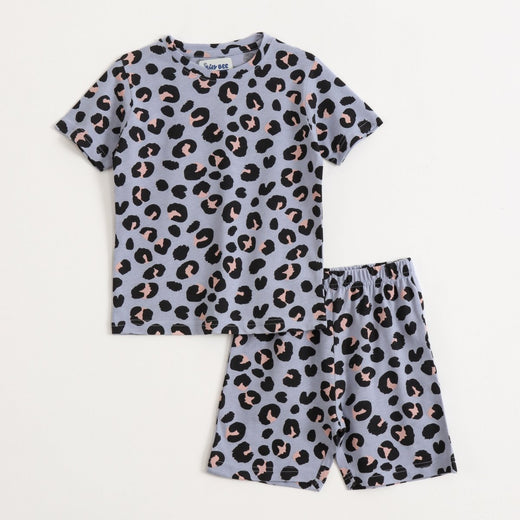
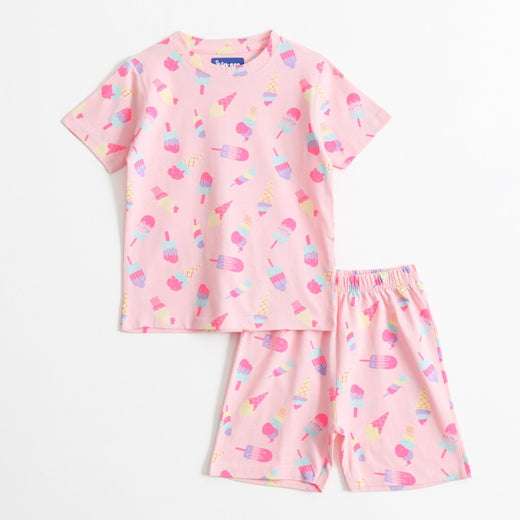
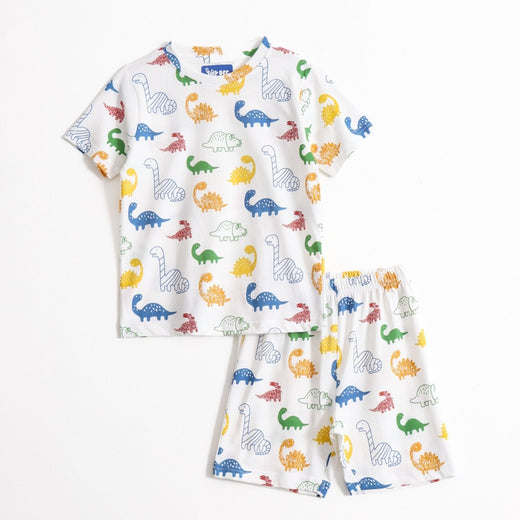
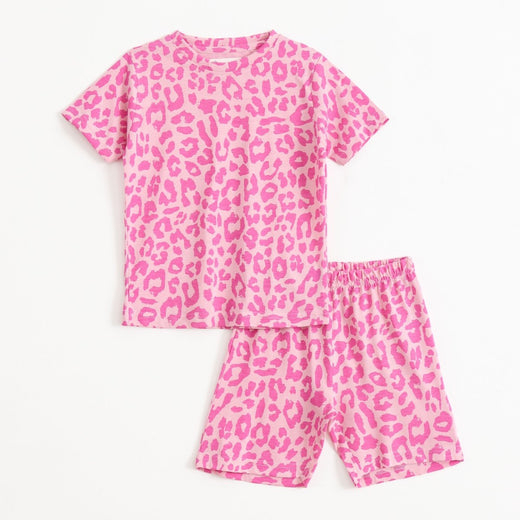
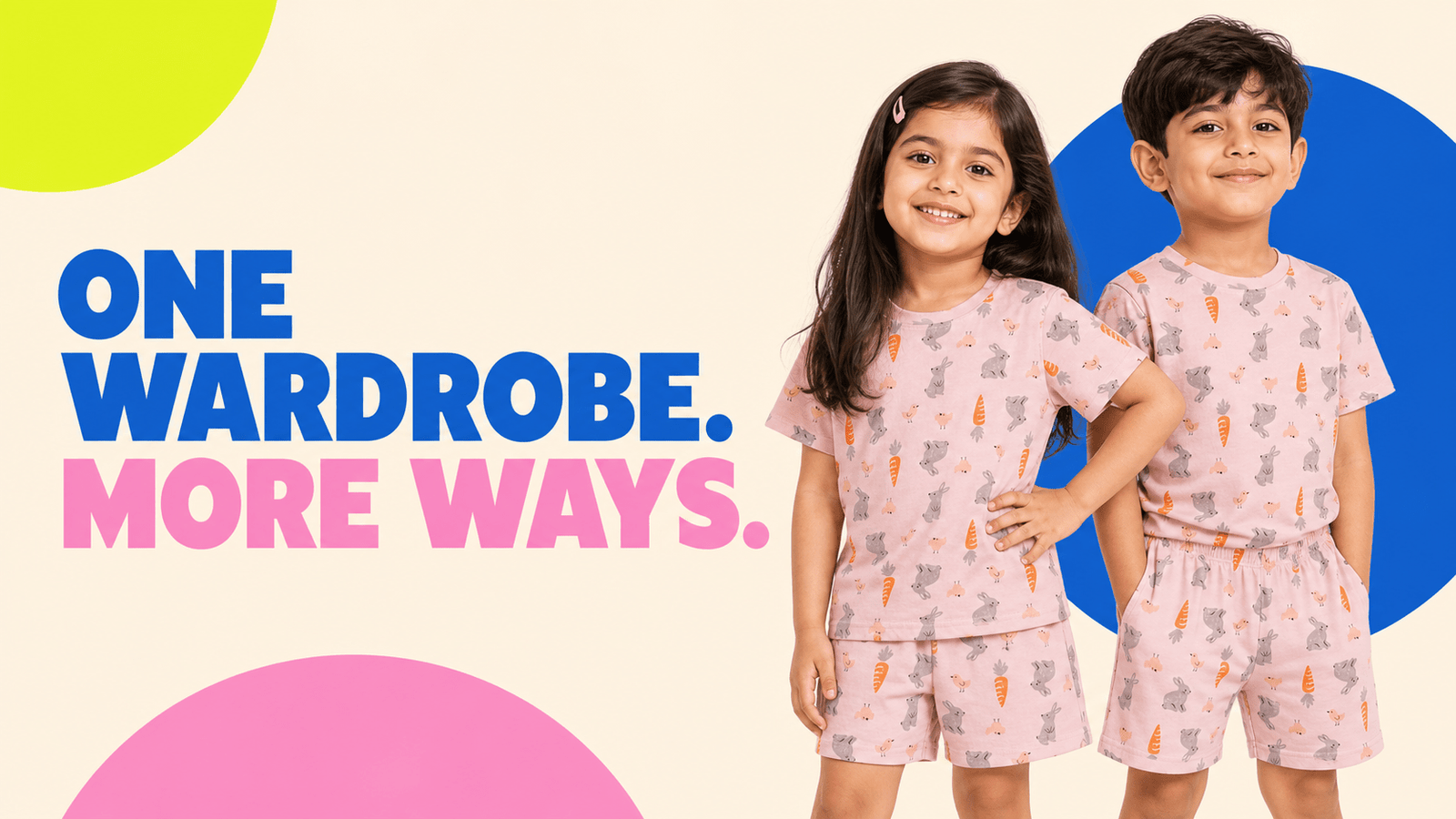
A Tiny Bee’s unisex shorts-set collection groups coordinated T-shirts and shorts intended for children across the listed age range. Current examples include sea-life, bunny, dinosaur, safari and abstract prints.
Five practical benefits of unisex kids clothes
1. Children get more choice
When clothing is not split into rigid sections, a child can respond to the print, colour and feel of the garment. That turns dressing into a manageable choice: “sharks or bunnies?” is often more useful than “boys or girls?”
2. Sibling hand-me-downs become easier
If two children have compatible sizes at different times, a well-kept unisex set can move between them without feeling assigned to one gender. This does not guarantee that every garment will survive every growth stage; condition, fit and each child’s preference still matter. It simply keeps more options open.
3. The wardrobe is easier to combine
A coordinated set already creates one outfit. If its top works with neutral shorts and its bottom works with a plain T-shirt, it can create several more. Choosing prints that connect with two or three colours already in the wardrobe reduces “orphan” pieces that rarely get worn.
4. Shopping becomes more focused
Parents can compare fabric information, measurements, waistband construction, care and price instead of browsing two nearly identical gendered ranges. That makes it easier to use the same quality checklist for every child.
5. Cost per wear can improve
A piece that works across outfits—or can later be passed to a sibling—has more potential wears. The real value still depends on comfort, wash performance and whether children actually choose it. Unisex design creates the opportunity; it does not replace quality.
How to build a small unisex everyday wardrobe
Begin with the child’s weekly routine and laundry frequency. A practical mini-capsule might include several comfortable tops, a few easy bottoms, two or three coordinated sets and the layers required for local weather. The exact number differs by family, climate, school requirements and how often laundry is done.
For a complete count-and-compatibility exercise, use our 14-piece kids capsule wardrobe guide. Its worked example is optional rather than a universal minimum; keep only combinations that fit the child’s current routine, climate and laundry cycle.
Use a simple colour bridge. For example, the current Bunny Carrot Shorts Set combines blush pink, grey and orange. Its top can be paired with grey or cream bottoms, while the printed shorts can work with a plain top in one of those colours. The set was listed at ₹289 in sizes 1–2 to 7–8 when this guide was prepared; verify current availability on the product page.
Fit is individual—even when the design is unisex
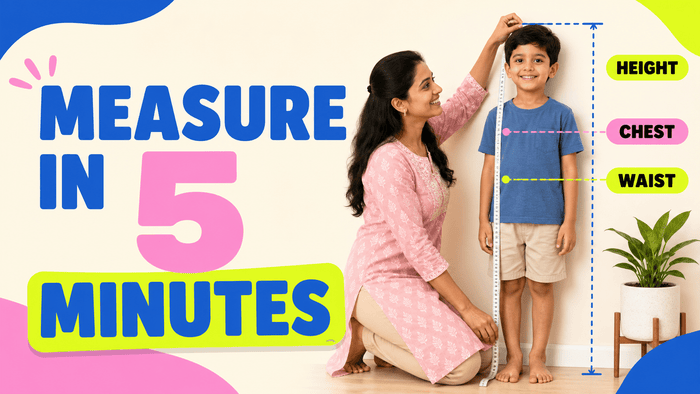
Children of the same age do not share one body shape. Check height, chest, waist and hip measurements rather than relying only on age. For a T-shirt, look at shoulder position, neck opening and hem coverage. For shorts, check the waistband, rise, seat and thigh room.
A unisex label should not be used as an excuse for a vague, excessively oversized fit. The garment should still have a clear size chart and predictable proportions.
How to choose prints without gender rules
- Ask the child which two or three prints they would actually wear.
- Check whether the main colours work with existing shoes, layers and bottoms.
- Prioritise the child’s comfort over adult assumptions about colour.
- For siblings, avoid forcing identical outfits if the children prefer different prints.
- For photographs or occasions, coordinate through one shared colour rather than exact duplication.
Unisex is useful, but it is not a quality claim
“Unisex” describes who can wear the garment; it does not prove fabric composition, durability or comfort. Read the product details, care label and size chart. Inspect seams and elastic when the order arrives. Keep the garment only if the actual fit works for the child and the product matches its description.
For a structured buying method, use our guide to choosing a kids shorts set for everyday play. If price is the main constraint, the under-₹500 quality checklist explains what to verify before checkout.
If you are deciding whether siblings can share the same styles, use the fit-first checklist in can boys and girls wear the same clothes? It separates garment fit and the child’s preference from gendered product labels.
Frequently asked questions
Are unisex clothes good for kids?
They can be a practical choice because they widen print options, simplify combining pieces and may make sibling reuse easier. The individual garment must still fit comfortably and suit the child’s preferences.
Do unisex clothes have to use neutral colours?
No. Bright pink, blue, orange, green and multicolour prints can all be unisex. Colour does not determine who can wear a garment.
Can unisex sizing fit every child?
No single size fits every body of the same age. Use the brand’s measurements and compare them with the child or a well-fitting garment.
Are unisex clothes better for siblings?
They can make hand-me-downs and coordinated outfits easier, but only when the size, condition and each child’s preference align.
Shop A Tiny Bee unisex shorts sets for current prints, sizes and availability.
Bring the guide to life
Only currently available products are shown. Sizes and stock update live.