A 14-Piece Kids Capsule Wardrobe for Indian Weather
A practical, parent-friendly guide to choosing playful prints without compromising on comfort, fit or everyday wear.
Practical choices.
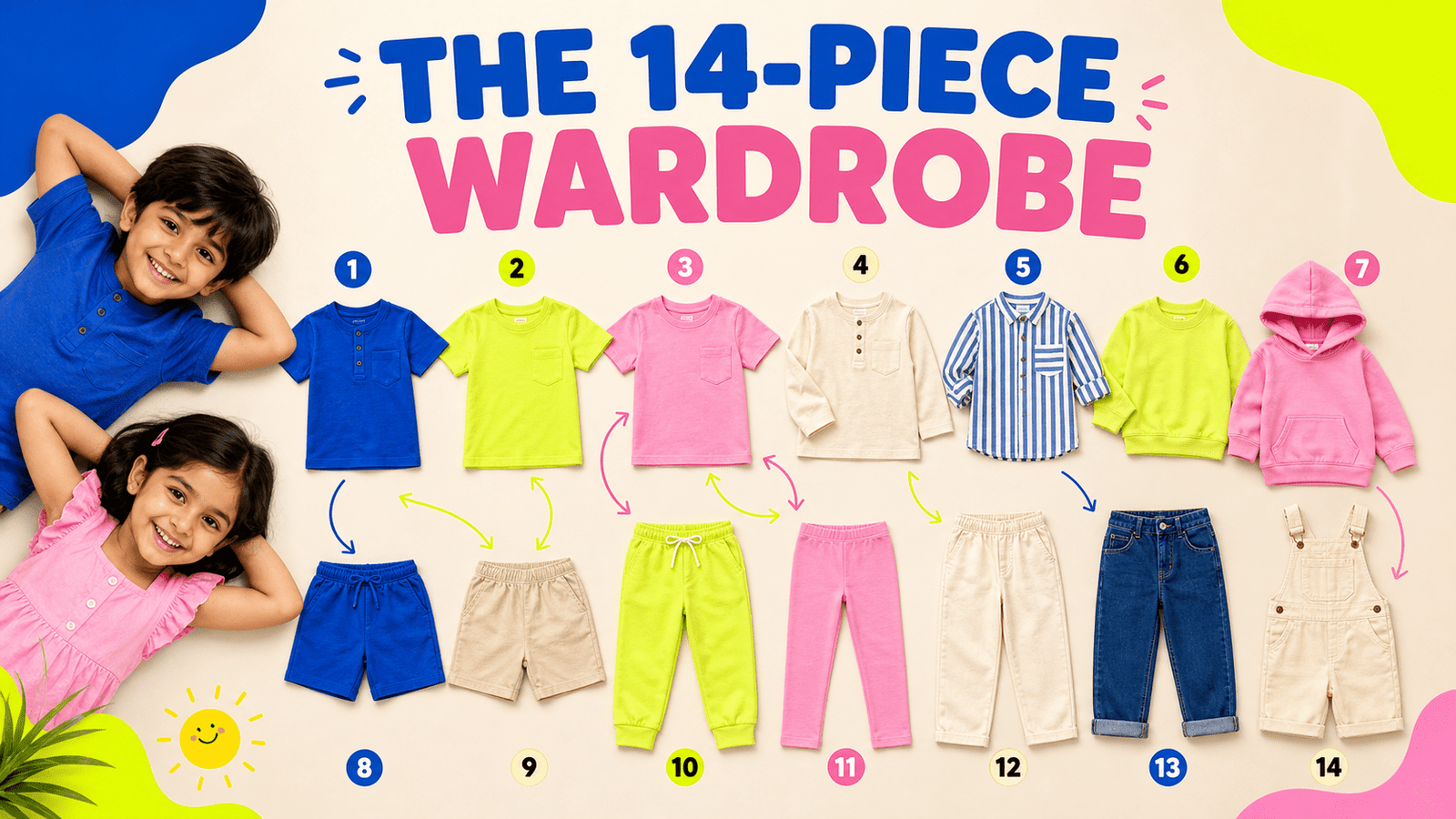
A practical 14-piece kids capsule wardrobe can contain four standalone tops, three standalone bottoms, three coordinated top-and-bottom sets and one light layer. That is 14 physical garments: four tops + three bottoms + six garments inside the three sets + one layer. It is an adaptable example, not a universal minimum.
The purpose of a capsule is compatibility. Most tops should work with most bottoms, coordinated sets should work together or separately, and the layer should suit the household’s actual weather and indoor environments.
The 14-garment structure
| Group | Quantity | Role |
|---|---|---|
| Standalone tops | 4 | Plain or lightly printed mix-ins |
| Standalone bottoms | 3 | Compatible shorts or other current-season bottoms |
| Coordinated sets | 3 sets / 6 garments | Three ready outfits plus mixable tops and bottoms |
| Light layer | 1 | For the actual evening, travel or indoor-cooling need |
| Total | 14 garments | Excludes sleepwear, uniforms, underwear and specialist activity clothes |
Keep excluded categories separate. A daytime capsule should not pretend that pajamas, school uniforms, swimwear or protective activity clothing are unnecessary.
Choose a palette before choosing prints
Start with two or three base colours already common in the child’s wardrobe. Add one or two accent colours. A printed coordinated set should repeat at least one base colour so its top or bottom can join another outfit.
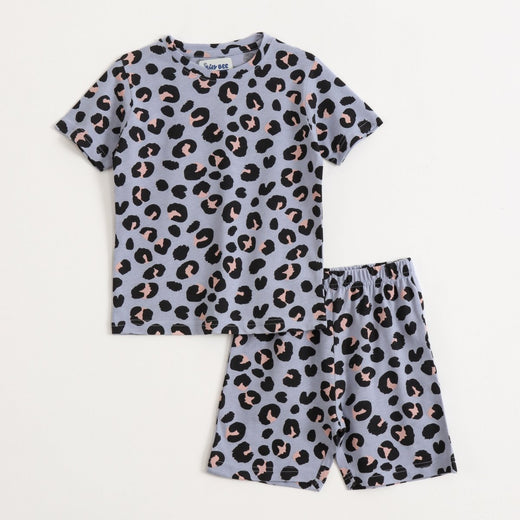
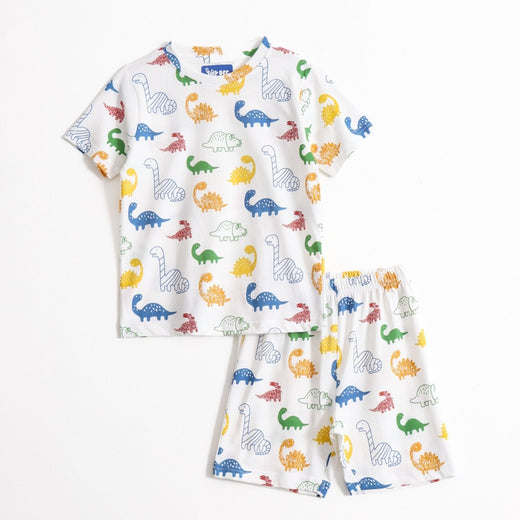
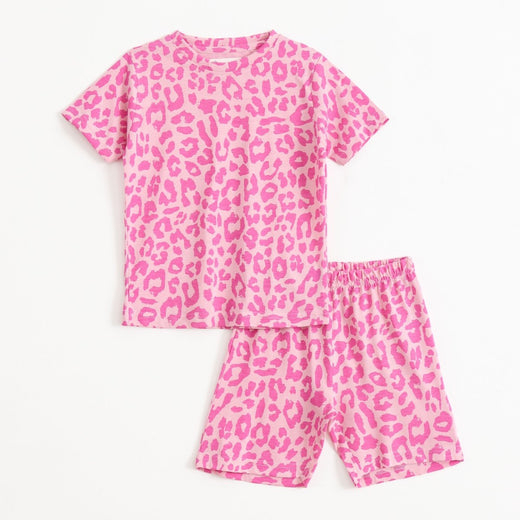
Do not make every garment the visual focus. One lively print can sit beside simpler pieces. Animal, dinosaur or abstract motifs can all be unisex when the child likes them and the fit works. Our unisex kids clothing guide explains how print preference and independent sizing are more useful than gender rules.
Build the outfit matrix
Label the four standalone tops T1–T4, the three bottoms B1–B3 and the three sets S1–S3. Before buying, test the proposed combinations on paper:
| Combination | Possible outfits | Check |
|---|---|---|
| Standalone tops × standalone bottoms | Up to 12 | Colours and garment functions are compatible |
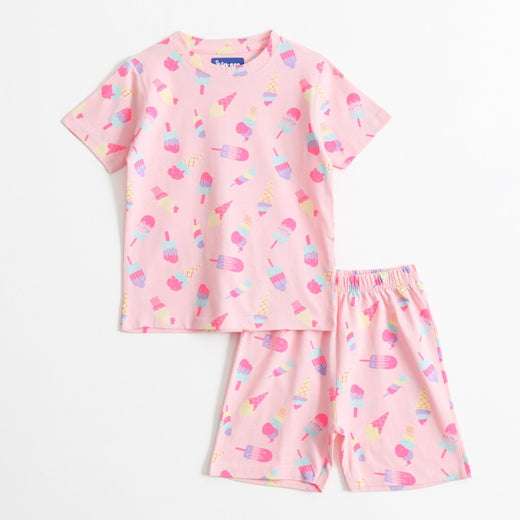
| Three complete coordinated sets | 3 | Both pieces fit independently |
| Set tops × standalone bottoms | Up to 9 | Print scale and colours work |
| Standalone tops × set bottoms | Up to 12 | Waist, length and activity remain suitable |
These are mathematical possibilities, not a promise that all 36 combinations will look or function well. Cross out combinations that clash, need incompatible care or do not suit the same activity. The useful number is the set of combinations the child will actually wear.
Adapt the capsule to Indian weather
India does not have one uniform climate. Adjust fabric weight, sleeve length, coverage and the light layer to local temperature, humidity, rain, sun exposure and indoor cooling. A capsule for a humid coastal month will differ from one for a cooler hill destination.
For warm-weather planning, read our summer clothes for kids in India guide. It combines clothing choices with current weather warnings, shade, timing and activity.
Do not force one layer into the capsule if the environment requires more specific protection. The 14-piece example is for everyday outfit planning, not extreme weather or specialist use.
Fit every garment in the current size
A capsule fails if several items are “for later.” Measure the child and compare the current chart. Check the neck, shoulder, chest, waistband, rise, seat and hem during movement. A slightly different size may be needed between products even within one brand.
Use our five-minute measurement guide. Keep future sizes outside the active capsule until they fit safely and functionally.
Make coordinated sets earn two roles
Each set should work as a ready outfit and as two separates. Before adding it, ask:
- Does the top match at least two other bottoms?
- Do the shorts match at least two other tops?
- Can both pieces be washed with the main rotation?
- Does each piece fit when worn without its partner?
- Will the child choose the print often enough?
Our co-ord set guide covers the difference between coordinated outfits, separates and pajamas.
Keep care routines compatible
A capsule returns to use quickly only when its care needs fit the household routine. Read every label rather than assuming similar colours have identical instructions. The US Federal Trade Commission’s care-label guide explains that washing, bleaching, drying, ironing and warnings can all form part of regular care instructions.
Choose garments that can realistically be washed and dried between uses. Do not add a delicate item to the everyday capsule if the required care will keep it permanently out of rotation.
Use a one-in, one-gap rule
When considering a new piece, name the gap it fills: another current-size bottom, a compatible layer, or a replacement for something outgrown. If no gap exists and the proposed garment does not create useful combinations, leave it outside the capsule.
Review the system when the child changes size, the season changes or several combinations stop being worn. Donate, hand down, repurpose or responsibly retire items according to their condition.
Frequently asked questions
Does a child need exactly 14 garments?
No. Fourteen is an example structure. Use laundry frequency, activity, climate and the child’s actual change pattern to adjust it.
Are pajamas included in the 14 pieces?
No. This example covers everyday daytime clothing. Plan sleepwear separately using room conditions, fit and laundry needs.
Do three coordinated sets count as three or six pieces?
They count as six physical garments and three ready outfits. Tracking both prevents confusion.
Can a capsule wardrobe include prints?
Yes. Keep prints compatible with the base palette and make sure each printed piece works in more than one useful combination.
How many colours should a kids capsule use?
There is no mandatory number. Two or three base colours plus one or two accents are a practical starting point, then test the actual outfit matrix.
Browse current A Tiny Bee kidswear and add only garments that fit now, work with the planned palette and fill a clear capsule gap.
Bring the guide to life
Only currently available products are shown. Sizes and stock update live.