How to Keep Kids Clothes Soft: A Label-First Guide
A practical, parent-friendly guide to choosing playful prints without compromising on comfort, fit or everyday wear.
Practical choices.
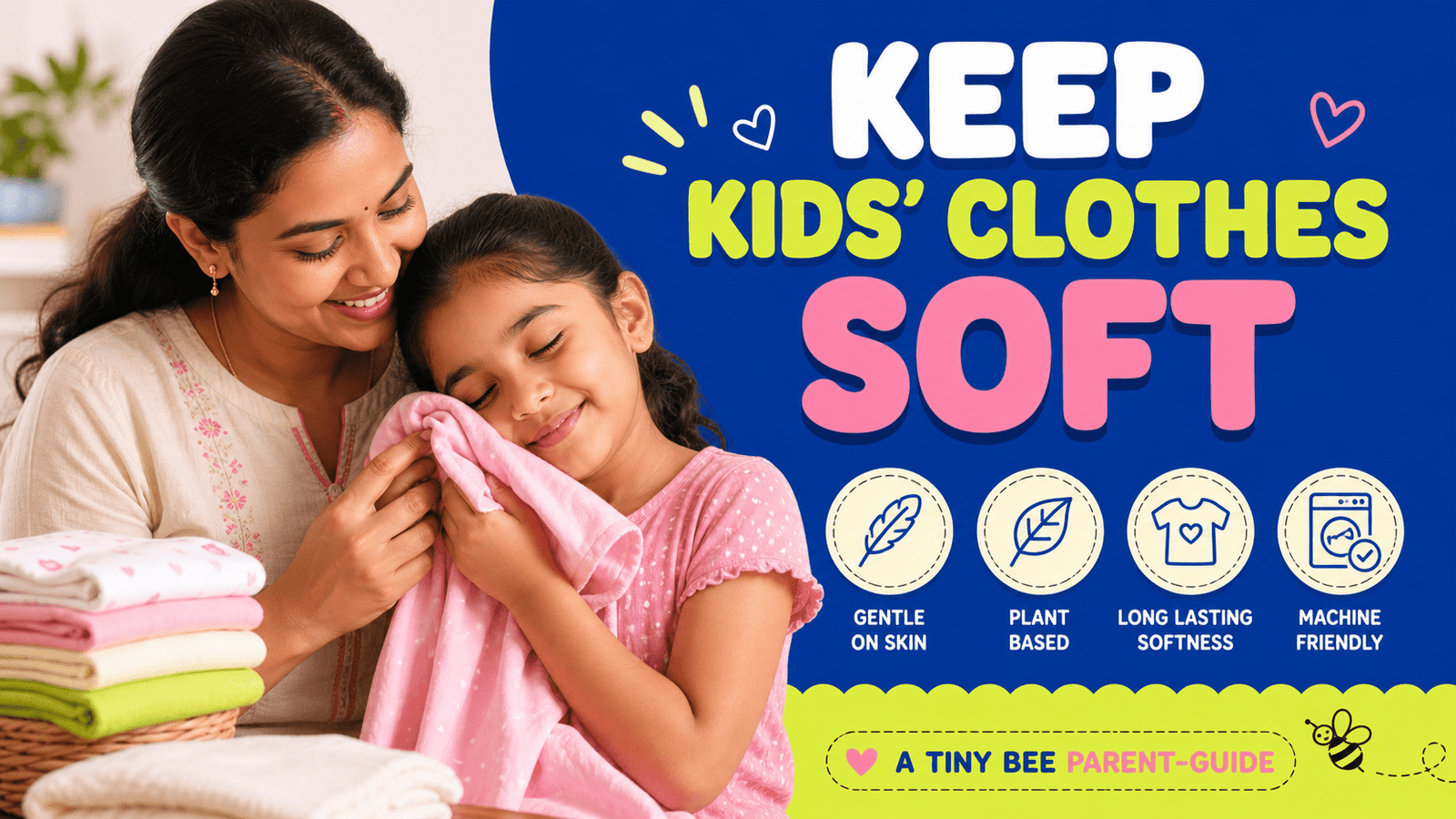
To keep kids clothes soft, start with the garment’s care label and correct the cause of stiffness instead of adding a universal household remedy. Use the detergent dose for the load and water conditions, leave the washer enough room to rinse, follow the permitted wash and drying method, and avoid overdrying. A softener may be suitable for some garments only when both the garment label and product directions allow it.
“Soft” is not one permanent fabric property. Fibre, yarn, knit or weave, surface finish, soil, detergent residue, mineral content in water, friction and heat can all change how a garment feels. Care can reduce avoidable stiffness, but it cannot guarantee the original hand feel forever or reverse worn fibres.
Diagnose why the garment feels stiff
| What you notice | Possible factor to check | First safe action |
|---|---|---|
| Several items feel stiff after the same load | Dose, overloading, rinsing or water conditions | Review the machine and detergent directions |
| Only one garment changed | Its construction, finish, soil or care requirements | Read that garment’s complete care label |
| Greasy or blue-grey marks appear | Softener applied directly or used excessively | Stop adding more product and follow stain guidance |
| Fabric feels hard after line drying | Drying conditions, residue or natural fibre behaviour | Reshape while damp and avoid unnecessary extra heat |
| Surface is rough, fuzzy or pilled | Friction and wear rather than simple stiffness | Reduce abrasion; do not promise a wash will reverse damage |
Read the whole care label first
The label is the starting constraint for washing, drying, bleaching and ironing. The US Federal Trade Commission’s care-labelling guidance explains that instructions must consider the complete garment, including components such as trim and fasteners. That principle matters even outside the United States: a fibre name alone does not tell you what the dyes, print, elastic or finish can tolerate.
Do not copy the setting from another cotton item or assume hotter water will make a stiff garment softer. If the label is unclear, use the seller’s current product information or ask before experimenting.
Use the detergent dose, not a guess
More detergent does not automatically mean cleaner or softer clothing. Use the dose stated for the load size, soil level, machine type and local water conditions. If a machine is packed too tightly, water and detergent may not circulate or rinse as intended.
When several items emerge with the same unexpected feel, check the shared process before blaming one fabric. Confirm that the correct dispenser was used, the cycle completed, and the load did not exceed the machine instructions. Never mix laundry chemicals in an attempt to “cancel out” residue.
Make rinsing part of the softness check
Visible suds or a slick, coated feel can be a reason to review dose and rinsing. Do not automatically run repeated extra cycles for every load; first correct the input that may be causing the problem. For a persistent issue, follow the washer manufacturer’s guidance and the detergent label, especially in hard-water areas.
New Mexico State University’s Getting Clothes Clean guide describes how water, soil, detergent, washing action and laundry products work together. Use it as background rather than as a substitute for the exact garment and product labels.
Treat fabric softener as an optional product
Fabric softener is not a required step for every child’s garment. If you use one, follow its measured dose, dispenser instructions and warnings, and confirm that the garment allows it. Do not pour undiluted softener directly onto clothing.
University of Georgia Extension notes that undiluted softener or overuse in a dryer can produce blue-grey, greasy-looking marks. Its fabric-softener stain guidance also stresses reading the care label and pretesting treatment. If a child reacts to fragrance or residue, pause the product and seek appropriate health advice rather than masking the issue with another scented product.
Avoid universal vinegar and baking-soda recipes
Household hacks often ignore dye stability, elastic, prints, machine instructions and chemical compatibility. Vinegar can change some dyes, and combining cleaning products can be unsafe. A recipe that worked on one towel is not proof that it is suitable for a printed kidswear set.
If a product is not named or permitted by the garment, washer and chemical instructions, do not prescribe it as a default softness treatment. Test any allowed treatment on one lower-value item or an inconspicuous area before applying it to a full load.
Dry only as the garment permits
Excess heat and unnecessarily long drying can change fibres, finishes, elastic and prints. Follow the stated drying method and temperature. When air drying is allowed, reshape the garment while damp and give it space for airflow. Do not leave a wet item crumpled in the machine or basket.
If line-dried clothing feels temporarily firm, first check residue, load size and drying method. Do not iron or tumble it at a higher temperature merely to chase softness unless those actions are permitted.
Use a one-garment troubleshooting test
- Choose one garment whose label is readable.
- Record its current feel and any visible residue or surface wear.
- Wash it with a correctly measured, small compatible load.
- Use only products and settings allowed by all labels.
- Dry it by the permitted method and compare only after it is fully dry.
Changing one factor at a time is more useful than adding detergent, softener and a household acid together. If the garment remains rough because its surface is abraded or pilled, the honest answer may be that care can prevent further damage but cannot restore the original finish.
For the complete washing sequence, use our cotton kids clothes wash guide. For colour protection, see how to reduce cotton clothes fading.
Frequently asked questions
Why do kids clothes feel stiff after washing?
Possible factors include excess product, insufficient rinsing, an overloaded machine, water conditions, drying method, the garment’s construction or ordinary fibre wear. Check the shared process and the exact care label.
Does more detergent make clothes softer?
No. Use the labelled dose for the machine, load, soil and water conditions. Adding more without evidence can make rinsing harder.
Should I use fabric softener on kids clothes?
Only when the garment and product instructions allow it and it suits the child’s needs. Measure it correctly and never pour it directly onto the fabric.
Can vinegar always soften cotton clothes?
No universal recommendation is safe. Vinegar can affect some dyes and may conflict with product or machine instructions. Do not use an internet recipe instead of the labels.
Can rough, pilled fabric become new again?
Usually not. Better care may reduce further abrasion, but washing cannot reliably rebuild worn fibres or restore a factory finish.
Explore current A Tiny Bee kidswear and check the exact garment’s sewn-in care instructions before choosing a softness routine.
Bring the guide to life
Only currently available products are shown. Sizes and stock update live.