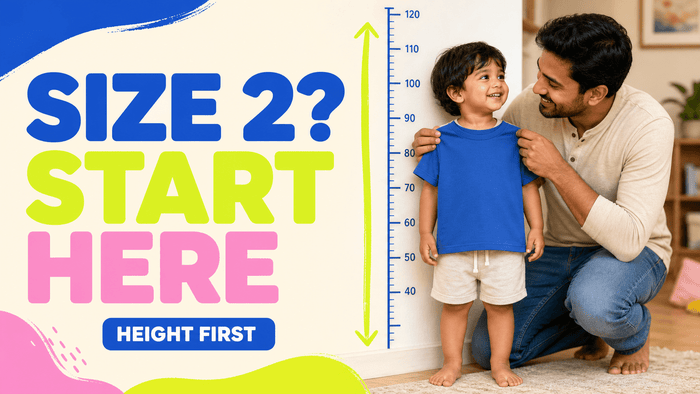
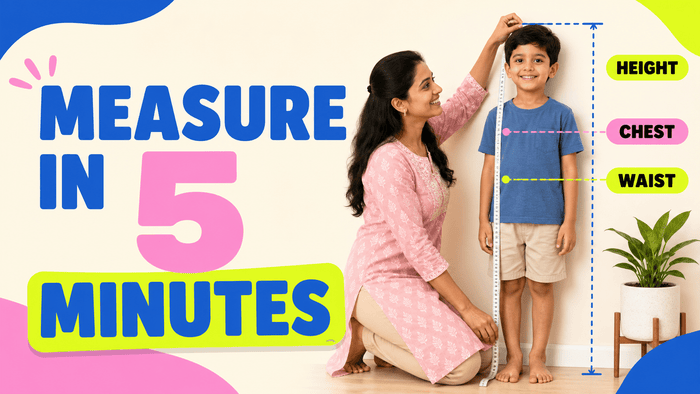
Kids Clothing Size by Height: Better Than Age Alone?
A practical, parent-friendly guide to choosing playful prints without compromising on comfort, fit or everyday wear.
Practical choices.
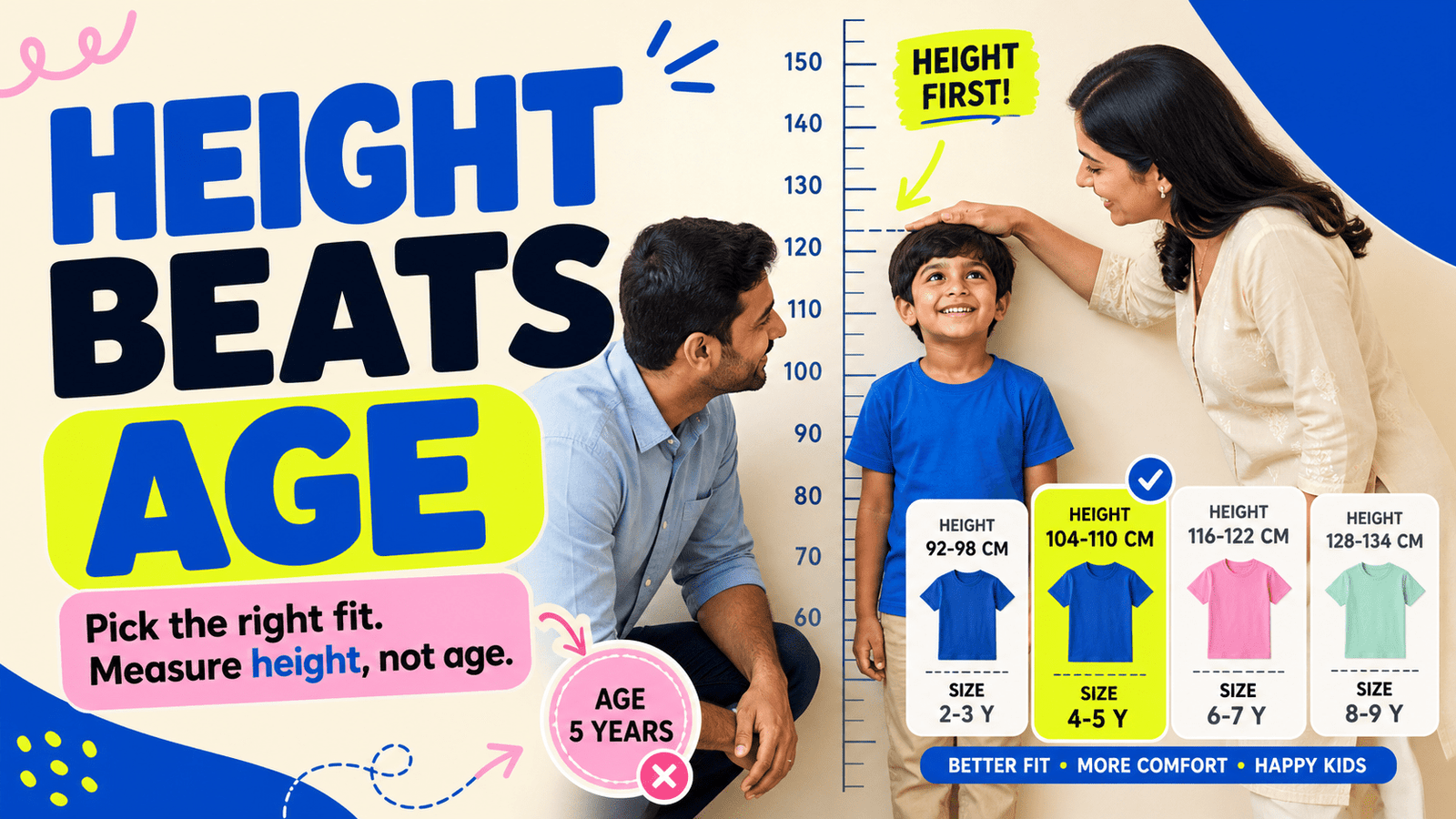
Height is often more useful than age for narrowing a child’s clothing size, but height alone does not determine fit. Start with the child’s current standing height, then compare chest, waist or hip measurements with the exact brand and product size chart. The garment type and intended ease still matter.
There is no reliable universal table that converts one height into the same clothing size across every brand. Treat a height range as a shortlist, not a guarantee.
Height-first size worksheet: what to do with the chart you have
| What the product chart shows | Your next step | Decision rule |
|---|---|---|
| A height range plus chest, waist or hip | Find the row containing the child’s current height, then compare every relevant circumference. | Keep the row only when the controlling measurements also fit. |
| Height ranges only | Use height to shortlist a row and ask for garment width, rise or length when the fit is important. | Do not treat a height match as proof of chest, waist or rise fit. |
| Age labels plus body measurements | Ignore age as the deciding measurement and compare the child’s current measurements with the published rows. | The row that accommodates the controlling body measurement is the better candidate. |
| Age labels only | Use age only to navigate the catalogue, then request product or garment measurements. | Do not convert the age label into an invented height range. |
| No usable chart or measurement method | Contact the seller or choose a listing that supplies enough evidence. | A guessed size is not a height-based decision. |
Hypothetical example: a child measures 112 cm tall. A product’s own chart—not a universal chart—places 108–114 cm in one row. That row is only the starting candidate. If the child’s chest or waist falls outside it, compare the next row or choose another cut; do not average the labels or select by height alone.
This worksheet deliberately does not publish an “India standard” conversion because brands use different grading, ease and chart methods. The exact product chart remains the source for its own garment.
Why height can be better than age
Children of the same age can have different heights and proportions. Age labels are convenient shopping categories, while body measurements describe the child in front of you. Height is especially useful for judging whether full-length pajamas, dresses and longer tops are likely to reach the intended point.
Height still cannot reveal chest room, waist security, hip room, rise, shoulder position or limb proportions. Two children with the same height may need different fits. That is why the correct sequence is height first, relevant circumference measurements second, and a movement check last.
Measure height accurately
- Remove shoes, bulky hair accessories and thick outerwear.
- Ask the child to stand upright on a level floor with their back against a flat wall.
- Keep feet flat and together or naturally close, without forcing posture.
- Look straight ahead rather than tilting the chin up or down.
- Place a rigid flat object level on the head and mark the wall.
- Measure from the floor to the mark and record the date.
Measure twice if the readings differ. Use centimetres when the chart uses centimetres; unnecessary conversions introduce rounding errors. For a complete body-measurement process, follow our kids clothing measurement guide.
Use the product chart, not a generic conversion
Find the chart attached to the exact product or brand. First identify the height range containing the child’s measurement. Then compare the measurements most relevant to the garment:
| Garment | Height helps with | Also check |
|---|---|---|
| Shorts set | Overall proportion and top length | Chest, waist, rise and shorts length |
| Pajama set | Top and leg length | Chest, waist, rise, neck and ankle position |
| Dress or frock | Where the hem may fall | Chest, shoulder, armhole and intended silhouette |
| Top | Body and sleeve length | Chest, shoulder and neck opening |
Check whether the chart lists body measurements or finished-garment measurements. They are not interchangeable. A finished garment normally includes design ease; adding that ease again can lead to an unnecessarily large choice. Our guide to reading a kids clothing size chart in India explains chart types, flat widths, circumferences and controlling fit points.
What if height and chest suggest different sizes?
Do not average the labels. Decide which measurement controls the garment’s safe and intended fit. A top must have adequate chest and shoulder room even when a smaller size appears better in length. Full-length bottoms need a secure waist as well as suitable length.
If no listed size accommodates the child’s measurements without creating another fit problem, that product’s cut may not suit the child currently. Choosing another style is better than forcing a size to solve incompatible proportions.
Do not add “growing room” everywhere
Growth allowance should not make necklines, shoulders, armholes or waistbands loose and unstable. Extra fabric can also change where a child steps, sits or moves. Buy for secure present use unless the product is explicitly adjustable and the larger size still passes the fit check now.
If the child sits between two sizes, compare both rows of the exact chart and prioritize the restrictive measurement. Do not automatically size up from an age label alone. Our guide to clothing size for a two-year-old explains why age cannot replace current measurements.
Check the garment after it arrives
Before removing tags or washing, confirm the seller’s return conditions and try the garment over suitable underclothes. Check:
- the neckline stays in place without pulling;
- shoulder seams sit appropriately for the design;
- the child can lift arms, bend, sit and walk comfortably;
- the waistband stays secure without digging in;
- the rise does not pull or sag excessively;
- hems and full-length legs do not create a trip risk;
- the intended silhouette still looks and moves as designed.
A height match on a chart is not evidence that all these checks will pass. The movement check is the final test.
Re-measure instead of predicting growth
Record height and key measurements with a date. Re-measure when several garments become short or tight, before buying for a new season, or when the last record is no longer representative. Do not estimate a future size from a fixed growth rate; children do not grow on a universal schedule.
Keep the record simple: height, chest, waist, hip when relevant, and the size that worked in a specific brand or cut. Past purchases are clues, not permanent conversions.
Frequently asked questions
Can I choose kids clothes using height only?
Height can shortlist a size, but it cannot confirm chest, waist, hip, rise or shoulder fit. Compare the other measurements required by the exact product chart.
Is height more accurate than age for kids clothing?
Height is a current body measurement, so it is often more informative than age. It is still only one measurement and does not make a size universal across brands.
Should I choose the larger size when height is near the top of a range?
Not automatically. Compare the next size’s relevant measurements and make sure its neck, shoulders, waist and length remain secure for use now.
Why does the same height map to different sizes?
Brands use different grading, ease and silhouettes. Product charts may also list body measurements or garment measurements. Always use the chart attached to the item.
How often should I measure my child?
Measure before a meaningful purchase when the existing record is old, the child’s fit has changed or the product needs precise length. A dated measurement is more useful than a routine calendar rule.
Explore current A Tiny Bee kidswear, then use the live product chart and your child’s current measurements to choose among available sizes.
Bring the guide to life
Only currently available products are shown. Sizes and stock update live.