How to Calculate Cost Per Wear for Kids Clothes
A practical, parent-friendly guide to choosing playful prints without compromising on comfort, fit or everyday wear.
Practical choices.
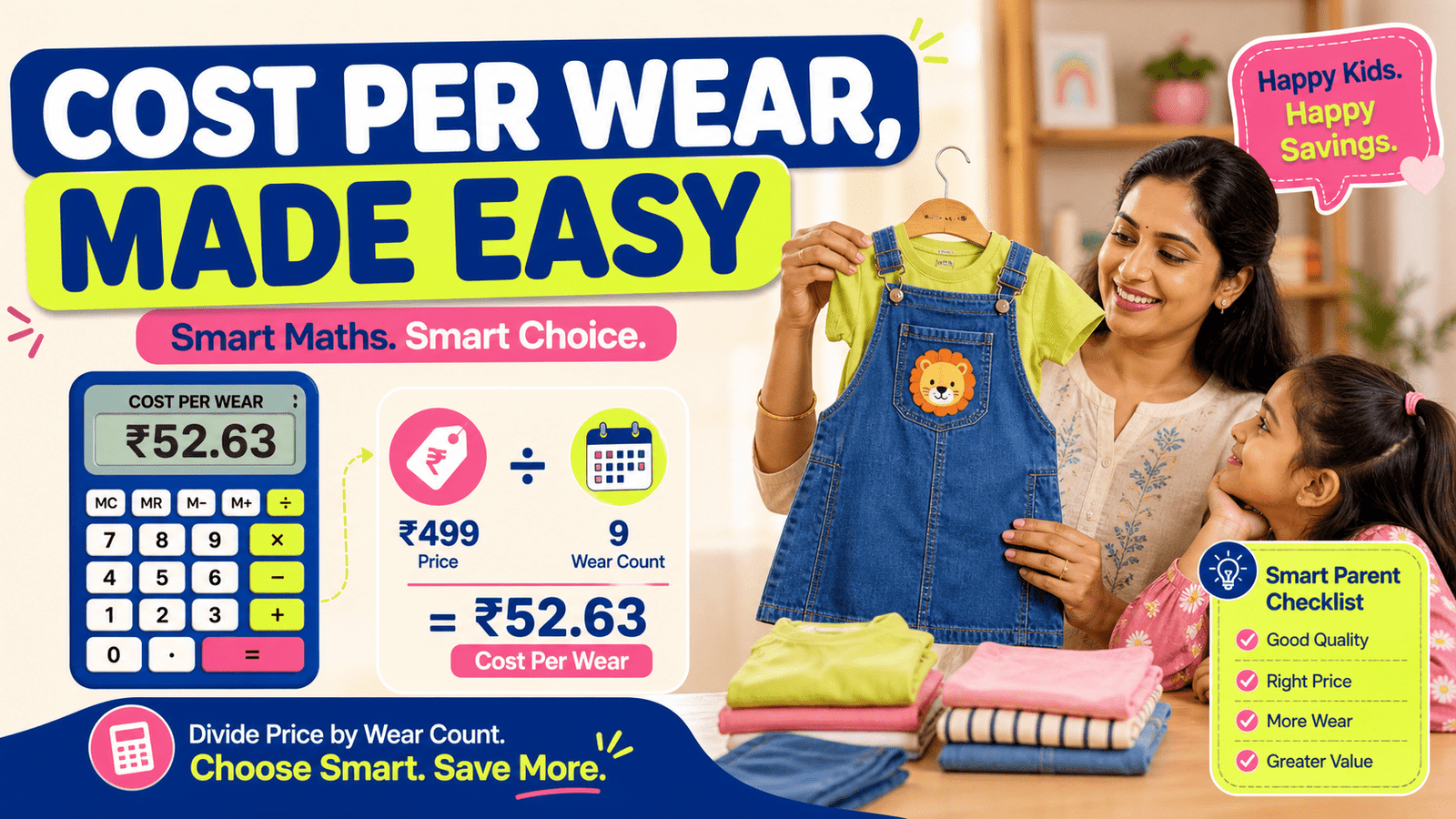
Value for money in kids clothes is not the lowest price; it is the useful wear received for the real cost paid. A simple starting formula is:
realized cost per wear = (checkout cost + item-specific care or repair cost − recovered value) ÷ completed wears
Use actual completed wears when reviewing an item and realistic expected wears when comparing a future purchase. Keep those two numbers separate.
Calculate the real cost first
The ticket price can differ from the cost attributable to one item. Include:
- the amount actually paid after product-level discounts;
- shipping or payment fees allocated reasonably across the order;
- non-refundable return or exchange costs, if any;
- item-specific repair or specialist-care costs;
- minus any verified resale or trade-in value received later.
Do not add normal household laundry cost to one garment unless you have a defensible way to allocate it. A complicated estimate can look precise while being less truthful than a simple product cost.
Define one completed wear
A completed wear is a meaningful use for the intended activity, not merely trying the garment on. For a coordinated set, decide before tracking whether the top and bottom count only when worn together or whether each piece is used separately.
Keep the unit consistent. If a top is worn ten times and the matching shorts four times, reporting “14 wears for the set” can hide an underused piece. Track complete-set wears and separate-piece wears in different columns when that distinction affects the decision.
Use expected cost per wear before buying
Before purchase, estimate wears from the child’s real routine:
- How many suitable days remain in the expected weather window?
- How often will laundry return the garment to the drawer?
- How many competing outfits already cover the same need?
- Does the garment fit securely now?
- Will the child actually choose the print, coverage and silhouette?
- Can both pieces of a set be used in the intended rotation?
Expected wears are a planning estimate, not a durability promise. Growth, stains, damage, preferences and weather can change the result.
A transparent comparison example
| Example | Checkout cost | Expected wears | Expected cost per wear |
|---|---|---|---|
| Lower-price item used occasionally | ₹300 | 6 | ₹50 |
| Higher-price item in regular rotation | ₹600 | 30 | ₹20 |
The table does not prove that a higher price creates better value. It shows why purchase price alone cannot answer the question. If the ₹600 item receives only five wears, its realized cost per wear becomes ₹120.
Account for outgrowing without guessing
Children can outgrow clothing before it wears out. Do not solve that uncertainty by buying an unstable size. Estimate a conservative wear window using current fit, current season and laundry frequency. Recheck actual fit rather than projecting a fixed growth rate.
If a well-fitting garment can be passed to another child, track the additional completed wears only after they happen. Do not reduce today’s expected cost using an assumed future hand-me-down.
Include failure and incomplete-set risk
A set loses practical value when one piece is missing, damaged or no longer fits. Before buying, inspect seam information, waistband construction, care instructions and return terms. After purchase, remove damaged or outgrown pieces from the active count instead of treating them as available wardrobe inventory.
The quality checks in kids clothes under ₹500 help evaluate construction and checkout facts. This article owns the calculation after those checks.
Track realized cost per wear simply
A phone note or paper tally is enough:
| Field | Record |
|---|---|
| Item | Clear product or outfit name |
| Real cost | Allocated checkout cost plus item-specific costs |
| Completed wears | One tally per defined wear unit |
| Current fit | Fits, next-size, outgrown or repair |
| Realized cost per wear | Real cost divided by completed wears |
Update the calculation when the garment leaves the rotation. The final number is more useful than checking it after every wear.
Improve value without buying more
- Keep current-size clothes visible and easy to reach.
- Use a rotation so favourites do not hide suitable alternatives.
- Follow the care label rather than applying one wash rule to everything.
- Treat stains promptly and make small repairs before damage spreads.
- Build outfits from existing pieces before filling a genuine gap.
See how to make kids clothes last longer for rotation, care and repair actions. Longer ownership does not improve cost per wear unless the garment remains usable and is actually worn.
Do not use cost per wear as the only decision
Fit, safety, weather suitability, care burden and immediate affordability still matter. A low expected cost per wear does not justify spending beyond the household budget, buying excess inventory or keeping an unsuitable garment in use.
Use the wardrobe quantity guide in how many clothes a child needs to determine whether there is a gap before comparing purchases.
Frequently asked questions
What is a good cost per wear for kids clothes?
There is no universal target. Compare similar garments serving the same purpose within your household’s budget, routine and wear window.
Should I include shipping in cost per wear?
Include a reasonable share when shipping was necessary for that order. Document the allocation rather than assigning the full order fee to every item.
How do I count a two-piece set?
Define whether you are tracking complete-set wears or separate-piece wears and remain consistent. Do not combine both into one total without labelling them.
Does a cheap garment always have better cost per wear?
No. Price is the numerator; completed useful wears are the denominator. A low-price item worn rarely can cost more per wear than a regularly used higher-price item.
Can I include hand-me-down wears?
Yes, after the second child actually wears the garment. Do not count an intended hand-me-down as a completed wear or guaranteed recovered value.
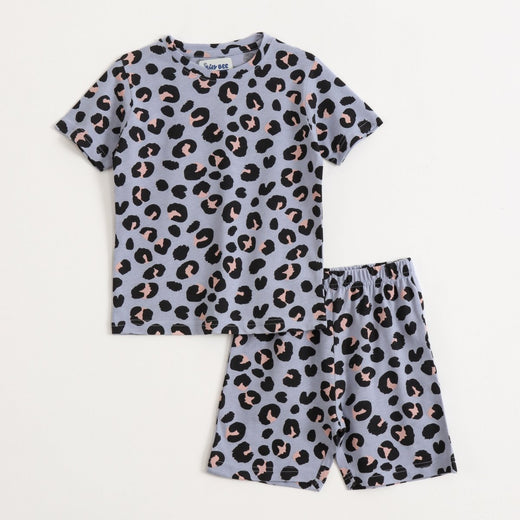
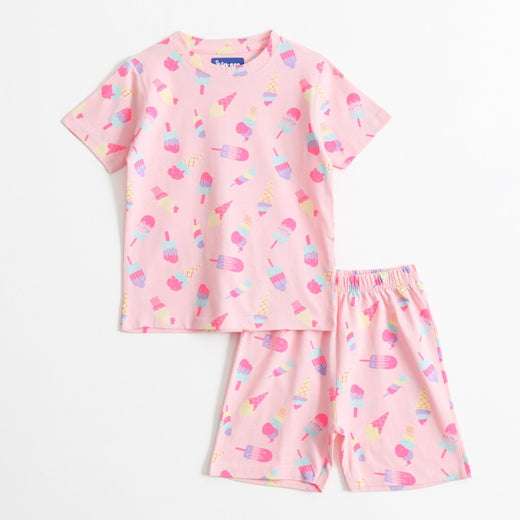
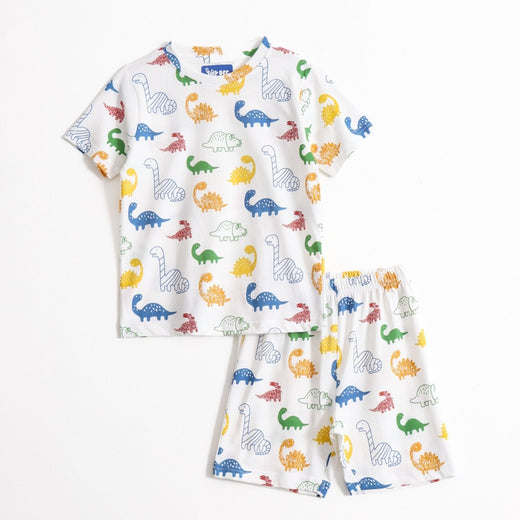
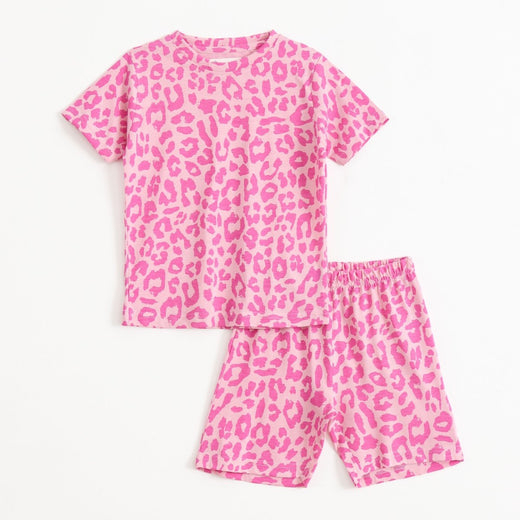
Explore current A Tiny Bee kidswear only after confirming a wardrobe gap, then verify the live price, size chart, stock, care information and policies before estimating value.
Bring the guide to life
Only currently available products are shown. Sizes and stock update live.