How to Choose Kids Clothes Online: 12 Checks Before Buying
A practical, parent-friendly guide to choosing playful prints without compromising on comfort, fit or everyday wear.
Practical choices.
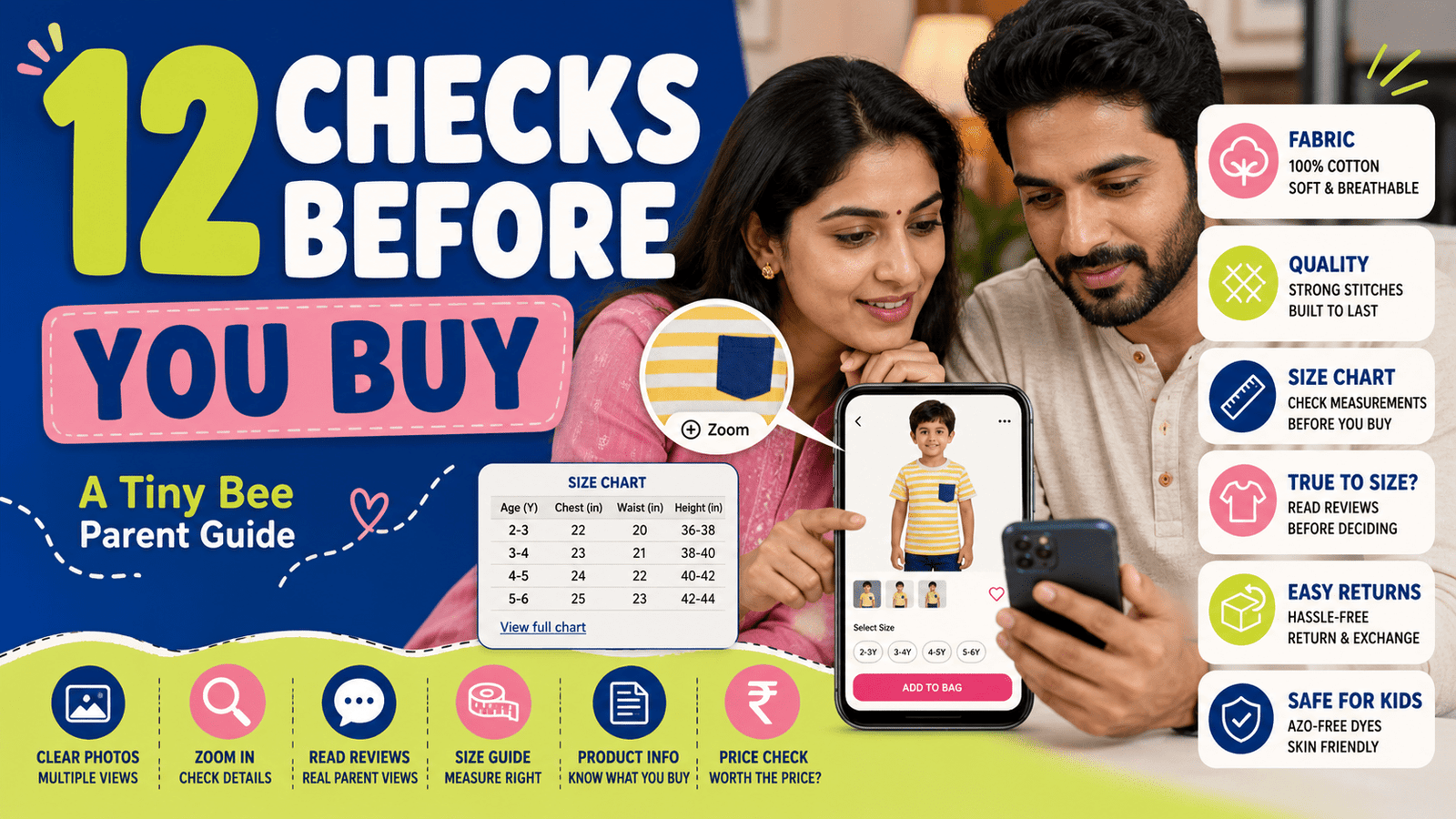
Choose kids clothes online by checking the exact garment, not by trusting an age filter or product photograph alone. Start with the child’s current measurements and intended use, then verify the product’s size chart, fabric information, included pieces, available variant, total checkout cost and return conditions. Inspect the delivered garment before washing or removing tags.
The objective is not to find a universally “best” outfit. It is to decide whether one specific product, in one specific size, works for the child’s present needs.
Use this 12-check online buying sequence
- Define where and when the garment will be worn.
- Confirm the exact garment type and pieces included.
- Read the current fabric information without expanding the claim.
- Review every useful product image.
- Measure the child now.
- Open the chart for that product or brand.
- Identify the measurement that controls the fit.
- Check that the intended size is currently available.
- Calculate the complete checkout cost.
- Read shipping, return, exchange and cancellation conditions.
- Save the order and product information used to decide.
- Inspect fit, construction and movement after delivery.
1. Start with the job the garment must do
An outfit for active indoor play has a different job from sleepwear, a family outing or a layered travel outfit. Write down the activity, likely weather, required coverage, footwear and whether the child needs to dress independently. This prevents colour or price from becoming the only decision.
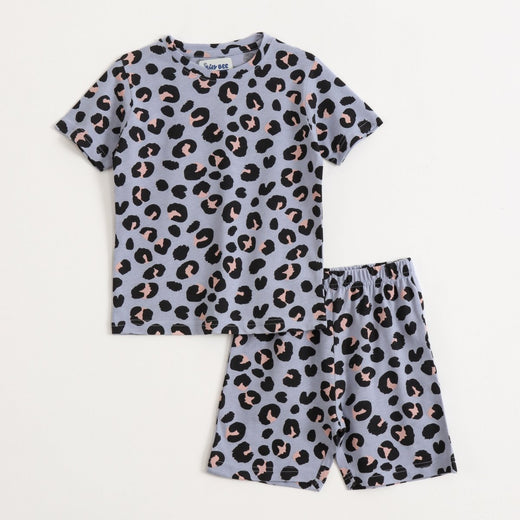
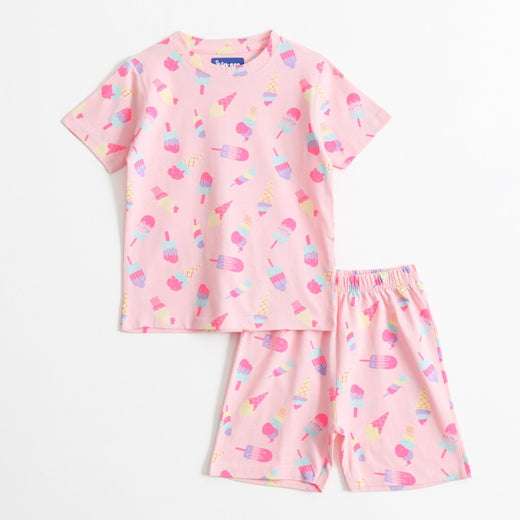
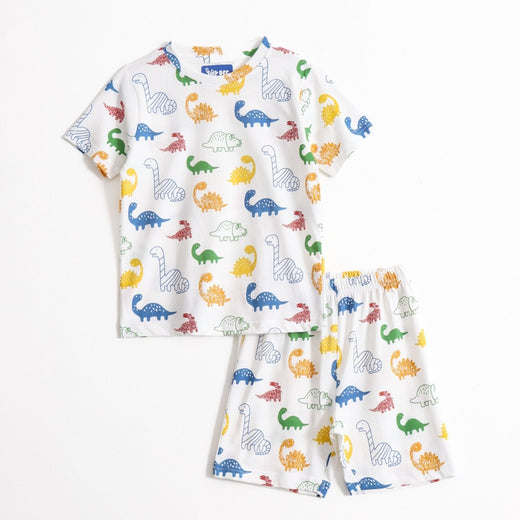
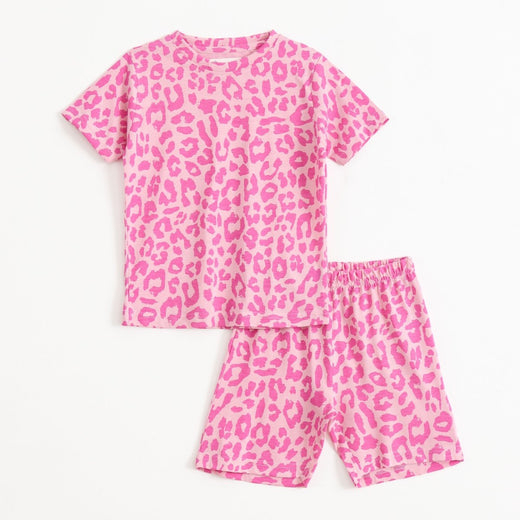
Choose the category before the print. A coordinated shorts set can simplify everyday dressing, while a frock, pajama set or separate may better suit another situation. Our kids co-ord set guide explains the difference between a matching set and unrelated separates.
2. Verify exactly what the listing sells
Read the title, description and image sequence together. A model photograph may show shoes, a cap, a jacket or styling props that are not included. For a set, confirm whether both top and bottom are sold together. Check whether a colour name refers to the background, print or trim.
Do not infer a fibre percentage, lining, pocket, fastener or certification from appearance. A “cotton” catalogue tag is not automatically a “100% cotton” statement. Use the product information and the sewn-in label for the most precise composition and care details.
If manufacturing location matters to the decision, look for a named manufacturer and address, then keep that evidence separate from garment-level quality claims. Our guide to what “made in Tiruppur” means for kids clothing explains what a location disclosure can establish and what still needs product-specific proof.
3. Treat photographs as evidence with limits
Useful images can show silhouette, neckline, sleeve shape, waistband construction, print scale, seam placement and relative length. They cannot confirm how the garment feels on the child or guarantee exact screen-to-fabric colour.
Look for a clear front view, back or closure view where relevant, and enough resolution to see the construction. If an important area is never shown, ask the seller rather than filling the gap with an assumption.
4. Make a measurement-led size choice
Age labels are a starting filter. Measure the child’s height, chest and waist; add hip and inside leg when the garment needs them. Our five-minute kids clothing measurement guide shows where to place the tape.
Next, determine whether the chart lists body measurements or finished-garment measurements. For a shorts set, chest, waist, rise and shorts length may control the decision. For a frock, chest, shoulder, armhole and intended hem position can matter more.
Do not automatically move up because the child may grow. Use the decision tree in should you size up kids clothes? and reject a larger size if it creates a loose opening, slipping waist or unsuitable length.
5. Check the live variant, not the collection card
A product can appear available while one age label is sold out. Open the product page, select the intended size and confirm that the variant can be purchased. Recheck before payment because stock and price can change between research and checkout.
If a preferred size is unavailable, do not substitute a larger size without repeating the fit check. A different print in the correct cut and size may be a better choice.
6. Calculate the real order cost
Use the amount payable at checkout, not only the largest discount badge. Include the selected variant price, delivery charge, payment-related fee and any applied discount. If buying a set, confirm that the quoted price covers every piece expected.
Price alone does not prove value. Our kids clothing cost-per-wear guide separates expected value before purchase from realized value after completed wears.
7. Read policies before removing uncertainty
Open the current shipping policy and returns and cancellation policy. Confirm the applicable window, item condition, tags, exclusions, process and costs directly from those pages. Do not rely on an old social post, search snippet or policy summary.
Save the order confirmation and a note of the chart or product details used. If the seller updates a listing later, the original decision remains easier to explain.
8. Inspect the received garment before washing
Follow the seller’s return conditions. Before removing tags or laundering, compare the delivered item with the order: product, colour, print, included pieces and size label. Check seams, elastic, closures and visible damage.
Then run an ordinary movement check: arms up, sitting, squatting, walking and dressing or undressing as intended. A chart match is not enough when the neckline gaps, waist slips, rise pulls or length interferes with movement.
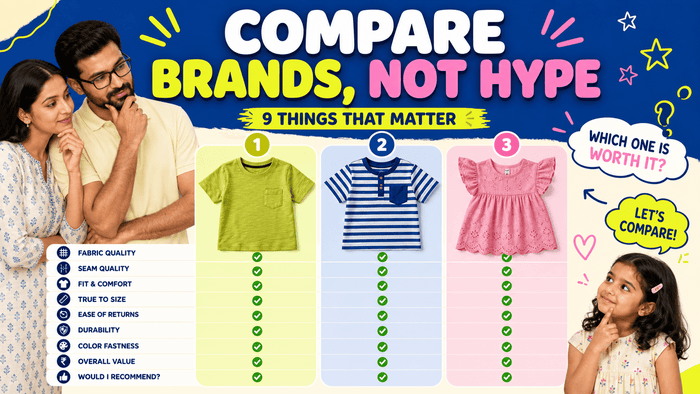
When comparing sellers rather than one listing, use the kids clothing brand comparison framework and the separate website evaluation scorecard. The first checks consistency across a brand’s range; the second checks the shopping website and transaction evidence.
Frequently asked questions
How do I choose kids clothes online without seeing them in person?
Use the exact listing, current measurements, product-specific chart, live variant, full cost and current policies. Treat photographs as useful but incomplete evidence.
Should I order by age or measurement?
Use age to narrow the catalogue, then choose with current measurements and the exact chart. Children of the same age can need different garment proportions.
Is a larger size safer for online orders?
No universal rule makes it safer. A larger size must still be secure at the neck, shoulder, waist, rise and length for present use.
Can I trust the colour shown on my phone?
Use it as a guide, not a guarantee. Screen settings, lighting and photography can change apparent colour. Read the colour name and review multiple images.
What should I check immediately after delivery?
Verify the item, size, colour, included pieces, visible condition, construction and movement fit before washing or removing tags, subject to the current return policy.
How do I choose comfortable kids clothes online?
Define the activity, measure the child, inspect the exact fabric and construction information, and compare the product-specific chart. After delivery, check the neck, seams, openings, waistband and movement before washing or removing tags. “Comfortable” is an outcome to evaluate, not a guarantee created by one fibre or age label.
Explore current A Tiny Bee kidswear and apply the checklist to the exact live product, size and checkout conditions.
Bring the guide to life
Only currently available products are shown. Sizes and stock update live.