Should You Size Up When Buying Kids Clothes Online?
A practical, parent-friendly guide to choosing playful prints without compromising on comfort, fit or everyday wear.
Practical choices.
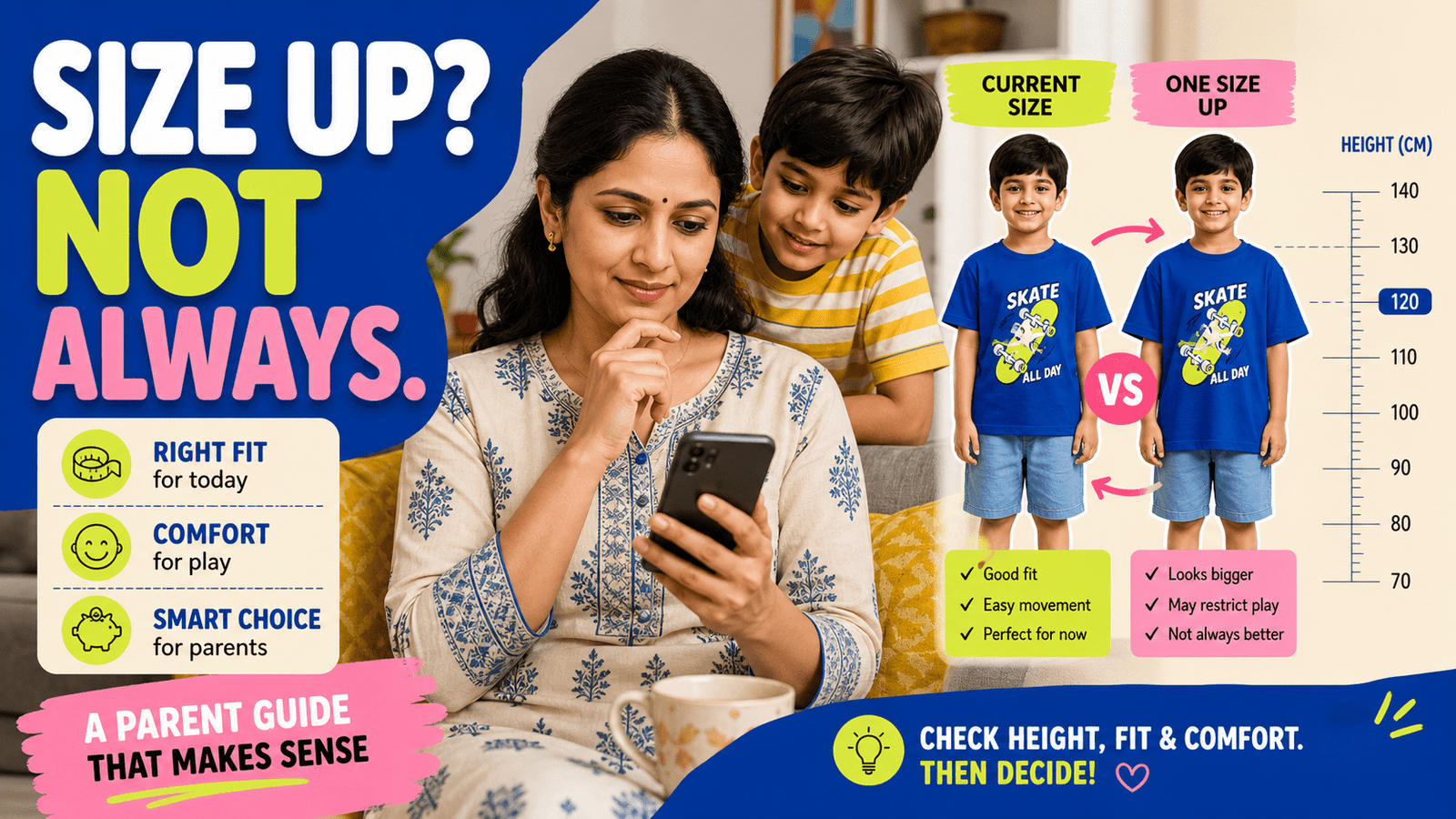
Do not automatically size up when buying kids clothes. Choose the smallest size that safely accommodates the child’s current measurements and the garment’s intended fit. Move to the next size only when a controlling measurement exceeds the current row, the child is genuinely between sizes, or the larger size still fits securely now.
“Room to grow” is useful only when it does not create a loose neckline, dropped shoulder, unstable waistband, excessive rise or unsafe length. Age labels and hoped-for future growth are not enough evidence to size up. Before comparing adjacent rows, check our India kids clothing size-chart guide so a body circumference is not confused with a flat garment width.
Use a garment-specific decision tree
- Measure the child now rather than using the last purchased size.
- Open the chart for the exact product or brand.
- Confirm whether the chart lists body measurements or finished-garment measurements.
- Identify the measurement that controls this garment’s fit.
- Compare the current and next-size rows.
- Reject any size that creates a secure-fit or movement problem today.
Our kids clothing measurement guide explains height, chest, waist, hip and inside-leg measurements. This page answers the next question: whether those measurements justify moving up.
Find the controlling measurement
| Garment | Measurements that commonly control fit | Problems if too large |
|---|---|---|
| Shorts set | Chest, waist, rise and shorts length | Loose top, slipping waist or low rise |
| Pajama set | Neck, chest, waist, rise and leg length | Open neckline, unstable waist or excess leg length |
| Frock or dress | Chest, shoulder, armhole and intended hem position | Dropping shoulders, large armholes or altered silhouette |
| Top | Chest, shoulder, neck and sleeve length | Gapping neck, sleeve interference or twisting |
A child may need the next size for chest room while the extra length becomes unsuitable. In that case, do not treat the larger label as a complete solution. A different cut can fit better than forcing either size.
When sizing up is reasonable
- The child’s relevant body measurement is above the current size range.
- Two measurements fall into different rows and the larger row still stays secure.
- The garment is intended to layer and the chart or product information accounts for that use.
- The child is at the edge of the current range and both sizes can be compared without creating a fit problem.
- The seller provides product-specific advice that the style runs small, supported by actual measurements.
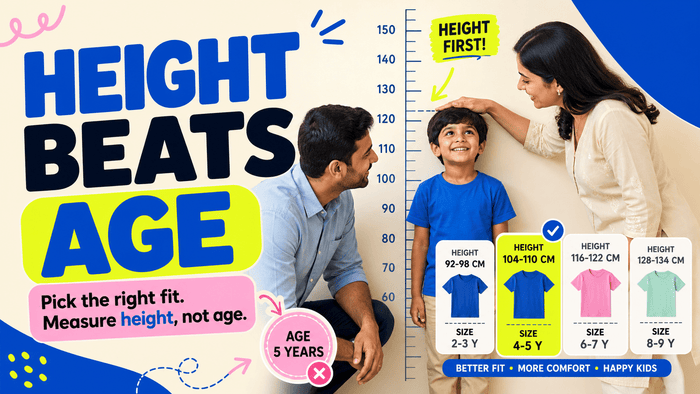
Even then, “one size up” means the next row in that product’s chart—not a universal centimetre allowance. Our height-based sizing guide explains why height narrows the choice but cannot settle chest, waist or rise fit.
When not to size up
Do not choose a larger size solely because the child will grow, because cotton might shrink, or because another brand required a larger label. Shrinkage cannot be predicted from the fibre name alone, and brands grade garments differently.
Avoid the larger size when:
- the neckline falls away from the body or shoulder seams collapse;
- the waistband slips during ordinary walking, sitting or bending;
- the rise hangs or twists and changes movement;
- long legs, sleeves or hems interfere with hands, feet or play;
- the intended silhouette becomes an unintended oversized fit;
- the only reason is an age label or guessed future growth.
Compare both sizes with numbers
Create a three-column note: child measurement, current-size range and next-size range. Mark the controlling measurement first. If the chart lists finished-garment measurements, compare them with a similar garment that currently fits rather than adding body ease again.
For example, a child’s height may fall in the next row while chest and shoulder measurements sit securely in the current row. For a short-sleeve top, the product length and intended silhouette decide whether moving up helps. There is no universal instruction to prioritize height in every garment.
Run a movement check after delivery
Before washing or removing tags, follow the seller’s return conditions and check the garment during normal movements:
- Lift both arms without the neck pulling or gaping.
- Sit, squat and bend without the waist falling or digging in.
- Walk and turn without excess fabric wrapping around the body.
- Check that hems, sleeves and full-length legs finish at safe points.
- Confirm the child can dress and undress as intended.
A size that passes the chart but fails the movement check is not the correct choice. Keep order details and garment measurements when asking the seller for help.
Do not buy far ahead using a predicted size
Future growth, weather and preferred fit are uncertain. Buying several larger garments for a later season can leave the child with the wrong length, proportions or climate coverage when that season arrives. Keep a small next-size reserve only when there is a clear use and the return window or storage risk is understood.
Review existing stock before purchasing. The three-zone system in how to organize kids clothes by size separates fits-now, next-size and outgrown garments so a speculative purchase is visible.
Frequently asked questions
Should I always buy kids clothes one size bigger?
No. Use the exact chart and current measurements. The larger size must still fit securely and allow normal movement today.
What if my child is between sizes?
Compare the measurement that controls that garment, then check whether the next size creates problems at the neck, shoulder, waist, rise or length. Choose another cut if neither row works well.
Should I size up because cotton can shrink?
Not automatically. Dimensional change varies by fabric, construction, finishing and care. Follow the exact label instead of assuming a shrink percentage.
Can I use last year’s size to order now?
Use it only as a clue. Re-measure the child and check the current product chart because the child, brand, cut or chart may have changed.
Is oversized clothing safer for growth?
Not by default. Excess length, unstable waists and loose openings can interfere with fit and movement. Growth room must remain secure for present use.
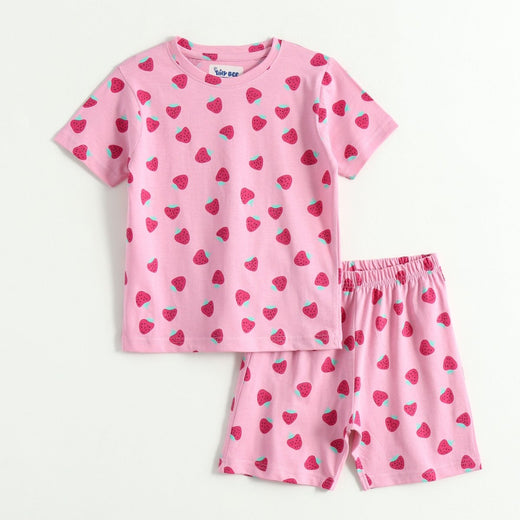
Explore current A Tiny Bee kidswear, then compare current measurements with the live chart for the exact product and available size.
Bring the guide to life
Only currently available products are shown. Sizes and stock update live.