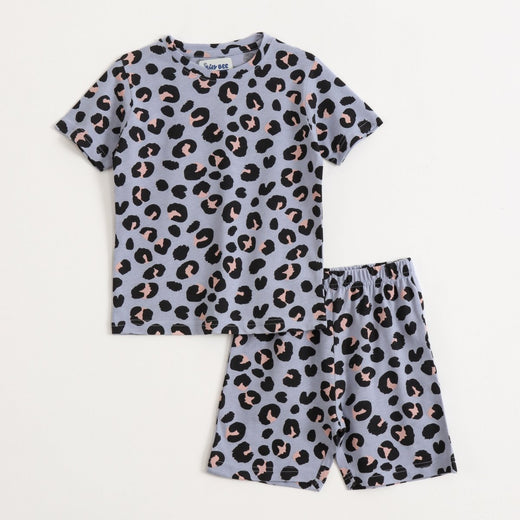
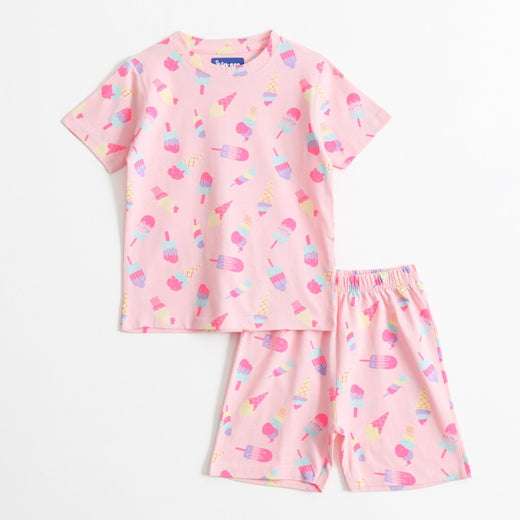
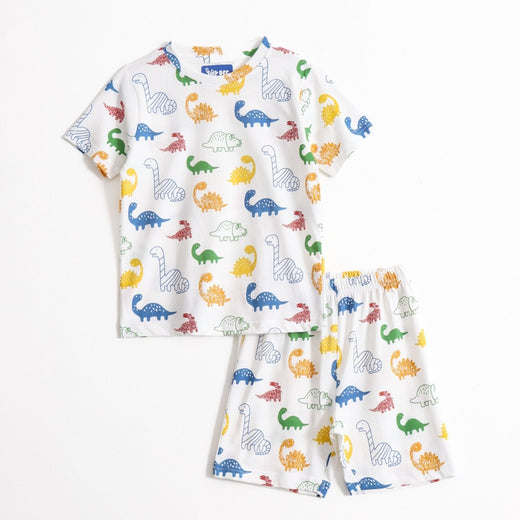
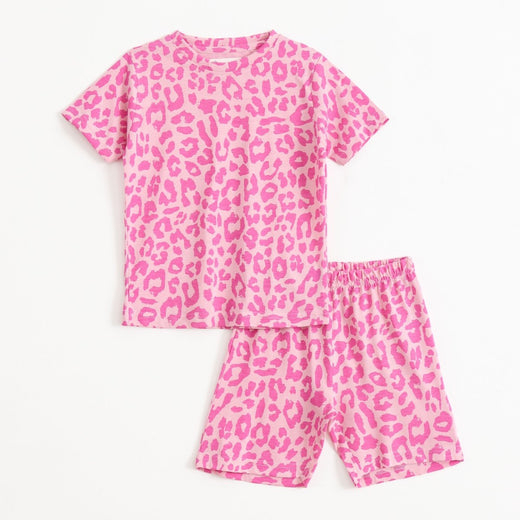
Elastic Waistbands in Kids Clothes: Fit and Comfort Guide
A practical, parent-friendly guide to choosing playful prints without compromising on comfort, fit or everyday wear.
Practical choices.
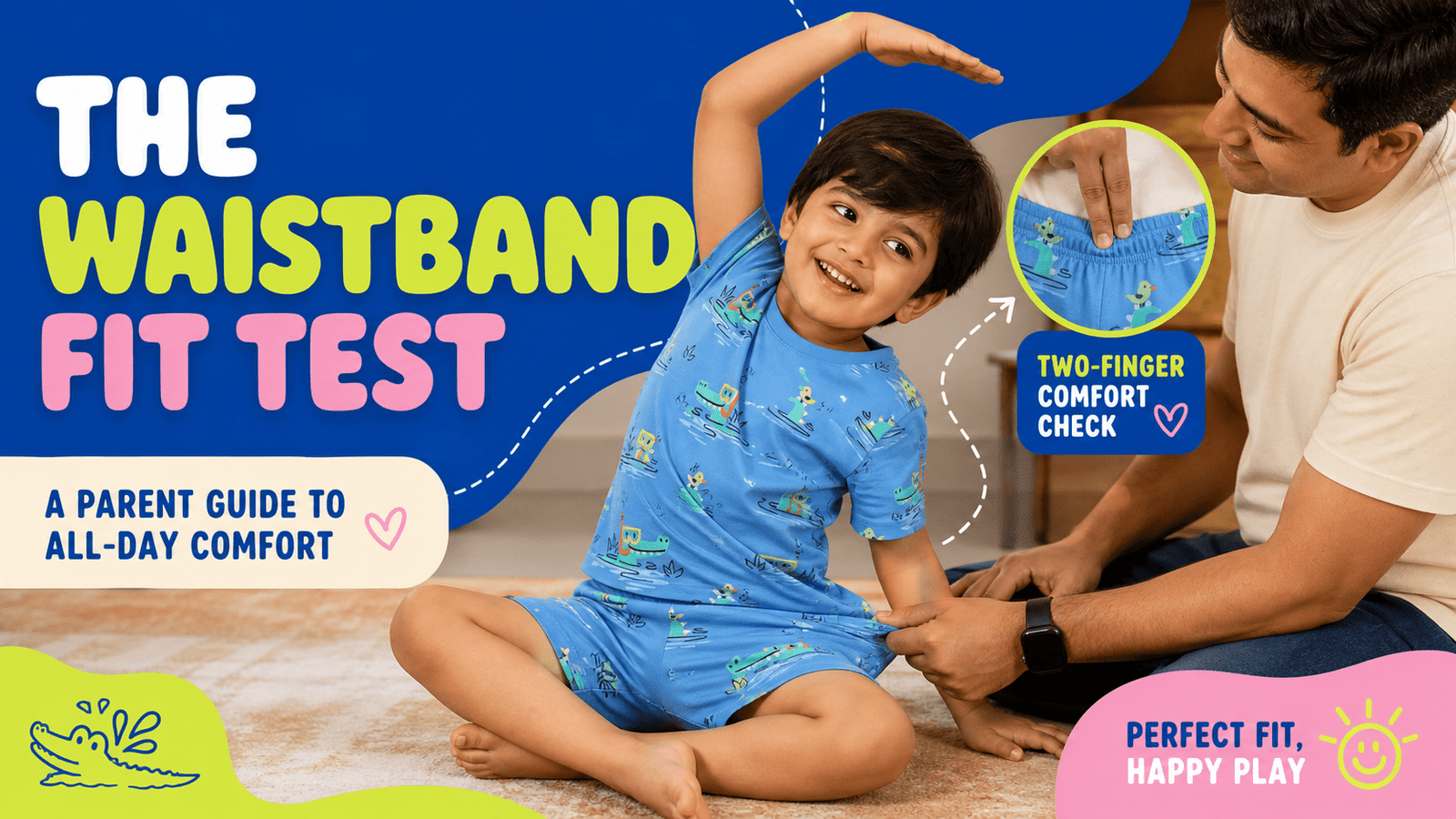
An elastic waistband can make kids clothes easier to pull on and can accommodate ordinary movement, but elastic does not guarantee comfort. Comfort and secure fit depend on waistband tension, width, casing, seam finish, rise, garment weight and the child’s current measurements. If the seller gives a relaxed waist, stretched waist or body-waist number, use our kids clothing size-chart guide for India to identify which kind of measurement you are comparing.
Evaluate the complete garment while the child stands, sits, bends and moves. A waistband should stay in place without digging in, rolling sharply, twisting or leaving the shorts or bottoms unstable.
What an elastic waistband does
Elastic contracts after being stretched, allowing an opening to expand during dressing and return toward its resting size. In shorts or pajama bottoms, it is commonly enclosed in a fabric casing or attached as part of the waistband construction.
That function can reduce reliance on belts, ties or multiple fasteners. New Mexico State University’s guidance on clothing for young children lists an elastic waistline as an easy-dressing feature and separately warns against elastic that is too tight. The page provides general educational guidance, not a product-specific guarantee or Indian safety rule.
Inspect six waistband details
| Detail | What to check | Possible problem |
|---|---|---|
| Tension | Stays secure through standing and movement | Digging in or slipping down |
| Width | Lies flat for the intended design | Narrow pressure line or folding |
| Casing | Smooth, even and free from obvious twisting | Bunched or rotating elastic |
| Seams | Flat enough for the intended use | Bulky join or rough edge |
| Rise | Reaches the intended waist position | Pulling at the crotch or sagging |
| Recovery | Returns after ordinary dressing stretch | Persistent looseness or distortion |
None of these observations proves fibre content or long-term durability. They help evaluate the received garment before regular use.
Use the correct waist measurement
Measure the child at the location stated by the exact chart, without pulling the tape tight or adding an invented allowance. Determine whether the chart lists body waist, relaxed garment waist or stretched garment waist. These values are not interchangeable.
If only the size label is available, ask the seller for measurements. Age cannot establish waistband fit. Follow the process in our kids clothing measurement guide before comparing sizes.
Run a standing and movement check
- Check the waistband at its intended position while standing normally.
- Ask the child to sit without the waistband rolling or cutting sharply.
- Bend, squat and walk to see whether the rise pulls or the garment slips.
- Check the skin and the child’s feedback after several ordinary movements.
- Confirm the child can pull the garment on and off as intended.
Do not use a finger-count rule as a universal fit test. Finger sizes, waistband widths and designs vary. Measurement plus movement provides better evidence.
Too tight and too loose can both fail
A tight waistband may dig in, roll, pull the rise upward or make dressing difficult. A loose waistband may slip, rotate or require repeated adjustment. Moving to a larger size can fix tension while creating too much rise or length; moving smaller can secure the waist while restricting movement elsewhere.
Use the decision tree in whether to size up kids clothes once it is clear which measurement is failing. Another cut may be better when neither adjacent size works as a complete garment.
Check the casing and construction
Lay the garment flat without stretching. The waistband should look even rather than sharply twisted. Gently distribute any normal gathers and check whether the casing seam appears continuous. Do not unpick, cut or pull the waistband during an inspection, especially while return eligibility matters.
If the elastic repeatedly turns inside the casing, the seam opens or recovery appears lost, stop relying on the garment until the issue is assessed. Keep photos and order information when contacting the seller.
Consider dressing independence
A pull-on waist can reduce fastening steps, but the child still needs an opening that expands enough and a rise that moves into place without force. A very tight elastic waistband is not an easy-dressing feature simply because it has no buttons.
Look for a clear front and back, reachable pockets only when useful, and enough room at the hip and thigh for the intended movement. Child preference and ability vary, so observe the actual dressing routine.
Follow the finished-garment care label
Heat, chemicals, repeated stretching and unsuitable drying can affect fabric, stitching and elastic differently. Follow the care label for the complete garment rather than applying a generic method to the waistband alone.
Our cotton kids-clothes washing guide explains a label-first routine. Do not assume the elastic has the same fibre content or heat tolerance as the main fabric.
Frequently asked questions
Are elastic waistbands comfortable for kids?
They can be, but comfort depends on tension, width, casing, seams, rise, garment fit and the child. Elastic alone does not guarantee comfort.
How tight should a child’s elastic waistband be?
It should stay secure during ordinary movement without digging, rolling sharply or making dressing difficult. Use the exact chart and a movement check rather than a universal finger rule.
Should I size up if the waistband feels tight?
Compare the next size’s waist, rise and length. Size up only if the complete larger garment remains secure and suitable; otherwise try another cut.
Why does elastic twist inside a waistband?
The elastic may have rotated within its casing or the construction may not hold it evenly. Do not open the casing yourself while return or seller assessment is possible.
Can elastic waistbands lose recovery?
Elastic can change with use, care and age. Follow the finished-garment label and stop relying on a waistband that no longer keeps the garment secure.
How do I choose comfortable clothes for active kids?
Check the complete garment during the movements the child actually performs. The neck, armholes, seams, waistband, rise, seat, thighs and hems should remain secure without digging, slipping or restricting movement. “Comfortable” is an observed fit outcome, not a guarantee created by elastic or one fabric name.
Explore current A Tiny Bee kidswear, then verify the live size chart, waistband construction, care information and available sizes for the exact product.
Bring the guide to life
Only currently available products are shown. Sizes and stock update live.