Toddler Summer Outfits in India: 10 Easy Formulas
A practical, parent-friendly guide to choosing playful prints without compromising on comfort, fit or everyday wear.
Practical choices.
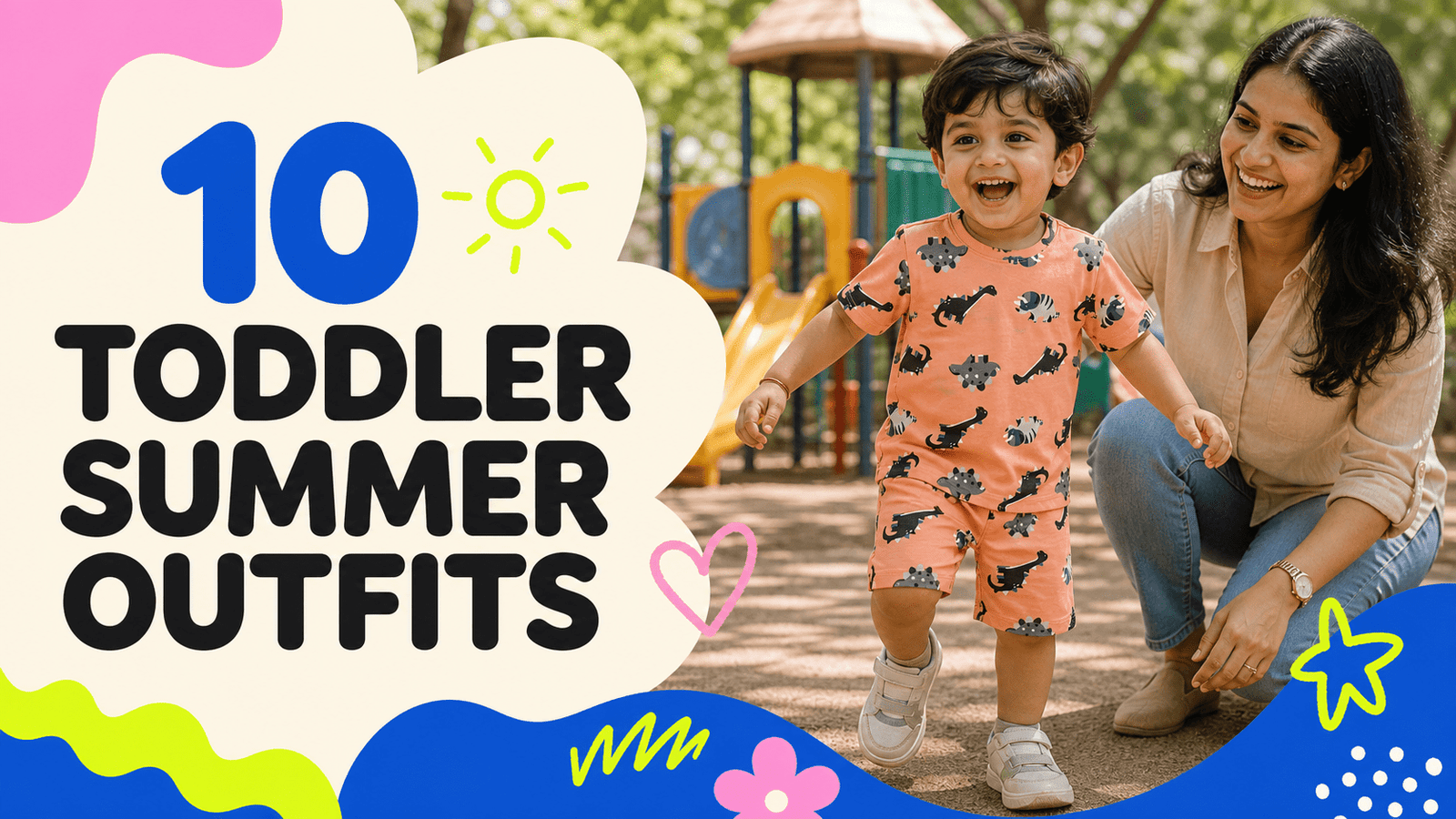
For toddler summer outfits in India, start with light-coloured, loose-fitting clothing suited to the day’s heat, humidity, sun exposure and activity. A short-sleeve top with easy-moving shorts is a practical base for many indoor and shaded play situations, but no single outfit works for every region, time or destination.
The National Centre for Disease Control advises light-coloured, loose clothing in warm weather, frequent fluids, shade and avoiding heavy outdoor activity during the hottest hours. Clothing is only one part of heat safety.
Check the day before choosing the outfit
Ask five questions:
- What are the local temperature, humidity and heat warnings?
- Will the child be indoors, in shade, in direct sun or moving between them?
- How active will the child be?
- Will air conditioning make a light layer useful?
- Can a clean spare outfit be carried for spills or heavy soiling?
India’s weather varies widely, and an outfit suitable for a shaded Bengaluru morning may not suit an exposed afternoon elsewhere. Use current local guidance rather than a fixed seasonal date.
Ten toddler summer outfit formulas
1. Matching shorts set for everyday play
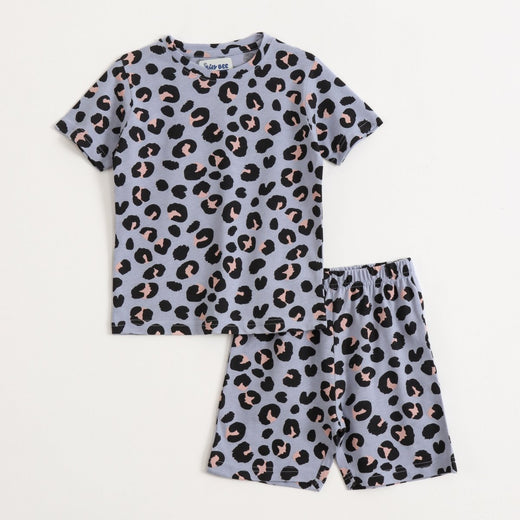
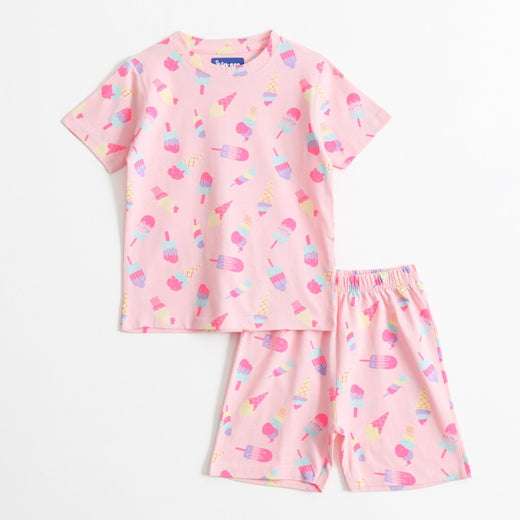
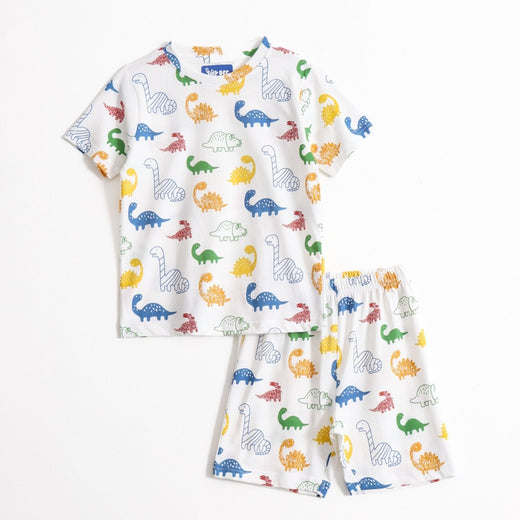
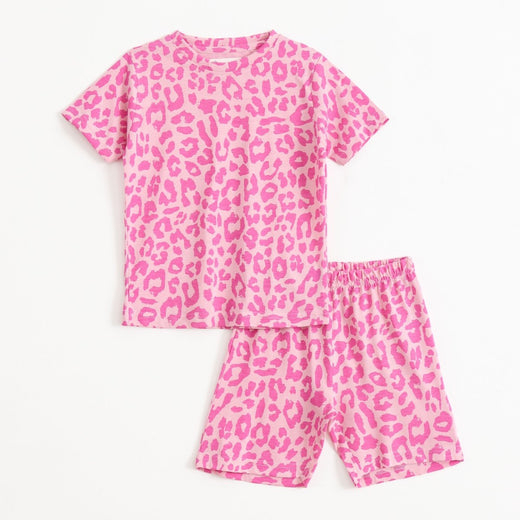
Pair a short-sleeve top with matching elastic-waist shorts. The outfit is already coordinated, while the two pieces can later be mixed separately. Check that the waistband stays secure during sitting and squatting.
2. Printed top with plain shorts
Use one lively top and a plain bottom in a colour from the print. This keeps the outfit easy to repeat and helps a favourite motif work with more than one bottom.
3. Plain top with printed shorts
Reverse the emphasis when the shorts carry the main pattern. Check that the print surface does not feel stiff at the hip or another movement point.
4. Co-ord plus a light indoor layer
Carry a plain, easy-to-remove layer for a strongly air-conditioned indoor destination. Remove or add it according to the actual environment rather than leaving it on by habit.
5. Travel-ready set
Choose a top and elastic-waist shorts that allow sitting and easy movement. Avoid complicated fastenings when quick changes matter. Keep the spare outfit accessible rather than buried at the bottom of luggage.
6. Shaded garden play
Use a loose outfit suited to movement, plus appropriate sun-protection measures for the setting. Clothing coverage, shade, timing and other protection should be planned together.
7. Indoor playdate
A coordinated printed set works without additional styling. Check the destination’s temperature and take a simple layer only if needed.
8. Two-set rotation for a longer day
Pack a second complete outfit when the child is likely to get wet, muddy or heavily soiled. A spare is useful only if it is the current size and easy to reach.
9. Sibling colour coordination
Choose different prints that share one colour. Size each child separately; visual matching should never require an unsuitable fit.
10. Print-led outing outfit
Let one matching printed set be the complete look and keep shoes and any layer plain. This avoids adding weight or complexity simply for decoration.
Fit the toddler, not just the age label
Toddler sizes can vary between products. Measure the child and compare the current brand chart. For a top-and-shorts set, check:
- the neckline passes over the head without force;
- shoulders and sleeves allow reaching;
- the chest does not pull when the child bends;
- the waistband stays up without digging in;
- the rise and seat allow sitting and squatting;
- hems do not catch during movement.
Use our measurement guide for kids clothes. Do not buy several sizes larger solely for growth if the outfit becomes loose or obstructive now.
Read fabric information without shortcuts
Fibre name matters, but it does not act alone. Knit or weave, fabric weight, fit, seams, finish, colour and moisture conditions all affect wear. A catalogue “cotton” tag is not proof of a particular percentage; confirm the current product page and sewn-in label.
Our cotton versus polyester guide compares moisture behaviour, drying, wrinkles, durability and care without declaring one fibre universally best.
Use official heat guidance alongside clothing
The NCDC’s child heat-health guidance recommends watching weather warnings, encouraging fluids before and during activity, using light-coloured loose clothing, seeking shade and avoiding heavy outdoor activity in the hottest hours. It also warns never to leave a child alone in a parked closed vehicle.
If a child appears unwell in heat, follow current medical and emergency guidance. An outfit guide is not a diagnosis or treatment plan.
Make the outfit easy to change
For toddlers, a practical summer outfit should work during dressing, toileting or nappy changes and active play. Before keeping a new set, try a calm movement check:
- raise both arms;
- sit on the floor;
- squat and stand;
- walk and climb one safe step;
- check whether the waistband or neckline moves out of place.
Stop if the garment restricts movement, exposes the child unexpectedly or has a fastener that cannot be managed safely.
Pack a small summer clothing kit
- one complete spare outfit in the current size;
- a suitable light layer for strong indoor cooling;
- a separate bag for wet or heavily soiled clothing;
- any destination-appropriate sun or rain protection;
- water and other essentials recommended for the outing.
Do not store damp clothes in a closed bag longer than necessary. Clean and dry them according to their labels after returning.
Keep summer prints easy to care for
Sweat, sunscreen, food and outdoor soil may require different treatment. Blot or remove excess material, check the care label, test any treatment where appropriate and inspect the mark before drying. Never mix cleaning chemicals.
Use our stain-removal guide for kids clothes and cotton kidswear washing guide for label-first steps.
Frequently asked questions
What should a toddler wear in Indian summer?
Choose light-coloured, loose-fitting clothing appropriate to the current weather, activity and sun exposure. A short-sleeve top and shorts can be a practical base in many situations.
Is cotton always the best summer fabric?
No fibre is automatically best in every construction and condition. Check composition, weight, knit or weave, fit, seams, drying needs and the actual day.
Should toddler summer clothes be oversized?
They should allow ease and movement, but not be so loose that the waistband slips, hems catch or the neckline becomes insecure. Measure and use the current chart.
How many spare outfits should I carry?
For many short outings, one current-size spare is a practical starting point. Increase it according to trip length, access to laundry and the child’s needs.
Can toddlers wear dark colours in summer?
Official NCDC heat guidance recommends light-coloured clothing in warm weather. Also consider shade, timing, fit, activity and local warnings.
What should a 2-year-old wear in summer?
Use current measurements and choose light-coloured, loose-enough clothing for the actual weather, activity and sun exposure. A short-sleeve top with secure shorts can be one practical option, but fit, coverage, shade, fluids and official heat guidance matter together.
Explore current A Tiny Bee summer-ready sets and confirm live sizing, product information, price and availability before buying.
Bring the guide to life
Only currently available products are shown. Sizes and stock update live.